

Missing link: Why Uganda’s once vibrant society needs public intellectuals to bridge academia and public life
Academia produces unparalleled expertise. Peer-reviewed journals detail the nuances of climate models, the historical roots of inequality and the complexities of vaccine development. Yet, this knowledge often remains entombed in specialised jargon.

How Kenyan MP outperforms fellow legislators, puts country’s ‘happy-go-lucky’ president to shame
He says Kiharu has 112 public primary schools and 65 secondary schools, many built from scratch in past decade during which he has been a member of parliament. He insists that every public primary school classroom is tiled.
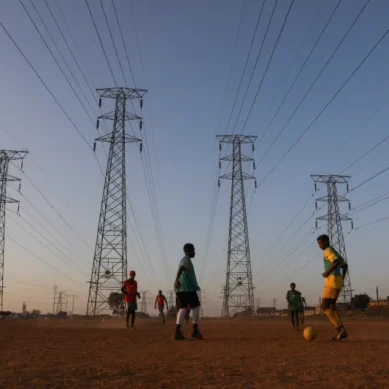
Lost decade: Why Raila’s loss of AU chairmanship and death means Africa’s failure to recover from punitive IMF and World Bank economic policies
Africa’s heads of states have been emboldened in their transformative campaign by some astonishing turn of economic and political events. In 2023, the IMF forecast that in 2024, the world’s seven fastest growing economies, and 12 of the top 15, would be African. This is a result of many factors, but primarily because the continent’s vast natural and mineral resources have emerged as an indispensable engine of growth for the increasingly hi-tech orientation of industrialised economies.

Flushing out scientists, on-boarding army: How Museveni ‘drafted’ Uganda’s fisheries, agriculture and livestock industries into wretched military
Creation of Operation Wealth Creation (OWC) is a prime example of the militarisation of conservation and the de-institutionalisation of MAAF.

Museveni dynasty: How 40 years of family misrule silenced Ugandans’ voice, stymied hopes of a people
In Uganda power is no longer just what you acquire through election to a political office, say the office of president of Uganda. Power has become inheritance. There is clear evidence that President Tibuhaburwa Yoweri Museveni has demonstrated, not announced, that his son, General Muhoozi Kainerugaba, is the one he wants to inherit power from him.
Uganda, a dictator’s paradise: Two conquests, one continuum from Britain to NRM hegemony
Under NRM rule, opposition is managed through a sophisticated of complex blend of coercion, denials, legalism, conscience buying and co-optation. The security apparatus (UPDF, CMI, police) is used against serious threats such as Kyagulanyi’s National Unity Platform or Kyagulanyi himself. The judiciary and parliament are often manipulated by the president for personal gain of power and influence.
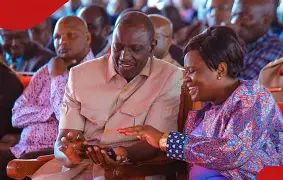
Do we still have a home? Why has new ODM leadership resorted to insulting non-Luo tribes that supported Raila, retired President Kenyatta?
The Political Parties Act presumes defection when you promote the ideals of another party but that’s not the case for the three, they are just deeply in love with William Ruto. It is understandable since all of them joined the party as a train for their political careers but not as believers in its philosophy.

In Uganda the line between ‘riots and protests’ is burred: both are met with state brute force
The truth is that most governments are fearful of gatherings of any kind because their “captors” believe the gatherings can easily result in challenge, even change of power. The citizens are collectively perceived as enemy-number-one of the state, especially in Africa, where governments frequently arm themselves to the teeth against the citizens.

Buganda Kingdom holds key to democracy in Uganda: Electing Museveni translates to extension tyranny, family dynasty
Buganda has always had an advantage over other regions of Uganda in that it is physically centrally positioned. This is the reason why in the colonial times it was referred to as Central Province. Besides, the seat of power and capital of Uganda are in Buganda. Also, in Buganda is the main state house of the president of Uganda

How sycophancy became stock-in-trade in Ugandan politics and nixed on democracy
One common characteristic of flatterers is that they are very good at lying. They position themselves as angels before the eyes of their victims – the flattered. Normally, they have no ideas because they carry thick heads that cannot think or reason critically.