
From Lufwosi in western Kenya to Dundori in central Kenya, vestiges of colonial legacy linger on through corrupted names.
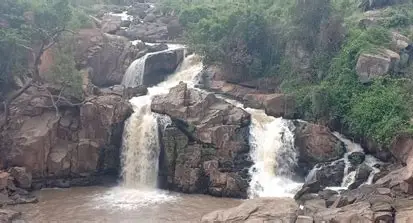
Chetambe Falls that overlooks Webuye town was once known as Broderick Falls. The indigenes of the region, unable to navigate through difficult English pronunciation, settled for Lufwosi (Falls), later renamed Webuye by founding President Jomo Kenyatta in 1972.
In Nyandarua, the Kikuyu made heavy weather of colonial large-scale landowner Danbury’s name. The mispronunciation of Danbury gave Dundori its current identity. In other parts of the region, the name gave way to Dumberi or Ndumbri in Nyandarua County.
Accordingly, some names of places in Kenya are laden with lustre of literature and history. Somewhat, a moniker goes beyond just a collection of phonemes that are pieced together to sound enchanting and pleasant to the ears of an audience.
Names are part and parcel of Kenya’s collective culture, literature history and heritage with history as the common denominator. Some names of Kenyan towns and places, were inspired by economic activities, wars or contact with the colonialists.
Nairobi estates
In actual sense, I was writing this piece at my editorial station in Rural Tents was converted to the present Riruta. This is in Dagoretti that was initially known as the Great Corner.
A possible Maasai origin of the name Dagoretti is the weed entiakuleti or Gomphocarpus physocarpus, which grows around the area. This origin may be valid because neighbouring place-names such as Kileleshwa and Uthiru are derived from Maasai words for vegetation.
A humorous story retold in Dagoretti Market and Thogoto areas is the mispronunciation of the Kikuyu statement ndagurite which could mean “I had bought” or “He had not bought”, depending on the tonality.
Apparently, a European man who had acquired land was involved in either a dispute, protest or an enquiry concerning the piece of land and uttered ndagurite to assert his claim of ownership.
Cow Grade Lane is presently now known as Kawangware. It is a shouting distance from Dagoretti. In close-range is Kabete, which my informer tick in history apprises me that it was formerly known as Carpet Ville. Not far from here, is the high-end estate called Kileleshwa that was coined from Clay Land Swamp.
What of Kariakor? During the First World War, a contingent of Africans who were enlisted in the British army, were asked to carry their luggage. The Carrier Corps, as they were known, carried everything the soldiers needed in order to survive during the tempestuous East African Campaign of the First World War. Thus, Carrier Corps became Kariakor
Again, all these places mentioned are found in Nairobi – the jungle of concrete. Being the capital city, it hosts tall buildings that kiss the skies. Historians posit that the Maasai, who were its original inhabitants gave the Kenyan capital its name. The name ‘Nairobi’ was derived from the Maasai phrase ‘Enkare Nyrobi’ – to mean ‘place of cool Waters’.
Furthermore, on Nairobi-Nakuru highway, there is Kinoo, which before corruption of the name, was known as Kings Knot. If you are fond of driving along that busy highway, then you must also have seen Sigona, not far from Kikuyu Town, which a fellow scribe tells me was described as Singers with Honour.
Still in Kikuyu, there is Thogoto. When the Church of Scotland Mission settled in this chilly land, they created a little Scotland by building schools, Church and mission hospital. The aborigines of the lush land could not pronounce the name Scotland correctly. They puffed it as ‘Thigoto’ and thus the name Thogoto was born. From those distant days hitherto, the town maintains its name.
Then there is Limuru, which has a close connection with ‘ilmur’ to mean donkey droppings, in tribute to a melange of donkeys that were found in that area. The name Naivasha was coined from a Maasai word ‘Enaipasha’, which means the lake. Nakuru was coined from Nakuro’, to mean a ‘dusty place’.
Somehow, Nyahururu came from ‘enaiwurwur’ meaning a ‘windy place’.
In Bomet County, there is a place called Tenwek. The small town is known far and wide because it is the home of one of the oldest eye hospitals built in 1936. People say that the name Tenwek is believed to have come about because it took people ‘ten weeks’ to travel from Mombasa to the area on foot.
Bungoma in far western Kenya, the town of Bungoma derives its name from the Sabaot dialect of Bung’oomek.
The Uasin Gishu town of Moi’s Bridge was initially named Hoey’s Bridge – after a white settler who constructed a bridge over River Nzoia for his oxen to cross. Hoey was a prominent figure during the colonial period and even served in the Legislative Council (LegCo). He died in 1956.
Hoey’s Bridge was later renamed Moi’s Bridge after independence.
- A Tell Media report / By Victor Ochieng’

About author