
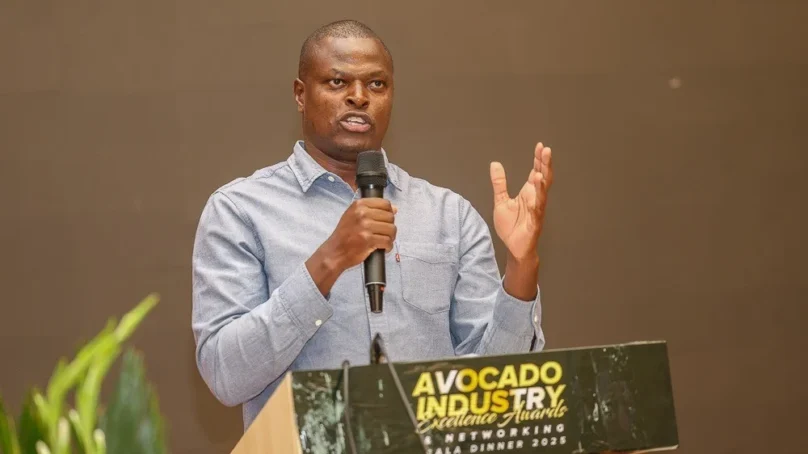
Ndindi Nyoro has done something unforgivable in Kenyan politics: he has exposed how low the bar has been set. By turning his constituency record into a public visual and verifiable conversation, the Kiharu MP has made parliament uncomfortable. Not because he is loud, but because the silence of others is now impossible to hide.
For more than a week, Nyoro has flooded the internet with development updates from Kiharu Constituency in Murang’a County. Not slogans. Not promises. Not rehearsed outrage. Numbers. Schools. Classrooms. Laboratories. Pavements. Meals. Teachers. Children.
The applause by the public has been loud. The irritation among fellow MPs is even louder, although expressed in whispers, sarcasm and accusations of “showing off.” But what exactly is Nyoro showing off?
He says Kiharu has 112 public primary schools and 65 secondary schools, many built from scratch in past decade during which he has been a member of parliament. He insists that every public primary school classroom is tiled. Not selectively. Not “model schools.” All of them. He goes further: every school compound is paved with cabro tiles, eliminating dust in dry seasons and mud during the rains. He dares critics to pick any school at random. He will take you there.
This is not normal Kenyan political language. It is dangerously specific. Education sits at the heart of Nyoro’s online campaign and this is where the discomfort deepens. In 2023, he rolled out Masomo Bora (Kiswahili for Quality Education) a low-cost, high-impact education programme covering all day secondary schools in the constituency – about 65 of them. Today, 12,500 learners are enrolled. Each pays Ksh1,000 per term. No hidden charges. No “development fees.” No creative levies. The children get meals at school from Monday to Saturday. And yes, every last Friday of the month, they eat chapati.
In a country where school feeding programmes are often seasonal, donor-dependent or purely rhetorical. This detail has become symbolic. It is small enough to be relatable, concrete enough to be believable, and consistent enough to be trusted. That is precisely why it irritates people.
Masomo Bora is not just about meals. It covers laboratories, other infrastructure and learning materials. Nyoro says Ksh20 million has been spent on revision materials alone for day secondary schools. Teacher motivation is built into the system: top-performing teachers by subject receive fully paid holidays to Mombasa; principals and most-improved performers are flown to Dubai. Even primary school head-teachers benefit. As we speak, a group of Kiharu head-teachers is reportedly in Dubai on an education tour.
The headline project is a modern, two-storey Mwai Kibaki Tuition Block, named after the former President who introduced Free Primary Education. Fitted with contemporary learning technology, it stands as one of the most advanced public education facilities in the region. Symbolism matters in politics, and so does continuity. Nyoro understands both.
So why the anger from fellow MPs? Because Ndindi Nyoro is ruining the curve. For years, the unofficial standard for “development” in many constituencies has been embarrassingly low. An MP could serve two or three terms and still rely on convoy photos, funeral speeches, handouts and personal wealth displays on social media as evidence of leadership. Constituency Development Fund (CDF) projects were often fragmented, politicised or reduced to token gestures that kept people dependent rather than empowered. Nyoro’s approach punctures that entire culture.
When one MP, receiving the same amount of public money as every other MP, delivers tiled classrooms, feeds children, equips laboratories and motivates teachers, uncomfortable questions arise. Not ideological questions. Practical ones. If he can do this, why can’t others?
The contrast becomes even starker when placed next to recent viral moments. A comedian’s expose recently showed an MP from a different constituency presiding over the official handover of donkeys and jerrycans as a CDF project. The images spread rapidly online. The internet did what parliament often refuses to do: it laughed and judged.
That juxtaposition tells a brutal story. While one MP is equipping children for a digital economy, another appears to be preparing citizens for a 14th-century existence. Both sit in the same national assembly. Both vote on the same national budgets. Both swear the same oath to serve.
The difference is not money. It is mindset. Ndindi Nyoro’s greatest “crime” is not that he posts his work online. It is that his work exists to be posted. He has forced a reckoning: development is no longer an abstract claim; it is a visual audit. You either have something to show, or you don’t. Predictably, critics accuse him of populism, self-promotion, or arrogance.
But these accusations collapse under scrutiny. Transparency is not arrogance. Evidence is not provocation. And public accountability is not showmanship. It is leadership. In truth, Nyoro has committed the ultimate political heresy: he has demonstrated that corruption is not inevitable. That CDF, when not stolen, is transformative. That ten years of disciplined, honest leadership can permanently alter the life chances of a constituency.
That is why parliament is uncomfortable. Because Ndindi Nyoro has reminded Kenyans of something dangerous: mediocrity in leadership is a choice. And once citizens see what is possible, excuses stop working.
- A Tell Media report / By Gitile Naituli


About author