


Uganda’s 2026vpresidential election sums up how the country evolved from a banana republic 40 years ago to a monstrous garrison
The primary mechanism for circumventing public interest is the transformation of the state into a garrison, where security apparatuses are designed for regime preservation rather than public protection.

Trouble with Uganda: Opposition is so wedded to power that external onslaught finds outfit plagued with internal failures
Despite widespread socio-economic grievances and democratic aspirations among the populace, the political opposition has consistently failed to coalesce into a credible, unified and effective alternative. This persistent weakness is not a historical accident but the deliberate outcome of a multifaceted system designed to perpetuate incumbent power.

Uganda’s January 15 General Election demonstrates that democracy cannot be built through a process designed to prevent it
We argue that elections under the NRM have become empty ceremonies because the system is engineered around three reinforcing mechanisms: digital authoritarianism, which controls the narrative and isolates citizens.

Museveni boasts after retaining seat he and NRM are forever popular in Uganda 40 years since coming to power
In his speech, Museveni accused the opposition of trying to foment violence during voting. He urged religious leaders to reach out to young people who are likely to be misled into violence.

Authoritarianism: Uganda’s quasi-democracy paints a picture of the East Africa nation’s status as a colossal military barrack stilted on steroids
A closed society is where, by design, law and policy people and institutions may or may not intercommunicate and selectively communicate with the outside world. In a closed society, human rights abuses by the State are common, and accountability and transparency are undermined in favour of a deep state run by Mafioso.
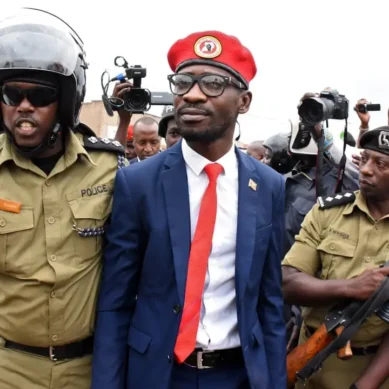
Ugandan police deny arrest of Museveni’s main rival who was allegedly abducted in pre-dawn military raid
Uganda held a general election on Thursday amid an internet shutdown that has been in place for four days, with the military heavily deployed across the country and pockets of violence erupting as people protested parliamentary election results in various parts of the country.

Prospects of bloody post-election violence high after police shoot dead 10 at a house in central Uganda
It was not immediately possible to independently confirm the circumstances of the violence. The election has been widely seen as a test of the 81-year-old Museveni’s political strength and ability to avoid the kind of unrest that has rocked neighbours Tanzania and Kenya.

Uganda decides: Africa’s third-longest serving president’s dream of extending his reign into a fifth decade looks possible
Wine wrote on Thursday on X that a senior official in his party in charge of Uganda’s western region had been arrested. He charged that there was “massive ballot stuffing everywhere.”

I risk assassination if I declare an opposition candidate winner of presidential poll, anxious Uganda elections chief says
Simon Byabakama, chairperson of the Electoral Commission, said he had been warned by senior government figures not to declare certain candidates winners, although he did not name those involved. He was reacting to a video circulating widely online in which a presidential aide suggested the commission would never announce opposition leader Robert Kyagulanyi, known as Bobi Wine, as president even if he won the election.

Uganda President Museveni confident of fifth decade in power as opposition alleges massive ballot stuffing
During the campaign, security forces repeatedly opened fire at Wine’s events, killing at least one person and arresting hundreds of his supporters. Museveni’s government has said those actions were a justified response to what it called lawless conduct by opposition supporters.
- 1
- 2