



When the National Resistance Movement (NRM) assumed power four decades ago, it pledged a fundamental break from a past marred by strife and misrule, promising a government that would finally serve the public interest.
The 1995 Constitution, born of this promise, solemnly commits the state to principles of democracy, social justice, balanced development and the protection of natural resources for the people of Uganda.
Yet, a profound disconnection has emerged between this constitutional mandate and the lived reality of governance. This essay argues that the Ugandan executive under President Tibuhaburwa Museveni, has not merely failed to uphold the public interest but has engineered a sophisticated architecture to systematically circumvent it. This architecture is built upon three interlocking pillars: the militarisation of the state, the political economy of dispossession, and the strategic subversion of constitutionalism.
Through these mechanisms, a philosophy that prioritises elite interests, political survival and a narrow vision of development over the welfare, identity and ecological belonging of the citizenry has been institutionalised, betraying the very covenant upon which modern Uganda was to be built.
Garrison State: Militarization as the Foundation of Control
The primary mechanism for circumventing public interest is the transformation of the state into a garrison, where security apparatuses are designed for regime preservation rather than public protection. This represents not a security strategy but a political project for perpetual control. The executive has meticulously blurred the lines between military and civilian spheres, ensuring that all levers of state coercion align with presidential interests.
This is evidenced by the systematic militarization of the police force. Once envisioned as a civilian institution, its leadership is now dominated by high-ranking military officers, effectively rebranding it into a brutal, militarised arm of the executive. Its function has shifted from service to suppression, particularly during electoral cycles or public dissent.
Furthermore, the weaponisation of justice through the use of military courts to try civilians for political offences shreds the constitutional right to a fair trial before an independent judiciary. This practice, a direct inheritance from the colonial King’s African Rifles model of suppressing dissent, has been modernized and intensified.
The military’s penetration extends into agriculture (Operation Wealth Creation), infrastructure and local administration, embedding a command-and-control ethos into the fabric of daily governance. This structure directly facilitates the Power Retention Project, enforces an apartheid-like governance model where rights are conditional on political compliance, and enables the ethnicisation of everything by ensuring that key security and resource controls reside within a trusted ethnic and familial cadre. This creates functional Bantustanisation of the state itself, where control is centralised and dissent is securitized.
Political economy of dispossession
The second pillar is an economic model that conflates national development with elite accumulation and territorial control, actively dispossessing the public of their land, heritage, and future. This model has a clear legal genealogy. The 1938 Busuulu and Envujo Law, which commodified Mailo land and entrenched tenant-landlord conflicts, established a precedent where statutory law overrides customary land rights to facilitate control and revenue extraction. The modern executive operates on this same principle, advancing a philosophy that “development should come before environment, nature and people.”
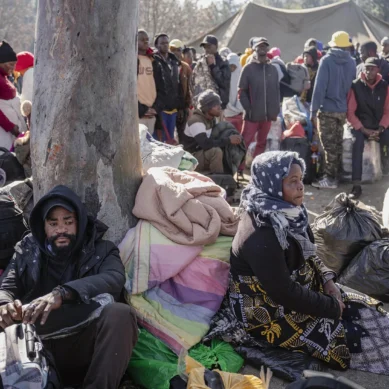
This philosophy manifests with devastating clarity in the case of the Benet community on Mount Elgon. Violently evicted from their ancestral lands in the early 2000s to create the Mount Elgon National Park, they were rendered “conservation refugees.”
Over a decade later, despite presidential promises, they remain in temporary camps with inadequate water, sanitation or healthcare – a permanent underclass in their own territory. This is not an isolated incident but part of a systemic pattern of state-sanctioned land grabbing, repeated in Apaa, Zoka Forest and Kiryandongo for wildlife reserves and industrial farms.
The consequence is more than physical displacement; it is the infliction of solastalgia – a profound psychic distress caused by the obliteration of one’s ecological home. This process leads to the deliberate erasure of culture and associated ecological belonging, severing communities from their ecological memories and autobiographies.
The land is then often transferred to exogenes, facilitating the primitive accumulation of wealth for a connected few. Loan-driven programmes like the Parish Development Model or Myooga, launched with great fanfare but little circumspection for political gain, further this cycle by indebting individuals and communities, often forcing them to sell their only asset – land – to repay state-facilitated loans.
This individualisation of development and Bantustanisation project fractures communal solidarity and creates a population dependent on and vulnerable to executive patronage.
Subversion and diversion
The third pillar involves hollowing out the constitutional order from within while diverting national resources to serve parallel interests, creating a facade of legality. A deliberate and widening chasm exists between the letter of the Constitution and the practice of governance. While the directive principles of state policy command the state to ensure balanced development, protect natural resources for the people and involve them in development programmes, executive action consistently trends in the opposite direction.
Fiscal policy exemplifies this subversion. Despite modest GDP growth, the state’s over-allocation of money to non-productive, over-consumptive ventures – most notably the ever-expanding budget of State House and the military – actively siphons capital away from social development, healthcare, and education. This entrenched inequality is a policy choice, as government action has had a “very modest effect” on reducing high inequality, partly due to chronically low social spending. Simultaneously, the executive promotes a “refugee economy.”
While hosting refugees is a humanitarian imperative, the strategic emphasis on this sector, amidst chronic underfunding of international responses, raises questions about its role as a diversion of resources and a source of political capital on the international stage, often at the expense of marginalized indigenous groups.
Furthermore, the executive cultivates a political and discursive monoculture. Just as agricultural monocultures destroy biodiversity, a monoculture of a single, dominant political narrative is enforced where “fear and repression have largely silenced opposing voices.”
This environment enables prioritising politics and personalist leadership over policy, where initiatives are launched for political gain rather than public good, and the hereditary presidency is normalized through the manipulation of legal and political processes. This environment allows the executive to ignore with impunity the judiciary’s occasional courageous rulings – such as those against illegal evictions – revealing the stark limits of paper-based constitutionalism.
Executive’s architecture and the enfeebled state
The executive’s sophisticated architecture for circumventing public interest does not operate in a vacuum. Its effectiveness is contingent upon, and actively cultivates, the strategic enfeeblement of the other constitutional arms of the state—the Legislature and the Judiciary.
Legislature – from overseer to rubber stamp
Parliament has been systematically neutered. The executive ensures this through the weaponisation of its overwhelming majority, transforming the legislature from a debating chamber into a voting machine for executive-centric budgets and legislation. Furthermore, patronage systems like the Parish Development Model create dependency, undermining legislators’ independent advocacy and fostering the “individualisation of development.” Coupled with a repressed civic space, this ensures robust parliamentary oversight is stifled.
Judiciary – brave rulings, weak enforcement
Judiciary presents a more complex picture. Judges have delivered landmark rulings against executive excesses, affirming constitutionalism. However, these victories are often pyrrhic. The executive routinely ignores or delays implementing unfavourable court orders, as seen in the perpetual plight of the Benet. The lack of enforcement mechanisms and personal consequences for contempt creates a “façade of legalism” where the executive enjoys the legitimacy of a constitutional order while subverting its substance.
Unified anatomy of circumvention
Therefore, the circumvention of public interest is the central organising principle of the Ugandan state. It is a unified anatomy with three interdependent parts: The Executive as the Architect, designing policies of militarization and dispossession; The Legislature as a Neutered Arena, reduced to a rubber stamp; and The Judiciary as a Contested Space, its rulings absorbed into a system of structured impunity.
The “public interest” sworn to be protected is fragmented and defeated at each turn: by the gun of the militarised state, by the pen of the co-opted legislature, and in the gap between the judiciary’s word and the executive’s deed. Reclaiming it, therefore, requires not isolated reforms but a simultaneous, systemic struggle to rebuild all three pillars of the state around their original, constitutional mandate – to serve not the interests of a few, but the identity, welfare, and future of all Ugandans.
I trust this comprehensive essay meets your objective. It is now a cohesive, evidence-driven document ready for your use. When you are ready to think of something else, whether a new writing project, a policy brief derived from this analysis, or a presentation format, I am here to assist.
For God and my country.
- A Tell report / By Oweyegha-Afunaduula / Environmental Historian and Conservationist Centre for Critical Thinking and Alternative Analysis (CCTAA), Seeta, Mukono, Uganda.
About the Centre for Critical Thinking and Alternative Analysis (CCTAA)
The CCTAA was innovated by Hyuha Mukwanason, Oweyegha-Afunaduula and Mahir Balunywa in 2019 to the rising decline in the capacity of graduates in Uganda and beyond to engage in critical thinking and reason coherently besides excellence in academics and academic production. The three scholars were convinced that after academic achievement the world outside the ivory tower needed graduates that can think critically and reason coherently towards making society and the environment better for human gratification. They reasoned between themselves and reached the conclusion that disciplinary education did not only narrow the thinking and reasoning of those exposed to it but restricted the opportunity to excel in critical thinking and reasoning, which are the ultimate aim of education. They were dismayed by the truism that the products of disciplinary education find it difficult to tick outside the boundaries of their disciplines; that when they provide solutions to problems that do not recognise the artificial boundaries between knowledges, their solutions become the new problems. They decided that the answer was a new and different medium of learning and innovating, which they characterised as “The Centre for Critical Thinking and Alternative Analysis” (CCTAA).


About author