

Civil Society Organisations have criticised the proposed nuclear power plant in Siaya County, raising concerns over lack of public participation, environmental risks and transparency in public spending.
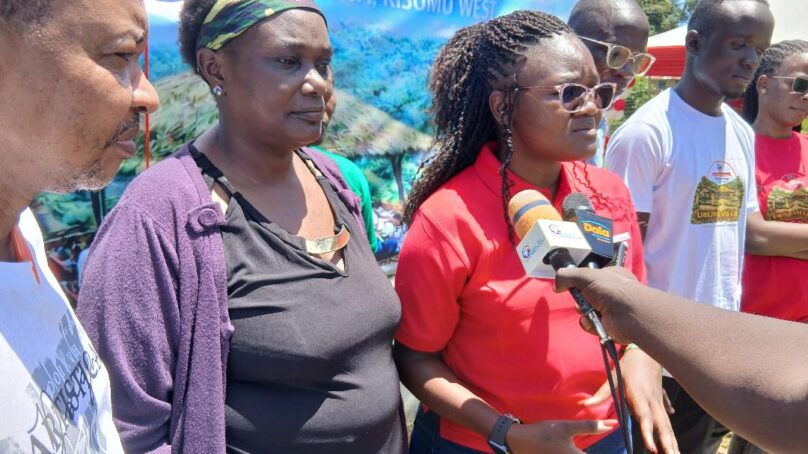
Speaking in Kisumu during the launch of Obuntu Village – a safe space for human rights defenders – the activists accused the government of side-lining local communities and pushing forward with the project amid uncertainty over key details, including the exact site of the plant.
Millicent Muchilwa, a member of the Social Justice Movement, said local people were left in the dark even as plans for the project appear to be progressing.
“We are urging the government to ensure communities are adequately informed. At this stage, there are many rumours and we do not even know where the site is, yet there is talk of ground-breaking,” she said.
Muchilwa emphasised that any acquisition of community land must be conducted transparently, with the involvement of the National Land Commission, and backed by meaningful public participation.
She further questioned the financing of the project, noting that it would rely on public funds and possibly loans whose terms remain unclear.
“This is taxpayers’ money. The public must be told where the funds are coming from and whether they will be used prudently,” she said.
The activists also raised concerns about intergenerational equity, arguing that young people—who form a significant portion of the population – have not been adequately consulted.
“Gen Zs are well informed. They must be involved, especially if they are the ones who will bear the burden of these loans in future,” she added.
Environmental concerns also featured prominently, with the group citing a review by the Netherlands Commission on Environmental Assessment, which reportedly found gaps in the Strategic Environmental and Social Assessment conducted by the Nuclear Power and Energy Agency (NuPEA).
“They were advised to go back and redo the study because it did not meet international standards. We want assurance that these concerns have been addressed,” Muchilwa said.
She pointed to global trends, noting that some developed countries are scaling down nuclear energy due to high costs and safety concerns.
“Germany has decommissioned its plants, while countries like Japan have spent billions dealing with nuclear accidents. We must ask ourselves whether we have the capacity to manage such risks,” she said.
According to Muchilwa, at least three petitions opposing the project have been submitted to both county and national authorities, but none has received a formal response.
“We have presented petitions as the Social Justice Movement, the Nyanza Business and Professional Caucus has done the same, and another has come from the Siaya community. There has been no response so far,” she said.
Haki Afrika Executive Director Yousouf Abubakar warned that they may escalate the matter through protests or legal action if the concerns are ignored. The concerns raised by the community, he said, were weighty and must be urgently addressed before commencement of works.
“We have several options, including judicial intervention similar to what happened with the Lamu coal plant, which was stopped through the courts,” he said.
Diana Mercy who coordinates the anti-nuclear campaign, said community engagements conducted in areas likely to be affected reveal widespread opposition to the project.
“Residents, including farmers and beach management unit members in areas like Rarieda, have expressed fears about environmental degradation and the impact on Lake Victoria,” she said.
She added that many locals question the government’s push for nuclear energy when Kenya has significant renewable energy potential.
“They are asking why we cannot first exhaust existing resources like solar, wind and hydropower before introducing a project that could pose serious risks,” she said.
Mercy also questioned the rationale behind proposed benefits such as the establishment of a cancer treatment facility in the area.
“Why bring a cancer unit if there is no risk from radiation? That raises more questions among the community,” she said.
The activists are now calling on the government to prioritise transparency, public participation and environmental safeguards before proceeding with the project, warning that they will continue mobilising resistance if their demands are not met.
- A Tell Media / KNA report / By Chris Mahandara


About author