


They said Isaiah Cole was finally free. Papers signed, chains gone, the war over. But some kinds of bondage don’t end with ink. When Isaiah came back to Georgia in 1866, the field still smelled of blood, and the men who once owned him were wearing badges, robes and smiles.
They called themselves the Order of Restoration.
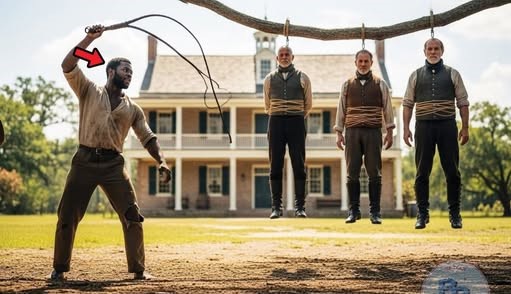
He called them by another name, unfinished business. One by one, he hunted them through the ruins of their own plantations, dragging them to the same trees where his mother once swung. The town’s folk whispered of a ghost, part soldier, part curse, stringing up his old masters before dawn, and carving three words into the bark. The freed remember.
But vengeance burns both ways. And by the time the sun rose over the hanging tree, the south had learned one truth it could never forget. When the hunted learns to hunt back, no master sleeps easily again.
The train whistle faded as Isaiah Cole stood alone on the platform, watching the iron beast disappear into the distance.
Milling Ville station lay half rebuilt around him, splintered wood patched with fresh lumber. Confederate graffiti painted over with hasty coats of whitewash. The Georgia air hung heavy with moisture, wrapping him in a familiar blanket of heat that his three years in the north had not erased from his memory.
Isaiah adjusted the wrapped rifle against his shoulder and gripped his carpet bag tighter. His Union coat, faded blue wool that had seen the blood fields of Petersburg, marked him as something both foreign and threatening in this conquered land. Yet he wore it deliberately, like armour. The station clerk, a thin white man with yellowed eyes, watched him from behind a barred window.
“You lost, boy,” he called out.
The old habit of command still fresh in his mouth despite the war’s outcome. Isaiah met his gaze without blinking.
“No sir, I know exactly where I’m going.”
His voice was quiet but carried the weight of certainty. The clerk looked away first. The road south stretched before him like an old scar cutting through red clay earth.
Isaiah walked with the measured pace of a man conserving strength for a longer journey. Each step stirred dust that settled on his worn boots. Union issued, like the coat, three miles to the Bowmont plantation. Three miles closer to the first name on his list. The land around him bore the marks of war and neglect. Abandoned fields where cotton once grew now sprouted wild brambles and stunted pine saplings.
Nature reclaiming what men had torn from her. An overturned wagon, its wooden wheels rotting, lay beside a dried creek bed. The charred remnants of a farmhouse stood like blackened ribs against the sky. When Isaiah crested the small rise that led toward town, he spotted the laundry house, a squat building with sheets and union suits flapping on lines strung between cedar posts.
Steam poured from large tubs in the side yard where several women worked in the heat. The oldest among them, a heavy set woman with arms strong from decades of ringing, looked up as his shadow fell across her washing.
“Lord have mercy,” she breathed, straightening her back with one hand pressed against her spine. “Is that Isaiah Cole I’m seeing, or has the heat finally cooked my brain?”
Isaiah’s face softened slightly.
“It’s me, Aunt Millie.”
“Well, don’t just stand there like judgment day. Come give an old woman a proper greeting. She wiped soapy hands on her apron and opened her arms. Isaiah set down his belongings and embraced her carefully, feeling the solid warmth of her, a piece of his past that hadn’t been destroyed. She smelled of lie soap and cornbread. “Scents that pulled at memories he’d tried to bury.
“You look like you’ve seen the whole world, and none of it pleased you much,” Aunt Millie said, stepping back to examine him. Her eyes caught on the rifle. “You ain’t come back to start trouble, have you? We got enough of that already.”
“Just came to see home,” Isaiah said, the lie sitting uneasy on his tongue. Aunt Millie snorted.
Ain’t much home left to see. Yankees burned most of Bowmont down when they came through. Nothing there but ghosts and chimney stones now and the people, the old masters. Isaiah kept his voice casual, but his fingers tightened around the carpet bag handle. Aunt Milliey’s face darkened. She glanced at the others, then pulled Isaiah closer to the shade of an oak tree.
“They’re back. Not all died in the war like we hoped. Judge Bowmont lost his money, but not his life. He’s living in town now in that yellow house by the courthouse playing the good citizen to the union men.”
“Crane?” Isaiah asked, his voice dropping lower.
“That devil,” Aunt Millie spat on the ground. “Got himself a little shack out past Mon road. Drinks most days. Whips coloured folks for pay when plantation owners want to pretend the old ways still stand. Isaiah’s jaw tightened and Reverend Whitlow got himself a new church, smaller than before, but his congregation’s growing again. Preaches redemption on Sundays, then meets with the others at night.”
She leaned closer.
“They got a brotherhood now. Call themselves the order of restoration. Masked men riding after dark, leaving messages for those they think stepping above their place.”
“Restoration,” Isaiah repeated, tasting the bitter word.
“You stay clear of them. You hear me?” Aunt Millie gripped his arm. “Whatever you’re thinking.”
It won’t bring her back. Isaiah looked down at her weathered hand.
“Who said I was thinking anything?”
“I know that look. Saw it on your face the day they took Sarah,” her voice softened. “Your mama wouldn’t want you throwing your freedom away on vengeance.”
A muscle in Isaiah’s cheek twitched. “My mama isn’t here to want anything. They made sure of that.”
Aunt Millie sighed. “Freed men’s boarding house is two streets over. Blue door. Tell Jeremiah I sent you. He’ll give you the attic room cheap.”
She pressed something into his palm. A small corn cake wrapped in cloth.
“Eat something. You’re too thin.”
Isaiah nodded his thanks, tucked the food away, and continued toward town.
The name Bjumant still arched over the plantation’s rusted gate when he passed it an hour later. Beyond stretched acres of overgrown fields surrounding the blackened skeleton of the main house, only the stone foundations and a few charred beams remained. Like the rib cage of some massive beast picked clean by vultures, he didn’t linger.
By dusk, Isaiah had secured the attic room, a narrow space with sloped ceilings and a single window that faced south toward the swamps. He laid his rifle on the bed and untied the wrapping, revealing a Springfield model 1861 that had seen him through battles from Gettysburg to Richmond. From his carpet bag, Isaiah withdrew a small wooden box.
Inside lay a folded piece of paper, yellowed at the creases. He opened it carefully, revealing three names written in a steady hand. Judge Silas Bowmont, Elias Crane, Reverend Josiah Whitlow. He placed the paper on the rough wooden table and cleaned his rifle with practised precision, each movement economical.
When the weapon gleamed in the fading light, he reached for the hunting knife sheathed at his ankle. The blade had once belonged to a Confederate officer who no longer needed it. Isaiah awoke before the first hint of dawn touched the sky. The attic room was dark and close, the air still with summer heat even this early.
He lit a stub of candle and opened his carpet bag again, this time removing items he’d collected over months of planning. A thread-bear black coat with two long sleeves, a worn collar that a real preacher might wear, and a Bible so well used its leather cover had softened like cloth. He dressed slowly, binding his soldiers’ posture into the humble stoop of a man of God.
The mirror showed him a different person, no longer the hard-eyed Union veteran, but a simple travelling preacher, weathered by faith and miles. Isaiah practised a gentle smile that never reached his eyes.
“The Lord’s work,” he whispered to his reflection, voice pitched higher than his natural tone. Just seeking souls to save. From his pocket he withdrew a small vial.
The apothecary in Washington had called it ludinum for sleep, but Isaiah knew its strength. Four drops for pain, 10 for deep sleep. The entire vial for a journey with no return. He tucked it carefully into the Bible, hollowed out between Revelation and the back cover. Outside, purple grey clouds hung low, promising rain.
The weather would work in his favour. Fewer people on the roads to remember his face. Isaiah slipped from the boarding house quietly, nodding to a sleepy eyed woman sweeping the front step.
“Blessings, sister,” he murmured. She crossed herself as he passed. The road to Makon stretched 30 miles south through pine forests and swampland.
Isaiah set a steady pace, his eyes scanning each bend and rise for danger. Georgia was not safe for a black man travelling alone, freed or not. The war’s end had unleashed new hatred, new ways to enforce old hierarchies. By midmorning, the first drops fell. The rain came steady, but not hard, dampening the dust and bringing out the rich smell of earth.
Isaiah had covered eight miles when a wagon approached from behind, driven by an old white farmer with a load of fence posts.
“Need a ride, preacher?” the man called, slowing his mules. Isaiah touched the brim of his hat.
“The Lord would bless such kindness, friend?” The farmer helped him up. “Where you headed?”
“Wherever souls need saving,” Isaiah replied, opening his Bible as if in devotion. “The pages fell to Exodus.” For I will pass through the land of Egypt this night, and will smite all the firstborn in the land of Egypt, both man and beast.”
The farmer drove him another 12 miles before turning off toward his own land. Isaiah walked six more before catching another ride with a freeman hauling chickens to market. By late afternoon, the rain had stopped, leaving the world steaming and green.
As the sun lowered, Isaiah found himself on the outskirts of Crane’s property. A neglected 10 acres with a shabby cabin set back from the road. A broken fence surrounded a yard strewn with rusting farm equipment. Two skinny hounds barked at his approach.
“Shut up, you mangy beasts!” a voice bellowed from inside. The door banged open, and Elias Crane stumbled onto the porch, a jug in his hand.
The years had not been kind to him. Once barrel-chested and powerful, he was now bloated and loose, his face mottled with broken veins and sun damage. The same cruel eyes, though small and mean under heavy brows.
“What you want?” Crane called, squinting at Isaiah.
Isaiah bowed slightly, keeping his face partially shadowed by his hat. Reverend Jackson, sir, I’m travelling through spreading the Good Lord’s word.
He held up his Bible. The storm looks to be returning. “I wonder if I might shelter in your barn for the night. I can offer prayers for your soul in return.”
Crane spat a stream of tobacco juice into the dirt.
“Ain’t got no barn, got a shed,” he eyed Isaiah suspiciously. “You one of them northern preachers come to tell us our business with the colorards?”
“No, sir,” Isaiah replied.
Georgia, born and raised, just a humble servant trying to bring comfort in hard times. Isaiah stepped closer, his head still bowed. “The Lord loves all his children, even those who’ve strayed from his path.”
Crane snorted. “Lord ain’t done much for me lately.”
He took another pull from his jug. “Two hired hands coming by later. You can wait in the house till then. Don’t much like eating alone.”
Thunder rumbled in the distance as Isaiah followed Crane inside. The cabin stank of unwashed clothes, spilled liquor, and something else. A deep rot that seemed to have seeped into the walls. A single room with a plank table, a lumpy bed, and a stone fireplace where a cast iron pot bubbled with something that might have been stew.
“You drink, preacher?” Crane asked, dropping heavily into a chair.
“On occasion?” Isaiah said, settling across from him. “To wad off the damp?”
Crane grinned, revealing tobacco stained teeth.
“Now that’s my kind of preaching.”
He pushed his jug across the table. Help yourself. Isaiah pretended to sip, then reached into his coat.
I have something finer, if you’d permit me. He produced a silver flask purchased in Washington for this very purpose, a gift from a grateful congregation. Crane’s eyes lit with greed.
“Don’t mind if I do.” He grabbed the flask and took a deep swallow of the whiskey within.
Whiskey Isaiah had carefully prepared the night before. Outside the first heavy raindrops began to fall.
Crane drank more, growing talkative as the poison worked through his system.
“You ever owned slaves, preacher.”
Never had the means,” Isaiah said softly.
“Best investment a man could make,” Crane slurred, his eyes growing unfocused.
“I was overseer for Bowmont Plantation. Knew how to handle them, break them when needed. He leaned forward, his breath sour, had one woman, thought she was special, practised witchcraft, turned the others against us.
Isaiah’s hand tightened on his Bible. “What happened to her?”
Crane laughed, a wet, ugly sound. Made an example, tied her to the oak, and lit the kindling myself. Screamed like the devil was taking her. Maybe he was. He took another long drink.
“You look familiar.” “Perhaps we’ve met in another life,” Isaiah said, watching as Crane’s eyes widened, then rolled back.
The flask slipped from his fingers. His body slumped forward onto the table. Isaiah checked for a pulse, faint, but fading. He had perhaps an hour before Crane’s hired hands arrived. Enough time. The rain came down in sheets as Isaiah dragged Crane’s heavy body across the muddy yard to a massive oak tree that stood like a sentinel at the property’s edge. The same tree it had to be.
He could almost hear his mother’s screams beneath the thunder. With practised hands, Isaiah fashioned a noose from the rope he’d carried coiled around his waist beneath the preacher’s coat. He hoisted Crane’s body up, securing the rope to a thick branch. The overseer’s feet dangled a foot above the ground, twitching as the last life drained from him.
Isaiah drew his knife and carved deep into the bark. The freed remember. Back at the cabin, he gathered his few belongings, then set his preacher’s coat and Bible ablaze in Crane’s fire pit. The flames leapt high, hungry for the dry wood. No evidence would remain of Reverend Jackson. No one would remember his face. The storm had reached its full fury when Isaiah stepped outside again.
Lightning split the sky, illuminating Crane’s body, swinging from the oak, a dark silhouette against the electric blue. Thunder crashed so loudly it seemed to shake the earth. Isaiah stood in the downpour, letting the rain wash over him. His body trembled, not from cold, but from something deeper. A release of tension he’d carried for years.
“One down,” he whispered, as lightning flashed again, turning night to day for one brilliant moment. The borrowed mule picked its way carefully along the muddy road. Two days of rain had turned the Georgia clay into slippery red slurry that sucked at hooves and boots alike. Isaiah sat straight in the saddle. His face set like stone beneath the brim of his hat.
The animal belonged to a freedman who’d offered it without questions, needing only to see the haunted look in Isaiah’s eyes, to understand some debts can only be paid in blood. Thunder still rumbled in the distance, though the storm had mostly passed. The skies remained the colour of a fresh bruise.
Trees dripped steadily onto Isaiah’s shoulders, but he barely noticed. His mind travelled between two places. The swinging body he’d left behind and the names that still waited on his list. As Milligville came into view, Isaiah noticed unusual activity along the road. Riders passed him. White men with grim faces, some carrying rifles.
They barely glanced at him. Just another black man on a mule. Not worth their attention. But Isaiah knew what drove them. News travelled fast in these parts, especially news of the hanging kind. The town itself buzzed like a disturbed beehive. Isaiah dismounted at the edge of the square, leading the mule to a water trough. Two white women stood nearby, their voices carrying clearly, found him yesterday morning, swinging from his own oak tree.
The first woman said, “Jenkins, who delivers milk, saw him first, nearly died of fright.”
“They’re saying it was spirits,” the second woman whispered. “Revenge from beyond or those freed men’s bureau agitators,” the first said sharply, stirring up the colours against their natural betters.
Isaiah dipped his hat to hide his smile and led the mule toward the livery stable.
The freedman who owned it, a barrel-chested man named Moses, took the reins with a knowing look. Then some excitement while you’ve been gone, Moses said quietly. “Overseer from old Bowmont Place found himself at the wrong end of a rope.”
“Is that so? Isaiah replied,” his voice neutral.
Moses nodded slowly. “Folks saying it’s the start of something. Saying someone’s out there settling old scores. He paused. You need anything? You let me know. Isaiah pressed a silver coin into Moses’s palm. Appreciate the care of the mule. The Magnolia Inn stood at the centre of town. Its white columns still grand despite the war’s passage. Isaiah had no intention of staying there.”
Black men weren’t welcome in such establishment. But the tavern beneath it served anyone with coin. He wanted to hear what was being said. Wanted to feel the fear spreading through the white community. The tavern smelled of wet wool, whiskey, and woods.
Conversation died as Isaiah entered, but the barkeep, a one-armed Confederate veteran, merely nodded toward a small table in the corner.
- A Tell Media report / Source: Fame News


About author