



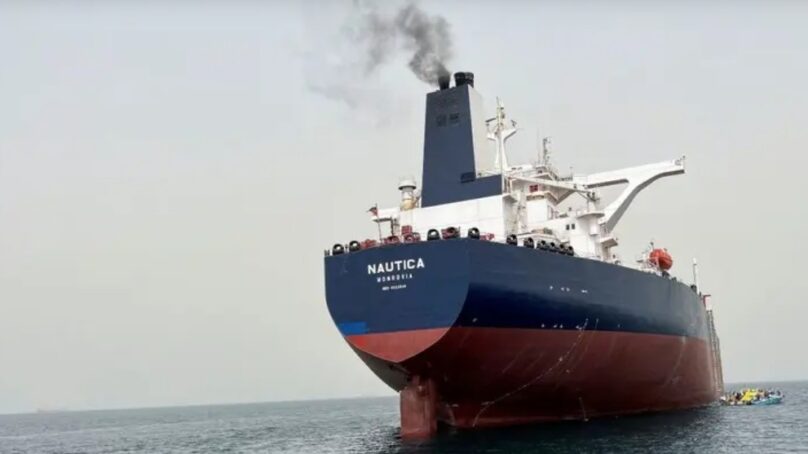
Amid ongoing disruptions to maritime shipping in the Middle East due to the closure of the Strait of Hormuz, Somali pirates are demanding a $10 million ransom for the release of an oil tanker recently hijacked off the coast of Yemen, multiple security officials say.
The oil tanker MT Eureka was sailing with the flag of the West African nation of Togo when it was seized by pirates at 5:00am on May 2 near the port of Qana in Yemen in the Gulf of Aden. The hijacking was the second within a 10-day stretch, following the hijacking of another ship, the HONOUR 25, by pirates on April 22.
The seven hijackers steered the MT Eureka towards Somali waters, anchoring near the fishing town of Murcanyo at the tip of the Horn of Africa near the Yemeni island of Socotra, according to three security officials from the semi-autonomous Somali region of Puntland.
Once anchored, more armed gunmen boarded the tanker, according to security officials who spoke with Drop Site. The officials estimate that there are roughly 30 pirates currently holding the oil tanker and its crew hostage.
A total of 12 crew members are also on board – including eight Egyptians, according to a statement about the hijacking from Egypt’s Ministry of Foreign Affairs.
Embassy officials from Somalia’s diplomatic mission in Cairo also said the Egyptian government has been exerting pressure on Somalia’s ambassador to Egypt, Ali Abdi Aware, over the fate of the hijacked tanker and its crew.
“The ambassador was making calls to Puntland security officials for information on the whereabouts of the hijacked oil tanker, because the pirates kept turning the AIS (automatic identification system) on and off to avoid their movements being detected at sea,” a Somali embassy official told Drop Site by phone.
The official requested anonymity as they were not cleared to speak with the press. A second Somali embassy official, as well as multiple Puntland security officials, confirmed that the Egyptian government had been urgently pressing for the release of the ship and its crew.
Prior to being hijacked near the Yemeni port of Qana, the MT Eureka had departed the port of Fujairah in the United Arab Emirates, which has been targeted by drone and missile strikes during the ongoing conflict, including in attacks earlier this month amid an official ceasefire.
The MT Eureka is owned by Royal Shipping Lines Inc, which is a shipping company based in the UAE, and was carrying 20,400 barrels of diesel as cargo, according to Puntland security officials. Royal Shipping Lines Inc has not issued a statement on the hijacking.
The hijacking of ships around the Horn of Africa by pirates based in Somalia has long been a major threat to shipping transit in the region, although local and international anti-piracy efforts have helped reduce the number of ships successfully targeted each year.
The issue of piracy first emerged after the collapse of the Somali government during a civil war in the 1990s, and destruction of the livelihood of coastal fishermen by international trawlers who capitalised on Mogadishu’s lack of control of its territorial waters.
The hijacking of cargo ships and tankers has since become a dangerous yet lucrative business.
According to elders from the same clan as the hijackers who spoke with Drop Site, the pirates on board the MT Eureka have been engaged in talks with negotiators in both Egypt and the UAE to secure the release of the ship and its crew in exchange for a significant ransom.
According to the clan elders, the hijackers are demanding a $10 million ransom to free the ship, after temporarily dropping their price to $7 million, before raising it again due to “frustration mounting over the pace of the talks.”
While Egyptian and Emirati governments have condemned the hijacking, Somali authorities have remained tight-lipped. The European Union Naval Force (EUNAVFOR), which oversees anti-piracy operations in Somali waters has also acknowledged the hijacking, warning that “vessels operating in the area are strongly advised to maintain heightened vigilance.”
A fresh wave of hijackings by Somali pirates in the Indian Ocean and Gulf of Aden in recent months has been fuelled in part by the closure of the Strait of Hormuz due to the US-Israeli war against Iran and subsequent blockade of the waterway.
The war has forced more international maritime traffic to circumvent Hormuz by navigating through the Red Sea and passing by Somali waters, putting vessels and crews at increased risk of being ambushed by armed gangs still engaged in piracy in the region despite efforts to snuff out their activity. One other oil tanker has been hijacked, and similarly a cement carrier remains held by pirates as well in Somali waters, while a UAE flagged dhow was released last week by Somali pirates.
The other hijacked oil tanker, HONOUR 25, which is carrying 18,500 barrels of oil, is also being held in the waters near Bander Beyla. In the time since the hijacking of HONOUR 25, the Puntland regional government has imposed a land blockade and moved troops to the coastal area near where the ship is anchored to prevent supplies and more armed men from boarding as reinforcements.
Somali piracy reached its peak from the period between 2005 and 2011 before declining following the deployment of naval assets to the region by the European Union, NATO, the US, and other states seeking to police Somali waters.
But efforts to combat piracy have been seriously undermined by ongoing wars and military interventions that have drawn resources away from anti-piracy efforts, while further destabilizing one of the most economically vital maritime transit regions in the world.
In late 2023, when the Ansarallah movement in Yemen began attacking international ships in the Gulf of Aden and Red Sea in response to the Israeli attack on the Gaza Strip, international naval forces shifted their focus from fighting piracy to helping combat their activities.
This diversion of focus allowed armed groups active on the Somali coast to exploit the security gap and resume hijackings of commercial vessels. In early 2024, Somali pirates hijacked MV Abdalla, a cargo ship from Bangladesh. That was followed by the hijacking of a Chinese trawler in November of that same year.
While negotiations over its fate reportedly continue, Puntland security officials have confirmed that MT Eureka remains anchored 3.7 nautical miles off the coast of the fishing town of Bander Beyla.
- A Tell Media report / By Mohamed Gabobe Drop Site News reporter


About author