


Kenya Secondary School Heads Association (KESSHA) has raised the red flag over the worsening financial crisis in public secondary schools and blamed the inadequate and delayed government capitation for ever escalating debts, non-payment of staff and challenges in sustaining learning programmes.
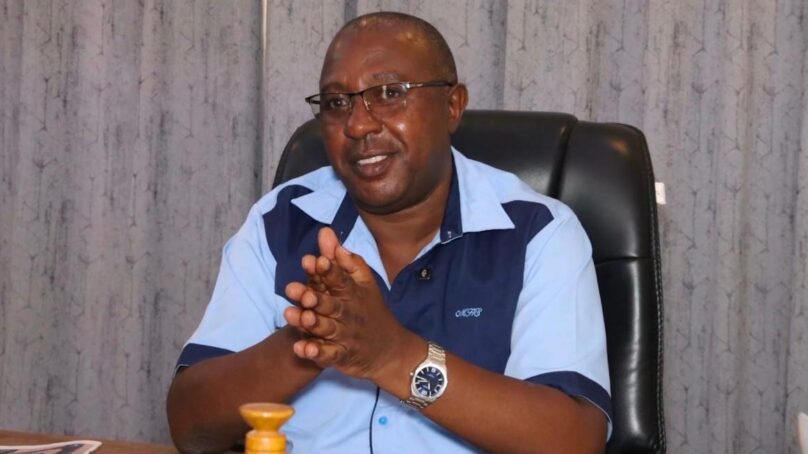
KESSHA National Chairman Willie Kuria said schools are receiving far less than the approved annual capitation, forcing principals to struggle with basic operational costs that cover food, electricity, water, salaries and learning materials.
Kuria, who is the Principal of Murang’a High School, said the government is expected to provide about Ksh22,000 per learner annually, but schools have so far received only about Ksh14,000 per student in their accounts this year.
He explained that although the ministry of education indicates that Ksh16,000 has been released per learner, Ksh2,000 is retained centrally to facilitate programmes such as procurement of textbooks, co-curricular activities and SMASSE, leaving schools with significantly less money to meet their day-to-day expenses.
The situation, he said, becomes direr in third term, when schools are expected to intensify preparations for national examinations.
“This term, schools received about Ksh2,890 per learner, which is too little considering the activities undertaken during the third term, including preparations for the national s examinations,” Kuria said.
He noted that the funding gap has persisted over the years as schools failed to receive the full capitation last year.
According to Kuria, the ministry released Ksh15,383 per learner last year but after Ksh811 was retained, schools received only Ksh14,572 in their accounts, leaving institutions with substantial financial deficits.
The chair said the cumulative funding shortfall has left many schools struggling with unmanageable debts, with some non-teaching staff going for months without salaries. Kuria further observed that the capitation rate has not been reviewed since 2017 despite a sharp rise in the cost of food, electricity, water and other essential commodities.
“The cost of running schools has increased significantly over the years. Schools are expected to provide quality education yet the cost of food, learning materials and utilities has continued to rise,” he said.
KESSHA chairman said the financial strain is particularly severe in public day secondary schools that depend almost entirely on government capitation to finance their operations. He accused a section of political leadership of misleading parents into believing that day secondary education is completely free, arguing that the policy position has made it difficult for school administrators to mobilise additional resources where necessary.
Kuria said the situation has left principals in a difficult position, particularly where the government funding received is insufficient to meet operational costs.
“How is a principal expected to run a school when the government allocation is supposed to cover Ksh22,000 per learner, yet only about Ksh14,000 reaches the school account?” he posed.
He warned that continued underfunding could compromise the quality of education, including participation in co-curricular activities and learner performance. Some schools, he said, have been forced to limit their participation in sports and other co-curricular programmes because of financial constraints.
Kuria also raised concern over declining student enrolment in some secondary schools following the transition of learners under the Competency-Based Education, saying institutions with low enrolment are finding it increasingly difficult to meet their fixed operational costs.
He noted that schools with larger student populations are able to benefit from economies of scale, while those with fewer learners face greater financial pressure.
KESSHA has now called on the ministries of education and national treasury to prioritise the timely release of the full capitation allocation to schools. Kuria said adequate and predictable funding is critical in enabling schools to settle bills, pay workers, provide learning materials and maintain a conducive learning environment.
“The government must ensure that schools receive sufficient capitation if it expects principals to effectively manage institutions and maintain quality education,” he said.
The principal warned that unless the funding gap is addressed, public secondary schools could continue accumulating debts, placing additional pressure on administrators and potentially undermining the gains made in expanding access to education.
- A Tell Media / KNA report / By Bernard Munyao

About author