



How engineered political ignorance and illiteracy undermine human transformation and progress: The case of Uganda
Abstract: This article examines the systematic engineering of political ignorance and illiteracy as deliberate instruments of governance that fundamentally undermine development, transformation, and progress in Uganda. Advancing the foundational principles that Beyond Scope Does Not Exist – Everything is connected to everything else and The Whole is Greater than its...

Just as he doesn’t know his date of birth, Ugandan President Museveni does not have clear plan for a nation teetering hopelessly on brink of collapse
Corruption remains endemic. Uganda scored just 25 points out of 100 on Transparency International’s 2025 Corruption Perceptions Index, ranking 148th out of 180 countries. When public resources are siphoned off by elites while the majority struggle for basic sustenance, the legitimacy of the state erodes. The socioeconomic magma chamber builds pressure with every corrupt transaction, every unfilled job vacancy, every empty stomach, and every young woman sold into servitude in the Gulf.

It’s time Uganda realised ‘learning without thought is labour lost and ‘thought without learning is intellectual death
Intellectuals are the heartbeat of society. This means they are the source of its vitality, its capacity for self-reflection, its ability to learn from its mistakes, and its potential for transformation. Without intellectuals, a society becomes stagnant, unable to question its own assumptions, unable to imagine alternatives, unable to course-correct when it veers off track.
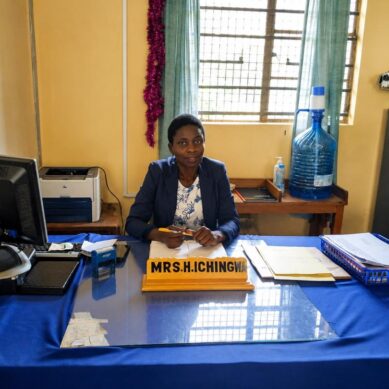
Exams council sets July 30 ‘equivalency’ test deadline for candidates hoping to sit secondary examinations without primary school grades
Kakamega Central Sub-County Adult Learning and Education Officer Hana Namakavuli-Ichingwa said validation, equivalency and registration for the qualifying test are ongoing and will close on July 30, 2026. The examination will be administered online at county education offices in September.
Mt Kenya University’s global technology award winners warn AI misuse compromises intellectual development
Mount Kenya University (MKU) teams of students and their instructors who won global awards in America and China recently have warned young people on rising misuse of artificial intelligence (AI) technology. A team of four MKU students has put the institution on the spotlight after securing a finalist award at...

New research findings expose gaps in Kenyan police professionalism and posits that little has changed 25 years since restoration of political pluralism
All these challenges brought to the fore issues related to overlap of functions, perceived competition and questions as whether they should continue existing in their current forms, consequently leading to the question of the merger of the two forces.

Nairobi-based CEMASTEA wants teachers to use AI to improve lesson planning and curriculum delivery
Speaking during the closing ceremony of the three-day capacity-building programme for Quality Assurance and Standards Officers (QASOs) at the CEMASTEA, Karen, Nairobi, Deputy Head of Research and Innovation at CEMASTEA Clotilda Nyongesa said the centre has equipped teachers with the skills needed to integrate AI into teaching under the Competency-Based Education (CBE) framework.