
Abstract
This article argues that Uganda’s development paradigm has been fundamentally misdirected, privileging physical infrastructure over human and intellectual development. While towns and cities have grown and roads have been constructed, the intellectual foundations necessary for sustainable development have been neglected, resulting in what the author identifies as “intellectual death” – a condition where critical thinking, independent analysis and genuine intellectual engagement are systematically suppressed.
Drawing on Confucian philosophy, critiques of colonial and post-colonial education and analyses of Uganda’s political economy, the article demonstrates that without intellectual development, all other forms of development – economic, social, political, cultural, and environmental—remain incomplete and unsustainable. There is no inclusive development at all in Uganda’s current model; development is neither participatory nor people-centred.
The article proposes a radical reimagining of higher education through the establishment of Team Sciences Centres modelled on the Timbuktu tradition, which would foster interdisciplinarity, crossdisciplinarity, transdisciplinarity and extradisciplinarity while remaining open to non-academics and ordinary people. The article concludes that a country that does not value intellectual development in the 21st century will not belong to the next 74 years and beyond.
Keywords: Intellectual Development, Uganda, Critical Thinking, Higher Education, Team Sciences, Interdisciplinarity, Timbuktu Model, Museveni, Human Development, Intellectual Death
- Introduction
Development is fundamentally human development. This is not a mere philosophical assertion; it is an ontological truth. When we speak of development, we speak of the development of human beings – their minds, their capacities, their communities, and their possibilities. Yet in Uganda today, we have progressively lost sight of this foundational truth. We have become mesmerised by the glitter of physical infrastructure – the roads, the bridges, the soaring buildings in our towns and cities – while the intellectual and human foundations upon which sustainable development must rest lie neglected, decaying, and increasingly silenced.
This article argues that Uganda faces a crisis not of resources or technical capacity, but of intellectual development. Without a deliberate, systematic and sustained commitment to intellectual development, all other forms of development – economic, social, political, cultural, and environmental – remain incomplete, unsustainable and ultimately hollow.
As Confucius taught centuries ago: “Learning without thought is labour lost. Thought without learning is intellectual death” (Confucius, Gems of Chinese Literature). Uganda, I submit, is experiencing precisely this intellectual death, and the consequences are devastating for our national development.
Furthermore, there is no inclusive development at all in Uganda’s current model. Development is neither participatory nor people-centred; it is imposed from above, designed by a select few, and implemented without meaningful engagement with the communities it purports to serve. This exclusionary approach is both a cause and a consequence of the intellectual death I describe.
- Misplaced emphasis: Physical development at the expense of human development
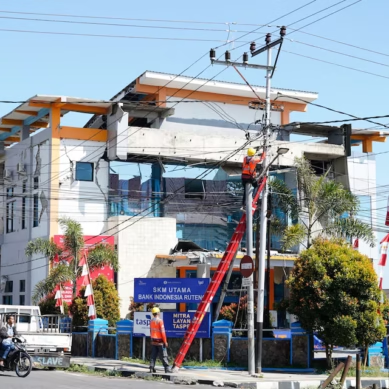
In Uganda, emphasis has increasingly been placed on physical development, including technological development. The results are visible in the sprawling towns and cities that have emerged across the country. Roads are tarmacked, electricity generation has increased from 60 megawatts in 1986 to more than 2,000 megawatts today and buildings rise on every corner. President Museveni himself has articulated this vision, distinguishing between “development, which is public infrastructure, and wealth, which is household income” (Museveni, 2025). Infrastructure, in his framework, includes “roads, electricity and telecommunications” as examples of “economic infrastructure” (Museveni, 2026).
Yet buildings without minds to fill them with purpose are like rocks in a desert. They produce nothing. They are consumptive, not productive. They stand as monuments to a development philosophy that privileges concrete over consciousness, structures over sensibilities, and roads over reasoning. The budget figures tell a stark story.
In the 2025/26 financial year, the Ministry of Works and Transport received Ush698 trillion. The energy sector received Ush1.586 trillion. Defence received Ush3.737 trillion. Yet education received only Ush497.1 billion for recurrent costs and Ush322.9 billion for development projects – a combined total of approximately Ush820 billion, less than one-sixth of what was allocated to roads alone (Parliament of Uganda, 2025; Uganda Broadcasting Corporation, 2025).
The 2024/25 budget, approved at Ush72.136 trillion, allocated Ush18.9 trillion to recurrent expenditure and Ush34.7 trillion to development expenditure. Within this, governance and security received Ush9.1 trillion (24.2 percent), while human capital development—including education, healthcare, and skills development—received Ush9.9 trillion (26.3 percent) (Parliament of Uganda, 2024). On the surface, this appears balanced. However, the trajectory is concerning. The 2026/27 budget proposes a 14.2 percent cut to human capital development, falling to Ush9.9 trillion. Infrastructure spending, meanwhile, continues to rise (Daily, 2026).
As one parliamentary report noted, investments in social sectors “have a direct impact on poverty and income inequality” (Parliament of Uganda, 2024). Yet Uganda’s Human Development Index (HDI) value stands at only 0.582, ranking the country 157 out of 193 countries worldwide – still lagging behind the global average of 0.756 (United Nations Development Programme, 2025). This is the legacy of a development model that privileges physical infrastructure over human and intellectual development.
- Many dimensions of development
Development is multidimensional. To speak of development is to speak of:
- Economic Development – the higher form of politics, yet meaningless without political development of the people
- Social Development – education, health, agriculture, and energy
- Environmental Development – the stewardship of our natural heritage
- Ecological Development – the sustainable relationship between human communities and their ecosystems
- Political Development – the cultivation of democratic citizenship, debate, and political education
- Cultural Development – the preservation and evolution of our diverse cultural traditions
- Moral Development – the ethical formation of citizens
- Spiritual Development – the cultivation of meaning, purpose, and transcendence
- Mental Development – the sharpening of cognitive capacities
- Intellectual Development – the cultivation of critical thinking, reasoning and independent thought
In Museveni’s Uganda, however, the President’s own philosophy of development appears to prioritise infrastructure development first, environment second and people last – their communities and societies receiving attention only insofar as they serve the grand project of physical transformation. Social development is not a priority. Consumption by government politicians and other officials takes up a large slice of the national budget, while social development languishes.
4. Crisis of intellectual development
4.1 What is intellectual development?
Intellectual development is the cultivation of the human capacity for critical thinking, critical reasoning, critical alternative analyses, and critical comparative analyses. It is the preoccupation of intellectuals – those individuals, whether within or outside academia, who subject received wisdom to rigorous examination, who question dominant narratives, who imagine alternative possibilities, and who refuse to accept the world as given.
Intellectuals are the heartbeat of society. This means they are the source of its vitality, its capacity for self-reflection, its ability to learn from its mistakes, and its potential for transformation. Without intellectuals, a society becomes stagnant, unable to question its own assumptions, unable to imagine alternatives, unable to course-correct when it veers off track. Intellectuals are not merely commentators; they are the conscience of society, the memory of its past, and the architects of its future.
4.2 Academicism versus intellectualism
It is crucial to distinguish between academicism and intellectualism. Academics are not necessarily intellectuals, and not all intellectuals are academics. Academicism – the pursuit of paper qualifications, the accumulation of degrees, the adherence to disciplinary orthodoxies – can coexist with intellectual death. Scholasticism – the rigid adherence to established doctrines and methods – can masquerade as intellectual rigour while stifling genuine thought.
In Uganda today, we are witnessing the devaluation of intellectualism and the preference for academicism and scholasticism accompanied by paper qualifications. The National Council for Higher Education notes that “although university enrolment has grown, many graduates still struggle with practical problem-solving and decision-making” (National Council for Higher Education, 2023).
The current university structure, function, and governance “do not adequately promote critical thinking, critical analysis, genuine interaction, sustainability and the production of future-ready professionals for the 21st century and beyond” (Oweyegha-Afunaduula, 2023a).
Critical thinking and critical reasoning are diminishing. Questioning is diminishing. Presidential dogmas and chosen narratives dominate development discourses, leaving little room for alternative analyses. As one observer noted, “the intellectual space in Uganda continues to shrink. Besides, it is being invaded and depressed by the military. The process of de-intellectualisation of the academics and the academia is spiralling upwards” (Muwado, 2025).
4.3 Silence of intellectuals
Intellectuals still exist in Uganda, but most are fearful and silent. I have elsewhere written extensively on the silence of intellectuals – a silence born of fear, co-optation and the systematic narrowing of spaces for public intellectual engagement (Oweyegha-Afunaduula, 2023b). As one recent analysis put it: “At most university campuses, the conspiracy of silence reigns, reflecting the National Resistance Movement’s (NRM’s) success story in separating academicism or scholasticism from intellectualism on university campuses” (The East African Watch, 2024).
The consequences are devastating. Many once useful public intellectuals and academics “have fallen prey to the men and women of power and are now victims of intellectual death. They have been convinced that what matters is not intellectual production, but owning property and sacks of money” (Muwado, 2025).
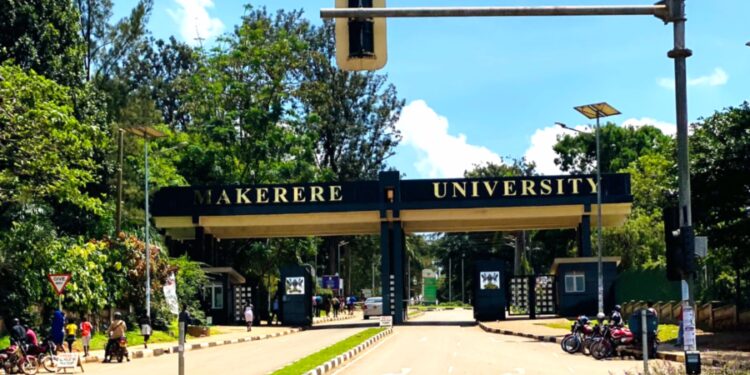
Makerere University, once the intellectual jewel of East Africa, “is bleeding its intellectual lifeblood: professors and senior lecturers are leaving in a quiet but steady exodus” (The Observer, 2025). At the root of this exodus “is not just policy, but fear – creeping, corrosive fear that silence is safer than speech, that compliance is more valued than contribution” (The Observer, 2025).
4.4 Confucius and intellectual death
Confucius, the great Chinese philosopher, understood the relationship between thought and learning with remarkable clarity. “Learning without thought is labour lost,” he taught. “Thought without learning is intellectual death” (Confucius, Gems of Chinese Literature). Uganda today is experiencing both sides of this equation. Our education system increasingly produces graduates who have learned without thought – who have accumulated information without developing the capacity to analyse, critique, or apply it. At the same time, our public sphere discourages thought without the safety of established learning – original thinking, independent analysis, and critical engagement are increasingly risky enterprises.
4.5 Traditional intellectual in Uganda
Traditional intellectuals in rural communities were once an important aspect of Ugandan society. They were the elders, the storytellers, the custodians of knowledge, the interpreters of custom, and the critics of power. They played a vital role in maintaining social cohesion, transmitting cultural values, and providing counsel to leaders. As Patrick William Otim (2024) has documented in his study of Acholi intellectuals, these individuals “were not simply creatures of British colonial self-interest; neither was their power invented by the coercive logic of indirect rule” (Otim, 2024, p. 8). They were autonomous agents of intellectual and political life.
However, following British colonialism, these traditional intellectuals began to decline in importance. Colonial education systems privileged Western knowledge and marginalised indigenous intellectual traditions. The colonial project, as Otim (2024) argues, fundamentally “problematises how historians address power in Africa” (p. 12) by displacing indigenous intellectual authority.
Today, traditional intellectuals have been largely replaced by NRM propagandists, who posit themselves as the thinkers of society. These propagandists serve not as independent critics but as defenders of the status quo, articulating and legitimising the dominant narratives of the regime. The space for genuine intellectual engagement has been narrowed, and those who dare to speak independently risk being silenced, marginalised, or worse.
5. Why Uganda needs intellectual development
5.1 Without intellectual development, development is stale and empty
When intellectual development is absent, everything is done politically, technically, and militarily without room for questioning and alternatives. Yet questioning and alternatives are precisely what we need to influence development and effect change. Development becomes a technocratic exercise – roads are built, budgets are passed, policies are implemented – but without the critical reflection that would ensure these interventions actually serve human needs.
President Museveni’s “No Change” policy has killed intellectual development. When change is foreclosed as a possibility, when the existing order is presented as inevitable and unalterable, intellectual development becomes not merely unnecessary but dangerous. Yet it is precisely in times of rapid change – and the 21st century is a time of unprecedented change – that we most need intellectuals to help us navigate uncertainty and imagine new possibilities.
As TND News Uganda (2025) documents, the emergence of electoral authoritarianism in Uganda since 1996 has been accompanied by the systematic suppression of intellectual independence and critical thought. The fusion of military and civilian governance structures has further narrowed the space for intellectual engagement (TND News Uganda, 2025).
5.2 Without intellectual development, philosophising dies
Philosophy and philosophizing are needed to create a critically thinking and critically reasoning society, especially in a world dominated by the Internet and Artificial Intelligence (AI), which is the case today. In a world of information overload, algorithmic curation, and AI-generated content, the capacity for critical thinking is more important than ever. We need philosophers – not in the narrow academic sense but in the broader sense of individuals who ask fundamental questions about meaning, truth, justice and the good life.
Uganda’s HDI, while improving, still ranks low at 157 out of 193 countries. Mean years of schooling have doubled, but this quantitative improvement has not been matched by qualitative intellectual development (United Nations Development Programme, 2025). We are producing more graduates but fewer thinkers.
5.3 Without intellectual development, there is no meaningful innovative development
Innovation requires the capacity to think differently, to question established assumptions, to connect disparate ideas, and to imagine new possibilities. Without intellectual development, there will be recycling of knowledges, wisdoms and insights – a collective worship mentality will develop where the leader is taken as a god, where the status quo is unquestioned, and where innovation is stifled.
President Museveni has criticised Uganda’s intellectual community “for not doing enough to address the country’s pressing socio-economic challenges” and accused them of being “overly theoretical and disconnected from the realities facing the country” (Museveni, 2025). Yet this criticism itself reveals a fundamental misunderstanding of the role of intellectuals. Intellectuals are not technicians; they are not meant to provide immediate solutions to practical problems. Their role is to think, to question, to imagine alternatives and to keep alive the possibility that things could be different. When intellectuals are reduced to problem-solvers within an unquestioned framework, intellectual development dies.
5.4 Without intellectual development, fear and silence reign
Without intellectual development, fear and silence reign. Development choices, avenues, and destinations fall into the hands of a few unquestionable men and women who will even posit themselves as the only thinkers. They will choose each other to dominate everything, again, against the collective fear and silence of the people.
The dismissal of student leaders “reflects a deeper crisis in our education system. One that risks replacing critical thinkers with silent followers and nurturing monsters of power instead of champions of democracy” (Muwado, 2025). When intellectual development is at its lowest ebb, human rights abuses increase rather than reduce. Oppression, repression, and suppression become integral to leadership and governance. The fusion of the military and civility becomes easier to achieve.
5.5 Without intellectual development, Uganda does not belong to the next 74 years
A country in the 21st century that does not value intellectual development does not belong to the next 74 years and beyond. Others will think and choose for it. In an increasingly competitive global knowledge economy, countries that fail to cultivate intellectual capital will be left behind. They will become consumers of ideas produced elsewhere, followers rather than leaders, subjects rather than agents of history.
Uganda will boast of many academic graduates that will not have been prepared to be future-ready, since their training and instruction in disciplinary silos will not have been rethought. Business-as-usual education will produce business-as-usual graduates who are ill-equipped to face the challenges of the 21st century (Oweyegha-Afunaduula, 2023c).
6. Way forward: from university to intervarsity
We need academic intellectuals who can think quickly to reintegrate knowledge, innovate new and different knowledges and professions, and prepare actors who will not fear the future – including the loss of careers and tenures.
We need a new breed of adequately developed intellectuals to guide the necessary shift from university to interversity, crossversity, transversity and extraversity; from disciplinarity and multidisciplinarity to the team sciences of interdisciplinarity, crossdisciplinarity, transdisciplinarity and extradisciplinarity.
The new strategies and cultures of knowledge production—interdisciplinary science, crossdisciplinary science, transdisciplinary science, and non-disciplinary science – are what I have elsewhere called “the Team Sciences” (Oweyegha-Afunaduula, 2023d). They emphasise integration of the sciences (humanities or arts, social science, and natural science). As one analysis notes, “unless we adopt team sciences (inter-, cross-, trans-, and extra-disciplinarity), we will continue generating complexities we cannot solve” (Uganda Radionetwork, 2026).
This is important because the ever-rising influence of the Internet and AI demands that we have people in the knowledge world and the professions who are more comfortable with multivariate analysis than with the narrow certainties of disciplinary silos. Otherwise, we shall have institutions fit for the past rather than the future – institutions comfortable with disciplinary gatekeeping of the slow professors and univariate analyses, when our interconnected wicked problems require different academics and intellectuals free to think and think independently in different types of institutions.
6.1 Team sciences centre: A Timbuktu model for the 21st century
With intellectual development, we shall have pertinent and relevant thinkers to help us rediscover the Timbuktu model to replace the siloed universities. By the 12th century, Islamic universities such as those in Timbuktu, Mali, “attracted students from the remotest corners of Africa and beyond, providing interdisciplinary education that accommodated religious knowledge with practical experience” (PBS, Wonders of the African World). More than 25,000 students studied under a rigorous 10-year program of astronomy, medicine, mathematics and more (Cambridge University, 2010).
A Team Sciences Centre with all the new institutions of interversity, crossversity, transversity, and extraversity coexisting and gaining from each other can be established along the model of Timbuktu. Such a centre would bring together scholars from different disciplines to address complex problems, would encourage the cross-pollination of ideas, and would produce graduates capable of thinking across boundaries.
Critically, this centre would be open to non-academics and ordinary people – farmers, artisans, community leaders, and citizens from all walks of life. The Timbuktu model was not an ivory tower; it was deeply embedded in the life of the community. Our Team Sciences Centre must similarly break down the barriers between the university and society, recognising that intellectual development is not the preserve of a privileged few but a collective enterprise that requires the participation of all.
Muwado (2026) has articulated a manifesto for a new higher education that defends the arts, social sciences, philosophy, and the team sciences as essential to Uganda’s future. This manifesto calls for “a new higher education in the 21st century and beyond” that would “rethink the very purpose of education in a world of rapid change and uncertainty” (Muwado, 2026). The Team Sciences Centre would be the institutional embodiment of this vision.
7. Conclusion
Uganda stands at a crossroads. On one path lies the continued pursuit of physical development – roads, buildings, and infrastructure – while intellectual development atrophies. On the other path lies a deliberate and sustained commitment to intellectual development – the cultivation of critical thinking, the nurturing of independent thought, and the creation of spaces for genuine intellectual engagement.
The choice should be clear. Without intellectual development, all other forms of development are incomplete. Without intellectuals, society loses its capacity for self-reflection, its ability to imagine alternatives, and its potential for transformation. Without intellectual development, Uganda will remain a consumer of ideas produced elsewhere, a follower rather than a leader, a subject rather than an agent of its own history.
The work we do today – the intellectual foundations we lay, the critical thinking we cultivate, the intellectual freedom we defend – will determine whether Uganda enters the 22nd Century as a sovereign, thinking nation or as a subject of others’ histories.
As Confucius taught, “To know what you do know, and to know what you do not know – that is true knowledge” (Confucius, Gems of Chinese Literature). Uganda must recognise what it does not know—and what it has allowed itself to forget – about the importance of intellectual development. The future belongs to those who think, who question, who imagine, and who dare to be different. Uganda must belong to that future.
The Centre for Critical Thinking and Alternative Analyses Uganda stands ready to contribute to this vital national project. We call upon all Ugandans – academics and non-academics, intellectuals and citizens, young and old – to join in the struggle for intellectual development. For without it, we have no future worthy of the name.
- A Tell Media report / By Oweyegha-Afunaduula, F.C. is a Ugandan academic, intellectual, and public scholar. He is the founder of the Centre for Critical Thinking and Alternative Analyses Uganda, an institution dedicated to promoting critical thinking, intellectual development, and alternative analyses of Uganda’s development challenges. He has written extensively on the need for educational reform, the importance of intellectual freedom, and the imperative of reimagining higher education for the 21st century. His work emphasises the interconnectedness of all knowledge and the necessity of moving beyond disciplinary silos to address the complex challenges facing Uganda and Africa.
References
Cambridge University. (2010). Learning from the Islamic Educational Past for the Western Academic Future. CRASSH.
Confucius. Gems of Chinese Literature: Miscellaneous Extracts. Wikisource.
Museveni, Y. (2025). Jinja: President Museveni Concludes Busoga Campaign Trail. State House Uganda.
Museveni, Y. (2026). Museveni Tells Kampala Youth to Turn City Development into Personal Wealth. KCCA.
Muwado. (2025). Silence of the Intellectuals of Uganda: The Implications.
Muwado. (2026). In Defense of the Arts, Social Sciences, Philosophy, and the Team Sciences: A Manifesto for a New Higher Education in the 21st Century and Beyond.
National Council for Higher Education. (2023). Critical Thinking in Curriculum Practice: The Case of Higher Institutions of Learning in Uganda.
Otim, P. W. (2024). Acholi Intellectuals: Knowledge, Power and the Making of Colonial Northern Uganda, 1850–1960. Ohio University Press.
Oweyegha-Afunaduula. (2023a). Uganda: Need for Education of New Sciences for Wholesale Living. Watchdog Uganda.
Oweyegha-Afunaduula. (2023b). Science For Survival, Critical Thinking And Genuine Interaction. Uganda Today.
Oweyegha-Afunaduula. (2023c). Being an Interdisciplinary, Crossdisciplinary, Transdisciplinary, and Extradisciplinary Scholar and Team Scientist. Uganda Radionetwork.
Oweyegha-Afunaduula. (2023d). Uganda: The Silence of Intellectuals. (Published article referenced).
Parliament of Uganda. (2024). Parliament Passes Ush72.136 Trillion Budget for FY 2024/2025.
Parliament of Uganda. (2025). Finance Tables: Ush40.7 Trillion Budget for FY 2025/26.
PBS. Wonders of the African World: Road to Timbuktu.
Pml Daily. (2026). Budget 2026/27: Government Bets on Industrialization to Solve Unemployment.
The East African Watch. (2024). Why the Current Academic Knowledge Workers Cannot Be Liberation Leaders: The Case of Uganda.
The Observer. (2025). The Quiet Exodus: Why Top Professors Are Fleeing Makerere.
TND News Uganda. (2025). The Emergence of Electoral Authoritarianism in Uganda: 1996 to Date.
Uganda Broadcasting Corporation. (2025). Government Proposes Ush40.7 Trillion Budget for 2025/26 to Boost Key Sectors.
Uganda Radionetwork. (2026). Urgent Need for Interdisciplinary Approaches: Embracing a New Culture of Knowledge Integration.
United Nations Development Programme. (2025). Human Development Report 2025: Uganda.


About author