


Residents at the epicentre of Congo’s Ebola outbreak are pinning their hopes on experimental treatments after researchers began a highly anticipated study in early July of two possible Ebola treatments in hopes of fighting the still-growing outbreak.
At the Ebola treatment centre inside Bunia’s Evangelical Medical Centre, in eastern Congo’s Ituri Province, the launch of the research was marked by urgency rather than ceremony on Thursday.
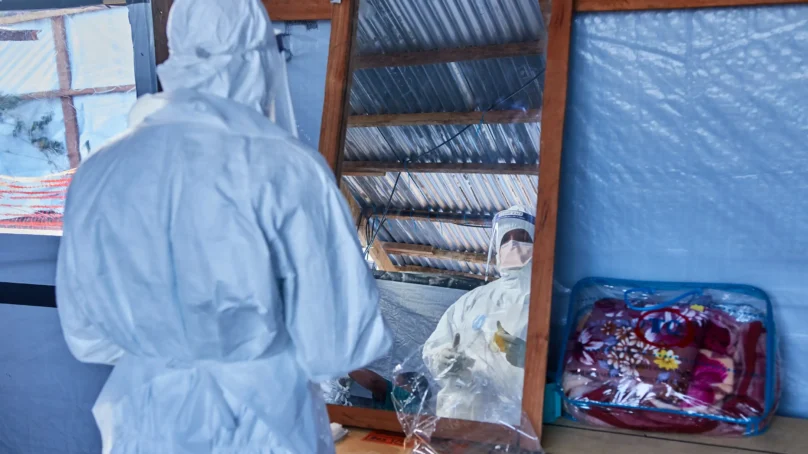
As ambulances continued arriving and healthcare workers disappeared behind layers of protective equipment into isolation wards, the research effort unfolded quietly alongside the daily struggle to keep patients alive.
The virus causing this outbreak, called Bundibugyo, is less common than others that cause Ebola disease and there are no specific treatments or vaccines for it. Already more than 1,400 people have been diagnosed and 438 have died, the head of the World Health Organization, Tedros Adhanom Ghebreyesus, said on Thursday.
The WHO announced the same day that the first participant had been enrolled in the study, which is evaluating whether the antiviral remdesivir, the experimental antibody treatment MBP134 or a combination of both can improve survival among patients infected with the Bundibugyo virus.
The WHO-supported trial is a collaboration between Congo’s national biomedical research institute INRB, Britain’s Oxford University, Antwerp’s Institute of Tropical Medicine and other international health groups.
The current trial focuses on confirmed Ebola patients receiving treatment inside specialised treatment centres, Prof Yap Boum, head of emergency response at the Africa Centres for Disease Control and Prevention, said. A second phase of the trial will include healthcare workers, close contacts and others at high risk of infection, he added.
Prof Placide Mbala, coordinator of laboratory activities for the current outbreak, said the research could continue for between three and six months, depending on how quickly the outbreak evolves.
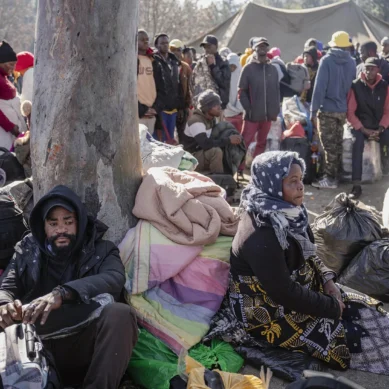
For many residents of Bunia, the beginning of the trial offers a rare source of encouragement after weeks of mounting fear. Audrey Tengetenge, a Bunia resident, said the trials represent a “light at the end of the tunnel.”
“I hope everything moves very quickly so that we can find relief. We want nothing more than an end to this very dangerous disease, which continues to bring us grief,” Tengetenge said.
Gladys Munguro, who survived Ebola and was discharged from an Ebola treatment centre two weeks ago, said she watched fellow patients die while she was receiving care. Now recovered, Munguro said she hopes the new treatments being tested will improve patients’ chances of survival and help bring the outbreak under control.
“This experimental phase is necessary for us,” Munguro said. “I will volunteer as soon as the next phase of the trials begins for high-risk individuals.”
But researchers will have to overcome pockets of deep mistrust in the community.
Nelson Dhebi, a shopkeeper in Bunia, said that while he supports scientific research and hopes for a positive outcome, he is concerned that the treatments could cause deaths and thinks that others should be part of the trials.
“Research should be carried out first and foremost on our elected representatives, as they are the ones who represent us,” he said.
Community mistrust is just one of the many challenges that have hindered the response to the outbreak. Overcrowded treatment centres in hard-hit areas, delays in people seeking care and insecurity restricting access to conflict-affected areas remain major obstacles.
Nearly three out of four Ebola deaths during this outbreak occur outside of health centres, Pierre Akilimali, incident manager at Congo’s National Institute of Public Health said Friday.
Currently, the study is being offered only at Bunia’s Evangelical Medical Centre in Ituri. The region has been hit hard by violence, including toward healthcare workers trying to fight the virus, which spreads by contact with sick patients’ bodily fluids.
Officials plan to expand the trials to other locations once it is safe to do so.
- An AP report s


About author