

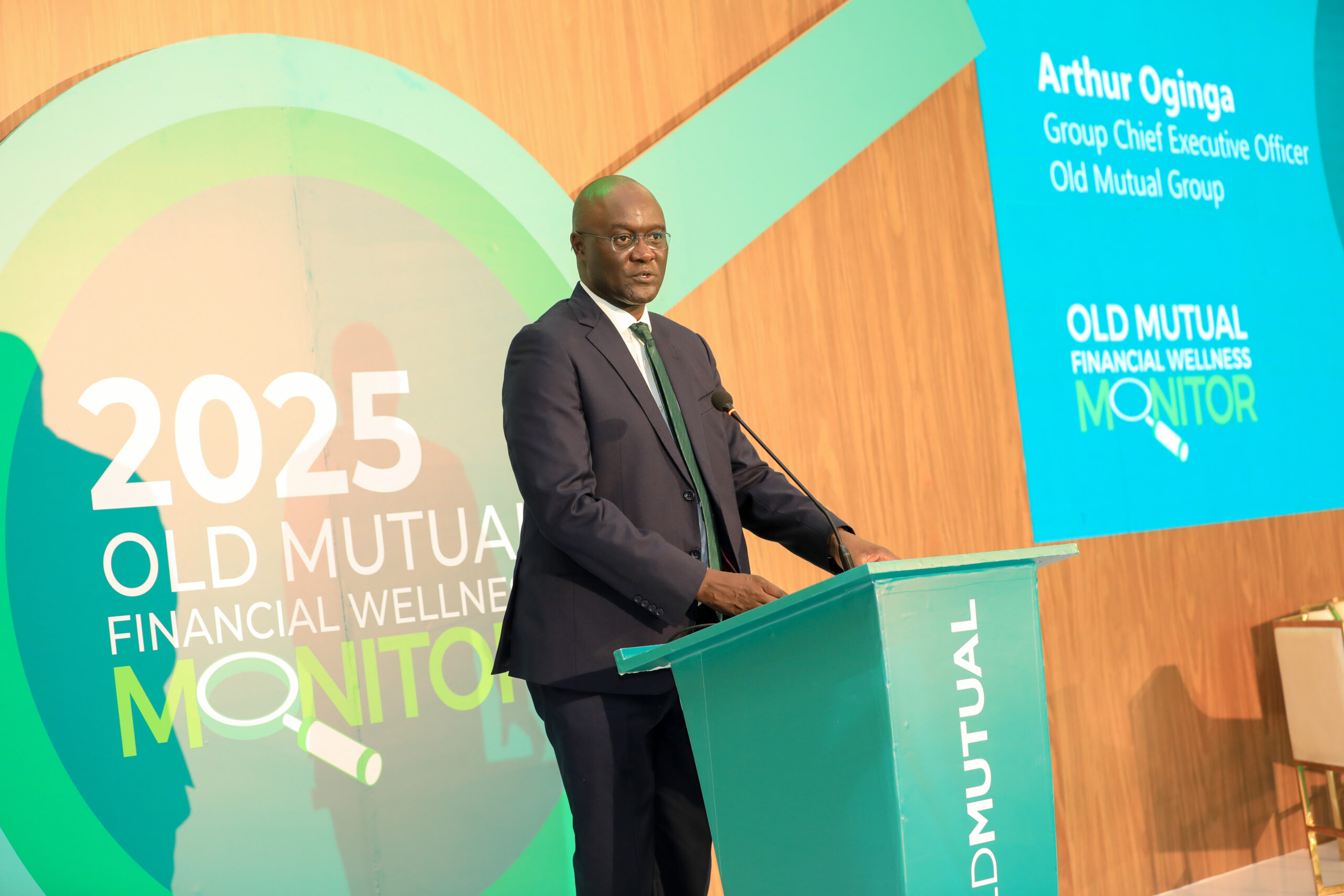
Young working Kenyans are showing strong signs of financial recovery, driven by improving earnings, income diversification or ‘mpango wa kando’, entrepreneurship and a strong commitment to saving, according to the Old Mutual Financial Wellness Monitor 2025 report.
The report, released ahead of International Youth Day, shows that young people aged 20-29 are the most optimistic age group surveyed, with 83 per cent expressing a positive financial outlook. Financial satisfaction among the group increased from 34 per cent in 2024 to 45 per cent in 2025, while 42 per cent reported earning more than they did a year earlier.
The findings also reveal a generation adapting to financial pressure by broadening how it earns, saves and manages money. However, significant gaps remain in emergency savings, business insurance, retirement planning and debt management.
“Young Kenyans are increasingly building their financial lives around more than one source of income. The growth of entrepreneurship and diversified income streams demonstrates strong adaptability. However, this progress needs to be matched with greater financial protection, emergency savings and long-term planning if it is to translate into sustainable financial security,” Annie Nibishaka, Old Mutual Group Head of Marketing and Communications, says.
Income diversification is emerging as an important contributor to financial resilience among young working Kenyans. Nearly a quarter (24 per cent) earn income from multiple sources, while 39 per cent own or part-own a business.
Beyond employment and business income, 27 per cent of young people also report receiving financial support from family, friends and local or international networks, highlighting the continued role of social support systems in household financial resilience.
Saving remains a priority among young people, with 97 per cent reporting that they have a savings goal. Their leading priorities include starting a business (29 per cent), investing in an existing business (23 per cent), funding their children’s education (21 per cent), buying a home (20 per cent) and building an emergency fund (19 per cent).
However, the findings reveal a gap between saving intentions and overall financial resilience. Only 36 per cent say their savings could sustain them for more than three months if they lost their income.
Long-term financial preparedness also remains limited. Only 26 per cent are actively saving for retirement, with the main barriers including feeling too young to start (35 per cent), insufficient funds (30 per cent) and retirement not being an immediate priority (30 per cent).
Consequently, 79 per cent lack confidence that their retirement savings will ultimately be adequate. The protection gap is also evident among young entrepreneurs. Despite the high level of business ownership, 79 per cent of businesses owned by young respondents are uninsured.
Despite improving financial confidence, many young people continue to face pressure from debt and the cost of everyday living. More than four in ten (43 per cent) have borrowed to meet everyday expenses, while 26 per cent have taken loans to purchase stock or fund business activities. Mobile money loans remain the most common source of credit at 39 per cent.
Sports betting is emerging as a notable financial behaviour. Nearly a quarter (23 per cent) of young respondents participate in sports betting, with participation significantly higher among young men.
Economic motivations are a major driver, with 55 per cent of those who bet saying they do so to make extra money.
However, the findings also highlight the financial risks involved, with 40 per cent of young gamblers reporting that they have experienced financial difficulties as a result of gambling.
The findings point to a strong demand for practical financial education. Seventy-eight (78) per cent of young working Kenyans say it is important for financial institutions to provide financial information and tools that can help them improve their financial knowledge.
- A Tell Media report / By Wangechi Wahome


About author