



How stars aligned for Bob Marley: Peter Tosh had banished him but 48 hours later Marley started journey to becoming Reggae music messiah
Oxone Dodd directed every note; every breath; every word. The shy teenager who had been standing in the corner was gone. In his place was an artist who had finally found his voice. When they finished, Oxon Dodd played back the recording.

Because she’s Black: Why first Black woman to sing for four American presidents died in penury, buried in unmarked grave
Everywhere she went, critics raved. The Washington Post described her voice as “clear and bell-like… Her low notes are rich and sensuous with a tropical quality. The compass and quality of her registers surpass the usual limitations and seem to combine the height and depth of both soprano and contralto.”

Slave diaries-1: Master Robert Thornton’s seven children all looked exactly like Samuel, a field slave he never knew was their father till his death
The psychological weight was almost unbearable. He knew Thomas was his son. Knew it the way any father knows his child through recognition existing in his bones. He counted them. Seven. Seven children. Seven lives. He had helped create. Seven faces proving his fatherhood to anyone willing to look. But he also knew with absolute certainty that acknowledging this in any way would mean immediate death, not quick death.
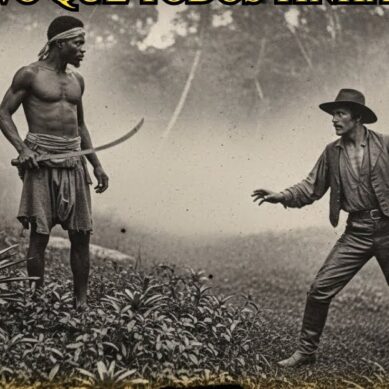
When a slave, Mateus, escaped from Brazil’s Recôncavo Baiano sugar fields, his master sent 100 hunters to pursue him – none returned alive
Colonel Rodrigues was not just a farmer; he was one of the richest and most feared men in the region. His sugar mill produced sugar for export on a large scale, and he proudly proclaimed to all who knew him that he maintained absolute order and discipline among his captives.
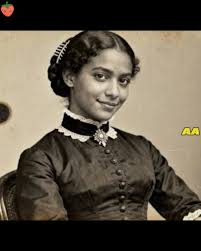
Black Widow-4: Freed slave girl, on a mission to avenge her mother’s murder, faces Ku Klux Klan White supremacists
Josephine said, “I want you to know why you’re going to die. I want you to know that this isn’t random violence or crazy criminals. This is justice. It’s not perfect. It’s late and it’s outside the law because the law let us down. But it’s still justice.”

Black Widow-3: My mother died begging them for mercy, did the Ku Klux Klan white supremacists show her any?
No matter what happened next, whether she lived or died trying to escape, she had already done something very important. She had shown that the knights were not invincible, that justice could find them even when the law couldn’t and that there were consequences for being cruel, even in a world built to protect the cruel.

Black Widow: Freed slave Celeste Defrain harboured revenge and exacted it by seducing, slitting throats of 11 White men
People found it hard to put into words what it was about her that made them uneasy. She was always tidy and behaved properly, but there was something about her that made them feel uneasy. The coloured workers at the hotel were more helpful, but only when they were asked in private and promised safety.
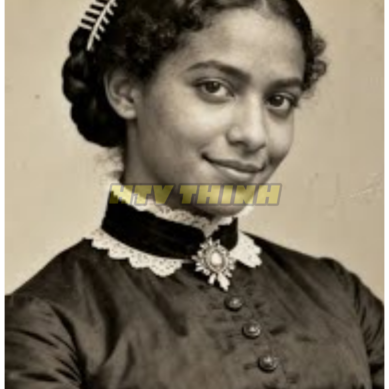
After abolishment of slavery, a Black widow sought revenge by seducing, killing 11 Ku Klux Klan men – White supremacist hate group
Thomas Brousard, who owned 1,500 acres of cotton fields east of town that weren’t doing well, ran into her outside the general store on a Wednesday afternoon. She was looking at a piece of fabric and moving her gloved hands over it with skill. He said he would help.

How three White widows bought a Black slave at Charleston Slave Market in 1857 and made him a gigolo, then jealousy set in
The house on Longitude Lane operated under rules that defied conventional Charleston dynamics. Samuel wasn’t assigned to manual labour. He was given a well-furnished room on the second floor. Catherine explained the arrangement: the three widows had formed a “domestic cooperative.” Wealthy, but without male heirs or husbands to give them social legitimacy, they needed something specific.
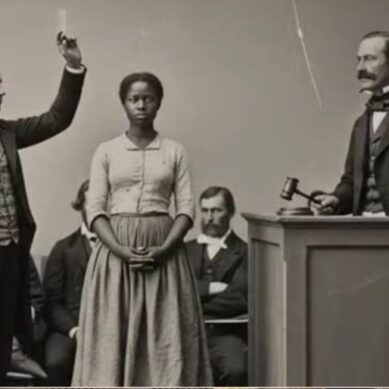
How problems retrace way home: Land owner bought slave girl ‘for less than price of cup of coffee’, she turned out to be his own wife’s blood
In the dim light of the kitchen, the housekeeper took a damp cloth to Nora’s wrist. She wiped away years of dirt until the faded blue scrap showed clearer. The letters on it stood out just enough now to read: MB. The housekeeper’s breath caught. Her mind flew to another piece of cloth packed years ago in a trunk that had belonged to Miss Margaret Beaumont before she became Mrs. Caldwell.