

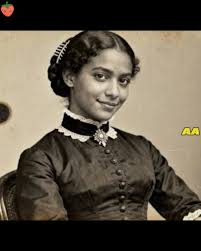
The Freriedman’s community knew where Celeste Defrain alias Josephine Budro was, and they would definitely riot if she died. But Josephine had not given any such orders.
In fact, she had told Isaiah to keep everyone away from the courthouse so that she could deal with the consequences of her actions on her own. The knights, on the other hand, didn’t know that.
They only knew that there were a lot more people of colour than white people in Brobridge, that racial violence could spread quickly, and that they were trapped in a building that could easily become a tomb.
Sheriff DVO asked, “What do you want?”
Josephine said, “I want you to know why you’re going to die. I want you to know that this isn’t random violence or crazy criminals. This is justice. It’s not perfect. It’s late and it’s outside the law because the law let us down. But it’s still justice.”
Then in a voice that showed no emotion but was completely sure, she told the story of every crime, every attack, every murder and every act of terror that these four men and their dead friends had done.
She named the victims, described what happened, and gave dates and places with the same level of detail as a court document. She had spent four years gathering this information, double-checking every detail, and making sure that when this moment came, there could be no denial, no evasion, and no claim of mistaken identity.
The knights listened in horror as she told them everything they had done wrong. Each man had heard about some of the crimes on their own, but when they were all put together and spoken in chronological order, they painted a picture of systematic terror that was almost too cruel to bear.
This is what they did.
They had made this mountain of pain, death and destruction with lives ruined, innocent people killed, and families torn apart. Until now, they had never had to face the consequences of what they had done.
“You’re confessing,” Judge Theod said, trying to get things back under control. Everything you’ve just said is a confession to multiple murders. We have witnesses. These guards heard every word.”
Josephine smiled, “Then arrest me. Put me on trial. Let me testify in court about everything I’ve just said. Let me call witnesses from the freed men’s community. Let me introduce evidence about every crime these men committed. Let’s have a public trial where all of this comes to light. I’m sure the federal authorities in Baton Rouge would be very interested.”
The judge didn’t say anything. Even if she was found guilty, a public trial would ruin them. The scandal would be complete and permanent.
There was a real chance that sympathetic northern newspapers would pick up her case, that she would become a cause and that the trial would show the whole system of terror that had ruled Louisiana since the end of the war.
DVO asked again, “What do you want?”
“I want what everyone else wants,” Josephine said. “I want justice, but since the law won’t give it to me, I’ll have to settle for balance. Seven of you are dead and four of you are still alive. I’ll make you an offer, but I don’t expect you to accept it. You can turn yourselves into the federal government, confess your crimes in public, face trial in prison and have your reputations ruined. Or you can refuse and take your chances against me. Those are your only choices.”
“How about if we arrest you right now?” Jessup asked. “If we hang you tonight and say you attacked us, then you’ll have to explain to Marshall Hullbrook why you killed a woman without a trial in secret in the middle of the night.”
She hit back, “You’ll have to deal with the investigation, the scrutiny and the questions about why she targeted you specifically. You’ll have to take the chance that federal troops will come in and impose martial law. And you’ll have to live with the fact that the Freriedman’s community will eventually get their revenge one way or another, now or 10 years from now.
“Is that a risk you want to take? The standoff went on for a long time with seconds turning into minutes and the tension building until it felt like the air was vibrating with it.”
And then out of the blue, Judge Theat laughed, a tired, bitter sound.
“She is right,” he said. “We don’t have any good choices. We never did. The moment we decided that the law didn’t apply to us and started down this path, we guaranteed this ending. Maybe not this exact ending, but something like it. She calls it justice delayed. Maybe she’s right. Maybe this is just the bill finally coming due.”
He stood up and moved slowly as if all of his years had suddenly caught up with him. Then said:
“I won’t confess. I won’t turn myself in. I don’t have that kind of courage. But I won’t fight you anymore either. I’m done. If you want to kill me, kill me. If you want to let me live in fear for however long I have left, do that. I don’t care anymore. I’m just tired. It wasn’t exactly giving up. It was more like exhaustion.
The feeling of giving up when someone finally realises they’ve lost. The other three knights looked at him with a mix of anger and jealousy. Anger at his weakness and jealousy at his honesty.
Sheriff DVO said, “I’m not ready to die, and I’m not ready to give up.”
He pulled out his gun and pointed it at Josephine.
“You’re going to jail for killing seven men. You’ll be tried and hanged. That’s how this ends.”
But before he could move again, before things could get violent, a new sound filled the courthouse.
It was a song. There were a lot of voices coming from outside the building. The guards at the windows yelled an alarm. A crowd of freed men and freed women from all over the parish had gathered in the square.
They were holding torches and lanterns and singing hymns that had helped them get through slavery, war, and the hard years of rebuilding. They weren’t there to fight. They had come to see what happened, to make sure that everyone saw and remembered what happened in the courthouse tonight and to show that Josephine Budro was not alone. They had come to take back the courthouse which stood for law and justice. They surrounded it with their bodies and voices and refused to stay hidden any longer.
Sheriff DVO put down his gun because he knew the situation had gotten out of hand. He couldn’t shoot Josephine because it would start a riot. He couldn’t take her into custody without going through a crowd of people who saw it happen.
He couldn’t make her go away without making sure that the story would spread all over the state and that the federal government would have to step in. He knew he had lost.
On October 29, dawn broke over Bro Bridge.
The courthouse was still surrounded by Freriedman who had stayed there all night. Inside, the fight had ended, not with violence, but with a strange deal that made everyone unhappy, but somehow ended the immediate problem.
Josephine Budro left the courthouse at dawn. The guards didn’t try to stop her, and the crowd parted respectfully to let her through. She had not killed the other knights, even though she was ready to do so. Instead of revenge, she had accepted something more valuable. Recognition.
Judge Theat had written out a full confession documenting every crime committed by the Knights of the White Himalaya in Street Martin Parish, signed and dated and witnessed by his fellow Knights.
The document would never be used as evidence in any official proceeding or filed in any court. But it was there, kept by trustees in the Freriedman’s community, a sword always hanging over the heads of the men who had caused so much pain.
Josephine agreed to leave Louisiana and never come back in exchange. She agreed not to kill the other knights as long as they didn’t start terrorizing people again. If they did, the agreement would be void. She agreed to vanish and become a ghost like the mysterious Celeste Defrain, letting the story become a legend instead of a fact. It wasn’t really fair.
Three men who should have been hanged would live out their lives without being punished by the law. They were known as monsters in their community, but their wealth and connections kept them safe. But it was something.
It was an admission of guilt, a recognition of crime, and a permanent reminder that their actions had consequences. Even when the law turned a blind eye, the four knights who lived through that night never got over it.
Judge Theat quit his job and moved to Texas where he died two years later from drinking too much and being sad.
Sheriff DVO lost his bid for re-election to a group of freed men and progressive whites who finally had the guts to vote against him.
Harold Jessup sold his hotel and moved away from the state. Marcus Tibido kept publishing his newspaper, but he never got his power back. His editorials became more and more angry and out of touch with the world around him.
That fall, the Ku Klux Clan’s power in Street Martin Parish came to an end. The group broke up and disappeared without its leaders. And the promise that violence would go unpunished.
Reconstruction went on, but it wasn’t perfect or complete.
But the time of terror that had been going on since the war, finally came to an end. And Josephine Budro, who had been a tool of revenge for four years, vanished from history. Some people said she went to Mexico.
Some said she went to Canada, and some said she went to France. The truth was easier to understand and use.
She moved to New York, changed her name again, and spent the rest of her life working with groups that fought for the rights of freed men. She used her experience and intelligence to help others get through the dangerous world of post-war America.
She never talked about what happened in Brobridge in public.
She never wrote a memoir, gave interviews or tried to get credit for what she had done. She lived a quiet, simple life until she died in 1903 at the age of 47. She was buried in an unmarked grave in Brooklyn.
But in Louisiana, the story of Lav Noir was passed down from generation to generation in the Bayou Parish’s coloured communities. It became part of the secret history of reconstruction.
The stories that freed men told each other about how they resisted and survived and how regular people fought back against terrible oppression.
Over time, the details changed, got more complicated or simpler, and mixed with other stories of revenge and justice, but the main idea stayed the same.
A woman whose family was killed by the clan got revenge by killing the killers and showing that even the most powerful men could face consequences.
Historians would later argue about whether Josephine Budro was a real person and if any of the story was true. There were official records of the murders, but they said that an unknown attacker was responsible for them and was never caught or identified.
There was never any sign of the confession that Judge Theat signed, but oral histories from the 1932s do mention it.
There is no record of Celeste Defrain in New Orleans, which means she was either made up or used such a deep cover that her real identity couldn’t be found. But just because there isn’t any proof doesn’t mean there isn’t any truth.
When so much violence was carefully erased from official records, when so many crimes went unpunished and unacknowledged, and when justice for freed men was only a theory, stories like Lav Noir were very important.
They told people that they could fight back, that the powerful weren’t unbeatable, and that courage, planning, and patience could do what the law and the government couldn’t.
And sometimes in the stillness of the night, in places where memory is stronger than written history, you can still hear an old truth being passed down from grandmother to grandchild, from elder to youth.
There are debts that the law can’t settle. Courts can’t punish some crimes. There are injustices so deep that they need to be addressed outside of civilised society.
And when those times come, when people have to choose between putting up with oppression or fighting back with whatever they have, ordinary people sometimes show amazing bravery.
Seven men were killed in the summer and fall of 1872. Their throats were cut and their crimes were finally punished. Four lived, but they never got better.
And in the shadows of history, a woman named Josephine Budro found some peace.
She knew that her mother’s killer had been punished and that justice, even though it was not perfect and was bloody and outside the law, had been done.
- A Tell Media report / Source: Legacy of Strength


About author