

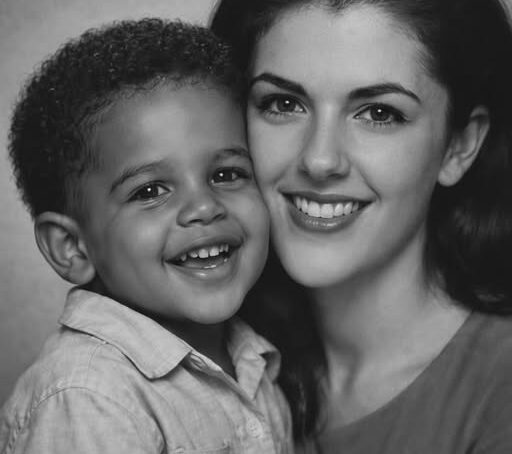
In 1963, at just 22 years old, Stanley Ann Dunham stood in a place many people judged harshly.
She was divorced.
She was raising a biracial son in a country where interracial marriage had only just begun to be legally protected nationwide – and was still socially condemned in many communities.
To some, she looked like a “poor girl” who had made reckless choices. Ann saw something else entirely. She saw freedom.
Instead of shrinking under criticism, she leaned into independence. She worked as a waitress. She stayed in school. She refused to let anyone else define the narrative of her life. The son she was raising – Barack Obama – would later describe her as the most formative influence in his life, not because she was famous, but because she was fearless.
When Ann later moved to Indonesia with her young son after marrying Indonesian geographer Lolo Soetoro, friends worried. The country was navigating political upheaval, economic instability and widespread poverty in the aftermath of violent transitions of power. It was not the safe, predictable path many would have chosen.
But Ann had never chosen the predictable path.
While her son adapted to new schools and learned a new language, Ann immersed herself in village life. She travelled into rural communities, sitting with blacksmiths, farmers, weavers and craftspeople. She listened before she spoke. She observed before she concluded.
Where outsiders often saw deprivation, Ann saw resilience. She saw skill. She saw intricate community networks. She saw discipline and pride in work.
What she did not see was laziness or lack of intelligence.
Her conclusion was simple but radical: people were not poor because they lacked ability. They were poor because they lacked access – to credit, to markets, to systems that recognised their worth.
Ann pursued that conviction academically and practically. She earned a PhD in anthropology, focusing her research on rural development and traditional crafts in Indonesia. But she did not stay confined to theory.
She helped design and support microfinance initiatives – small-loan programmes that allowed families, especially women, to borrow modest amounts of money: $50, $100, sometimes less. With that capital, they could buy materials, expand small businesses, stabilise income and send their children to school.
The repayment rates were remarkably high. The results were tangible. Entire communities shifted, not because of charity but because of opportunity.
Ann believed deeply that people did not need handouts. They needed respect. They needed systems that trusted them. Her work quietly influenced broader conversations about development economics and grassroots empowerment.
She was not seeking recognition. In fact, much of her work happened far from cameras and headlines.
In 1995, at just 52 years old, Stanley Ann Dunham died of ovarian cancer. She never saw her son take the oath of office as president of the United States. For many years, her name surfaced publicly only in relation to him.
But she was far more than someone’s mother. She was a scholar who challenged simplistic ideas about poverty. She was a fieldworker who walked into villages others overlooked. She was a woman who believed dignity was not something to be given – it was something already present.
Stanley Ann Dunham’s life is a reminder that some revolutions are quiet. They happen in classrooms.
In rural workshops. In single-parent households determined to keep going.
Sometimes the most radical act is choosing hope when the world expects you to give up.
- A Tell Media report / Source: Legacy of empires


About author