

Tanzania president grappling with accusations she killed more than 10,000 civilians in election violence
Independent human rights experts appointed by the UN Human Rights Council said in December that “disturbing reports” indicated security personnel were given “shoot to kill” orders during an enforced curfew, without saying where that information came from.

Washington’s silence on ‘foreign elections’ is what Museveni needs to retain power in Uganda
Violent youth-led protests in neighbouring Kenya and Tanzania over the past two years have underscored the risks to the government of young people’s frustration with political systems they see as corrupt and unresponsive to their needs.

Psychiatric drugging of children: How we are systematically harming children while calling it care
If you are a young person who was drugged into compliance and told there was something fundamentally wrong with you, I want you to hear this: There was not. There is not. You were a human being having a human experience within a system that profits from your suffering.

Museveni times seven: How normalisation of violence became hard currency for winning Uganda’s omnipresent leader 7th term
Ugandan President Yoweri Museveni is seeking his seventh term in office in the January 15 presidential election that kicks off Africa’s 2026 election calendar. He and his National Resistance Movement (NRM) party are running on the campaign theme of “Protecting the Gains: Making a Qualitative Leap into High Middle-Income Status.”

Error of judgment? US President Trump’s scramble for Venezuelan oil coincides with transition shrinking appetite for fossil fuel
Experts caution that a number of realities – including international oil prices and longer-term questions of stability in the country – are likely to make this oil revolution much harder to execute than Trump seems to think.
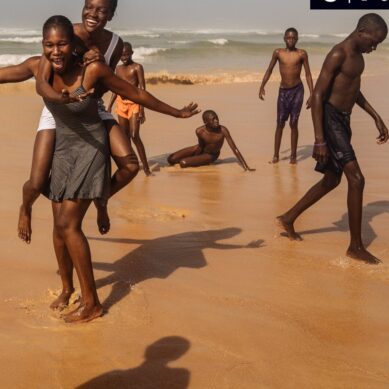
Glut of young workers: Africa is often seen through the lens of its recent past, not its potential future
The world economy needs Africa’s economic growth; but it also needs Africa to take a different path than did China. The Asian giant followed the West’s pattern of early industrialization: grow quick and dirty and worry about the consequences later. Driven for years by coal, China’s economic success has also been an environmental disaster.
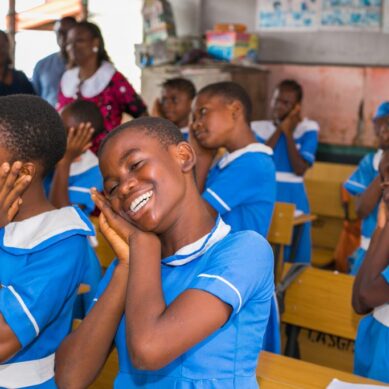
World Bank: Africa’s glut of young workers is not a threat but an extraordinary opportunity upon which prosperity of the world depends
The most recent UN estimates project that Africa’s population, driven by both falling mortality and high fertility, will grow from 1.4 billion today to 2.5 billion by 2050. With China, Japan, Korea and European countries all likely to experience a sharp decline in young workers, the world economy is set to slow sharply unless it receives a productivity boost from the billion young people being added to Africa’s population in the next quarter century. The dynamism of Africa’s youth is central to the future of the global economy.

How Kenyan MP outperforms fellow legislators, puts country’s ‘happy-go-lucky’ president to shame
He says Kiharu has 112 public primary schools and 65 secondary schools, many built from scratch in past decade during which he has been a member of parliament. He insists that every public primary school classroom is tiled.
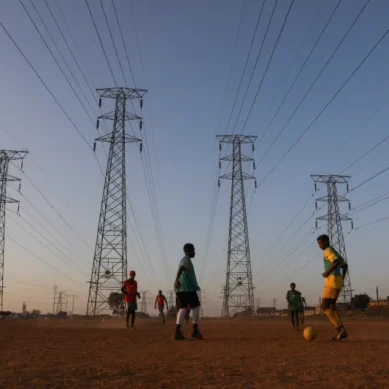
Lost decade: Why Raila’s loss of AU chairmanship and death means Africa’s failure to recover from punitive IMF and World Bank economic policies
Africa’s heads of states have been emboldened in their transformative campaign by some astonishing turn of economic and political events. In 2023, the IMF forecast that in 2024, the world’s seven fastest growing economies, and 12 of the top 15, would be African. This is a result of many factors, but primarily because the continent’s vast natural and mineral resources have emerged as an indispensable engine of growth for the increasingly hi-tech orientation of industrialised economies.

Flushing out scientists, on-boarding army: How Museveni ‘drafted’ Uganda’s fisheries, agriculture and livestock industries into wretched military
Creation of Operation Wealth Creation (OWC) is a prime example of the militarisation of conservation and the de-institutionalisation of MAAF.