
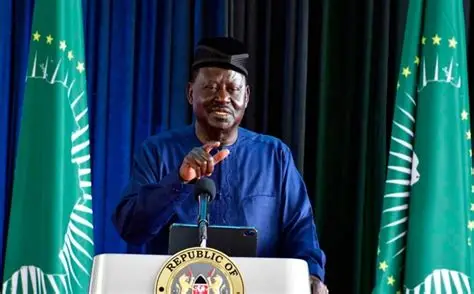
“With six countries suspended by the AU, its founding concept of African Unity has been shaken to the core.”
I was heartbroken for Africa when news came through of Raila Odinga’s failure to get the African Union Commission’s chairmanship. In preparation for filling this position, our presidents had earlier thrilled us with a “solemn pledge to appoint a visionary leader capable of promoting transformative change,” an implicit recognition that this pivotal African institution was floundering and needed extraordinary leadership.
But when it came down to it last weekend, the majority of our heads of state, in a closely contested ballot, went instead for the very opposite: continuity, and a safe pair of hands. They chose Mahmoud Ali Youssouf, Djibouti’s Foreign Minister for the last 20 years and a seasoned diplomat and technocrat who had candidly campaigned on a platform of his “priorities of financial management and governance.” He had honed these skills in Europe, studying multiple languages in France and undergoing advanced training in business management in the UK and Brussels.
This is not at all a criticism of our new chairman; all Africans will pray for his success. But it is a criticism of our leaders, who turned down Kenya’s former Prime Minister Raila Odinga, a charismatic figure known throughout the continent for his courageous struggles for democracy and for his bold Pan Africanist vision. He had campaigned for a new path to address the deepening torments of a continent being torn apart by wars and political conflicts, and the mass economic immiseration that is roiling most countries.
Most media had in fact reported that that Raila was the front runner, thanks in part to President William Ruto’s intense efforts. Even the state-owned France24 network said he had an easy path. Ironically, French President Emmanuelle Macron played a crucial role in blocking that path, mobilising Francophone leaders to elect Youssouf, partly because France has a very large military base in Djibouti. The UAE and other outside forces were of course hard at work as usual. That is still Africa’s Fate, it seems.
The major tumultuous crises apart, the African Union itself is in profound difficulties. In fact its whole raison d’etre and the sacrosanct concept of African Unity that Nkrumah-ist founders built our freedom on, have been shaken to the core: Six countries have been suspended for unconstitutional changes in government.
If there are more coups, will we suspend yet more members? Will we also begin suspending countries where regimes hold on or come to power unconstitutionally, as with rigged elections? How are we promoting real democracy, which is the best way to avoid coups? And then there is that elephant in the room: grand corruption led from the top, and so vast that it continues to escalate even when it seems everything in sight had already been grabbed.
This crisis of suspending member states came to a head last July with the seismic sundering of the powerful sub-regional 50-year-old Economic Community of West African States. Burkina Faso, Mali, and Niger pulled out from what is the continent’s most visible and influential regional economic bloc and formed their own confederation, the Alliance of Sahelian States. They did so after Ecowas threatened to intervene militarily to restore civilian rule and imposed harsh trade embargoes and sanctions.
It would be interesting to know if ECOWAS consulted with the AU Commission before taking the unprecedented step of invading one of its members. If not, did the AU make any effort to dissuade Ecowas from punishing the three so harshly?
Interestingly, the centrepiece of the commemorations celebrating the African Union’s 50th anniversary in 2013, was the adoption of our assembled heads of state of very moving “Solemn Declaration on Silencing the Guns in Africa.” The Declaration resonated across Africa, since none of our daunting challenges need to be addressed more urgently than wars, which are inflicting untold misery on tens of millions.
But there was one startling element in the 2013 Declaration: the AU was formally pledging to end all wars by 2020! Such deadlines are obviously aspirational, but setting the wildly improbable goal of ending all wars in seven years seriously damaged the AU’s credibility, and heightened cynicism about our leaders’ seriousness in addressing even the acutest challenges.
And now, ECOWAS itself was threatening to start a war! As it happens, the Oslo Peace Research Institute reported that the number of state conflicts is still much higher than when ‘Silencing the Guns’ declaration was adopted. We cannot of course blame it all on AU failure, but it needs to do infinitely better,
Many of these recent West African coups occurred mostly because the people were infuriated by the loss of sovereignty that occurs when forces of powerful countries station large number of troops there. The putative reason in Africa is to fight violent jihadists, but several recent reports have indicated that jihadism continued to grow, while internal state repression soared to prevent growing unrest. Naturally, many coup leaders met immense popular support.
The Washington Post wrote powerfully this week that across the breadth of Africa, Islamic extremism is rising, military coups are spreading and Russian influence is on the rise. While this might not win the US more Muslim friends, the reality is that the current policy is a huge failure not just for Africa but for the West as a whole. But it continues. Africa is seemingly helpless while outsiders can easily bear the small burden of its costs.
Somalia is the poster child of this crisis. This war began when American troops on a humanitarian mission in 1993 ended up going after the warlord Aideed. The rest of that is captured in the “Black Hawk Down” horror which saw a dozen Marines killed. This is the world’s longest war by far, now in its 33rd year. There seem to be no negotiations under way to bring about an end to this conflict, except through the use of force – over the horizon capacity as it is technically labelled – that has utterly failed.
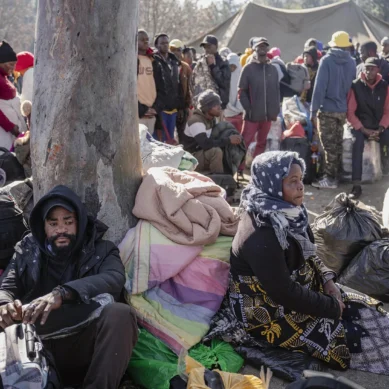
And then there is the even more ancient conflict in the Eastern Democratic Republic of the Congo, dating back to the 1960s. In its latest iteration, 3,000 people were killed in one week in late January, in the deadliest battle there in decades, as M23 rebels, supported by Rwanda according to the United Nations, ousted the Congolese army. A particularly gruesome incident was the sexual assault and killing of 165 women inmates when the jail was set ablaze.
There is no crime greater than aggressive war. For those who believe in human rights, they should prioritise the struggle against war as it destroys every single right of hundreds of thousands and even millions. Ending war should be Africa’s first priority, followed by ending extreme poverty, which has skyrocketed in Africa while falling significantly everywhere else. In 1990, Sub Saharan Africa accounted for just 15 per cent of the world’s extremely poor. Now we constitute an astounding 60 per cent. This is unacceptable.
We have of course had lots of successes as well. For example, the G20 admitted the Commission as a permanent member last year. The IMF forecast last year that the world’s seven fastest growing economies, and 12 of the top 15, would be African in 2024. But in those countries, that success will primarily benefit the very rich and the middle. The lot of the poorest will not be significantly ameliorated. That is how our world system is currently constructed. Home now to the world’s most impoverished people, Africa should try to lead the world by showing its humanity and its concern for the poorest.
For the first few decades after our independence, the OAU and its leaders, were household names. Now few know what it really does. The former AU Commission chairman, Moussa Fake, was in office eight years. When the current election round began for his replacement, I asked a few of my non-journalist friends if they knew the name of the incumbent. Not a single one did.
This is not a failure on Mr Faki’s part. His conception of his position, abetted by the presidents who appointed him, was that he should first and foremost be a diplomat working behind the scenes.
The head of the African Union Commission is the regional counterpart of the UN Secretary General. He or she should be known within Africa at least by most of us, just as the UN Secretary General is known globally, Chairman Youssouf should of course be a serious diplomat and negotiator, but Africa should see him as a fighter for all of us and for humanity.
- A Tell Media report / This article was republished with the permission of the author and veteran Kenyan journalist Salim Lone.


About author