
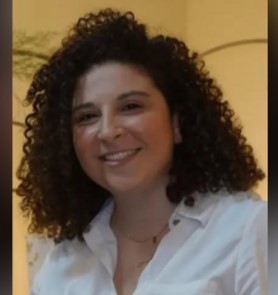
Samar Al Halal: When surveillance becomes normal, democracy turns into a show’ and humanity clatters
Samar Al Halal, a computer and communications engineer and expert in digital security and rights, authored the study Global Surveillance of Journalists: A Technical Mapping of Tools, Tactics and Threats, commissioned by the International Federation of Journalists (IFJ) and published on April 26, 2026.
The publication is part of the Brave Media project, a global consortium of nine organisations led by BBC Media Action. In this interview, Al Halal explains how the report reveals a growing, systemic infrastructure of control targeting journalists worldwide through increasingly sophisticated digital surveillance technologies.
What is the innovative aspect of this report compared to the previous published on surveillance?
This report looks at the digital and cyber surveillance of journalists from a truly global perspective. It brings together methods used in very different contexts – from the Global North to the Middle East, Latin America and conflict zones – and shows how similar techniques travel across borders. What’s new is that it doesn’t isolate spyware or hacking as separate issues.
Instead, it connects tools, tactics and actors into one picture shaped by interviews with experts from different regions who rarely appear together in one study. The result is a single, coherent view of how journalist surveillance actually works worldwide.
Over the past decade, how has digital surveillance targeting journalists evolved?
Surveillance has shifted from occasional, targeted attacks to constant and systematic monitoring. Journalists are no longer watched only because of a specific investigation; they are monitored because they exist within data-rich systems. Phones, SIM cards, platforms, and networks now generate enough information to track journalists continuously, often without using advanced spyware at all. As one expert noted, we are moving from targeting individuals to surveilling people at scale.
Could you tell us more about ‘The 3 Ps’: Pegasus, Predator and Graphite (Paragon)?
Pegasus, Predator and Graphite are commercial spyware tools sold to governments and security agencies. They allow full access to a phone – messages, calls, photos, location, and even the microphone – without the user being aware.
According to a specific expert interview (who highlighted the alias 3 Ps), these tools are no longer exceptional in the Middle East region; they are part of a broader surveillance toolkit used alongside telecom data, forensic extraction, and platform cooperation.
Their importance lies less in their technical sophistication and more in how normalised and unaccountable their use has become.
Could you share a concrete example of journalists or media organisations that have been compromised by everyday low-cost surveillance tactics?
I prefer not to go into naming names but this happens more often than people think. In many cases, journalists were compromised in very ordinary ways. Phones were searched during arrests or checkpoints or extracted using forensic tools that can pull messages, contacts, and even deleted data in minutes.
In other situations, authorities didn’t need spyware at all – they relied on telecom data, SIM records, or information requested from online platforms to track movements and contacts. One expert put it simply: sometimes it’s easier to access existing data than to hack a phone. These methods are cheaper, harder to notice and that’s exactly why they’re so widely used.
Across the case studies you examined, a recurrent pattern emerges: the convergence of commercial spyware, state intelligence and weak oversight. What does this tell us about the conditions enabling surveillance of journalists? And about those governments, from democratic States to authoritarian regimes, using digital surveillance?
It tells us the system is designed to be easy to monitor journalists. Governments rely on private companies to provide surveillance tools, then hide behind secrecy and national security laws. Oversight is weak or non-existent and responsibility is spread so thin that no one is held accountable. This isn’t limited to authoritarian states, democratic governments use the same tools and justifications. The problem isn’t one bad actor; it’s a structure that enables abuse.
What can journalists do to protect themselves at a time when surveillance is constant, often invisible and increasingly normalised?
The research shows that protection has to be layered and realistic.
First, journalists should reduce what their devices expose: using full-disk encryption, keeping software updated, and limiting sensitive data stored on phones.
Second, communication hygiene matters: safer messaging apps, strong passwords, being aware of phishing links and separating personal and professional accounts where possible.
Third, operational habits are critical: using clean or secondary devices when traveling, changing credentials after detention, and assuming devices may be searched.
Finally, journalists should not do this alone. Ongoing Digital Security Training is essential and having trusted points of contact with digital rights organizations for rapid support and forensic help is essential. No single tool fixes the problem, but combined practices can reduce harm.
The study describes the surveillance of journalists as a “systemic infrastructure of control.” How should this framing shape our response, particularly in terms of moving beyond individual self-protection toward stronger legal and political accountability for those enabling these practices?
When surveillance is built into platforms, telecoms, borders and security institutions, individual self-protection can only go so far. This framing shifts responsibility away from journalists and toward governments, companies, and regulators who enable these practices.
The real response has to be political and legal, advocating for legislative action: regulating spyware vendors, enforcing export controls, demanding transparency from platforms and telecoms, and holding governments accountable. We cannot ask individuals to defend themselves against an industrial-scale system.
Experts cited in the report warn that in conflict zones such as Gaza, AI-driven surveillance enables not only monitoring but also physical targeting, for instance by flagging a reporter’s location or contacts for military action. What role does the situation in Gaza play today in the development of mass surveillance practices, particularly against journalists?
Gaza is the clearest and most dangerous example of where surveillance is heading. Experts described how AI-driven systems there don’t just monitor journalists, they can feed directly into physical targeting by linking location, contacts, and communication patterns.
Gaza is effectively a testing ground, showing how advanced surveillance becomes lethal when combined with military power. It shows that surveillance can go beyond observation and monitoring, but also control and elimination.
Why does the surveillance of journalists pose a grave threat not only to journalistic work, but to press freedom and democracy as a whole?
Surveillance is the weapon used to kill freedom of expression quietly. When journalists are watched, sources disappear, investigations stop and self-censorship becomes normal. When sources know journalists are monitored, they stop talking. When reporters self-censor to stay safe, the public loses access to truth. The public doesn’t just lose information, it loses the ability to hold power accountable. When surveillance becomes normal, democracy turns into a show, it is seen yes, but it’s no longer real.
- A Tell Media report / By Samar Al Halal – A computer and communications engineer and expert in digital security and rights, authored the study Global Surveillance of Journalists: A Technical Mapping of Tools, Tactics and Threats, commissioned by the International Federation of Journalists (IFJ) and published on 28 April 2026


About author