
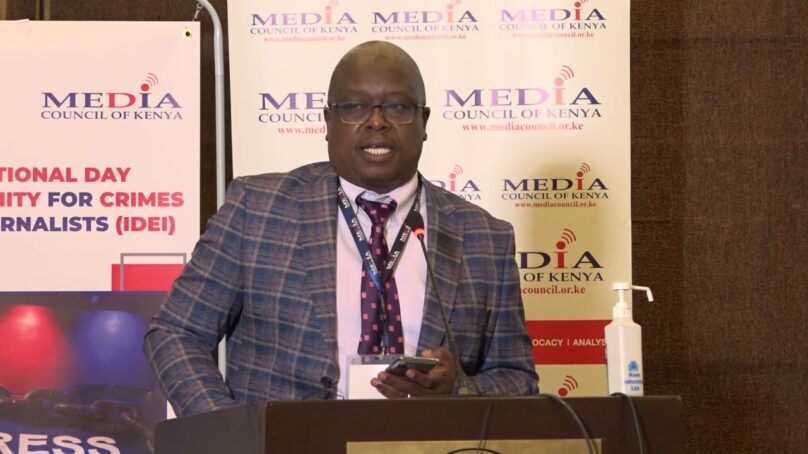
Honourable Chief Guest; distinguished representatives from the media industry; senior government officials; members of academia; representatives of the diplomatic corps; development partners; ladies and gentlemen, good morning.
It is my honour to join you today as we commemorate this year’s World Press Freedom Day; a day set aside globally to reflect on the vital role of free, independent and responsible media in society.
This year’s theme, Shaping a Future at Peace could not be more timely. It is a powerful reminder that peace is not simply the absence of war or conflict. It is the active, daily presence of truth, accountability and informed public discourse, values that only a vibrant and fiercely professional media can sustain and defend.
A free press is the lifeblood of any democratic society. It arms citizens with the information they need to make meaningful decisions, amplifies voices that would otherwise go unheard, and holds institutions to account. Journalists are not merely storytellers. They are custodians of truth and indispensable actors in building a stable, cohesive, and inclusive society.
Ladies and gentlemen, the Media Council of Kenya remains steadfast in its mandate, anchored firmly in the Media Council Act, to promote and protect media freedom whilst upholding the highest standards of professionalism.
Through the Code of Conduct for Media Practice, we guide journalists in the pursuit of accuracy, fairness and ethical reporting, because responsible journalism is not optional. It is the foundation upon which public trust is built.
Responsible journalism prevents conflict, counters misinformation and fosters national unity. This is especially critical during periods of heightened national significance, such as elections and public crises, when the risk of inflammatory and divisive reporting is at its peak. Our work is to ensure the media informs without inciting, and builds rather than divides.
The safety and protection of journalists is, and will remain, a top priority for this council. A peaceful media environment cannot exist where journalists operate under the shadow of fear, intimidation, or physical threat. We have put in place robust safety guidelines, rapid response interventions and strengthened collaboration with security agencies and media stakeholders to ensure every journalist can do their work without fear.
Yet the situation on the ground demands our urgent attention. During this period, the council has documented twelve press freedom violations across the country, ranging from threats and harassment to outright physical attacks. More troublingly, we have observed a disturbing new pattern in which politicians deploy hired individuals to intimidate and silence journalists. This is unacceptable, and we condemn it unreservedly.
Ladies and gentlemen, the numbers tell a sobering story. In the past year alone, the Council verified 92 cases of press freedom violations. With the general elections scheduled for August 2027, we anticipate that number will rise further. This paints a grim picture of the fragile and increasingly unsafe environment in which Kenyan journalists carry out their duties.
Equally alarming is the situation facing women in journalism. A study commissioned by Association of Media Women in Kenya found that 64.8 per cent of women journalists have experienced safety or security breaches in the course of their work.
Only 35.2 per cent report feeling safe in their working environment. These are not isolated incidents. They are widespread violations, deeply embedded in everyday practice, and we must confront them with equal resolve.
To strengthen our media landscape from within, the Council is investing deliberately in capacity building. Through targeted training programmes in conflict-sensitive reporting, digital safety, and ethical storytelling, we are equipping journalists with the skills they need to navigate an increasingly complex information environment, and to do so with integrity.
Accountability, too, is central to a credible and peaceful media ecosystem. The Media Complaints Commission continues to serve as an independent and transparent platform for addressing grievances between the public and the media. Its work reinforces public trust whilst protecting editorial independence, and it remains a vital pillar of our regulatory framework.
We must also confront the emerging threats that lie ahead: the rapid spread of misinformation and disinformation, and the growing menace of online harassment directed at journalists. These challenges demand innovative, collaborative, and forward-looking responses.
The Council is actively engaging government agencies, media organisations, civil society, and international partners through policy development, public awareness campaigns, and strategic partnerships to ensure that the digital transformation of media strengthens, rather than undermines, the values of truth and accountability.
None of us can achieve this alone. Today, I call upon every stakeholder in this room and beyond to reaffirm an unwavering commitment to press freedom and responsibility. Let us reject, without equivocation, all forms of violence, intimidation, and censorship directed at journalists.
Let us champion a media that is ethical, professional and fearless in the pursuit of truth. Above all, let us never lose sight of this: the future of peace, stability, and progress that we all seek depends, in no small measure, on the strength and integrity of our press.
- A Tell Media report / Speech by the chairman, Media Council of Kenya Maina Muiruri, at the world press freedom day commemoration. Theme: Shaping a Future at Peace, at Strathmore University on May 4, 2026


About author