
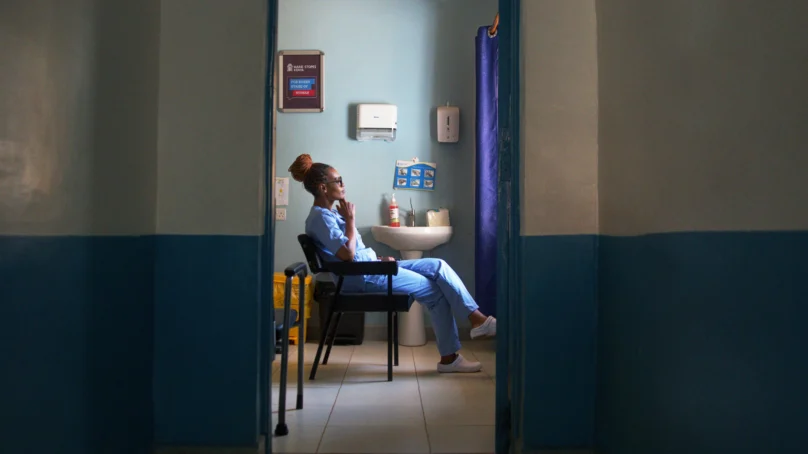
In Kenya, the names and addresses of staff at reproductive rights organisations have been published online, accusing them of murder.
One owner of a private abortion clinic in Nairobi said staff members are routinely harassed by police and detained. Officials demand bribes, threatening charges if they don’t pay up, the owner said, speaking on condition of anonymity for fear of repercussions.
Musoba Kitui, regional director of Ipas Africa Alliance, which promotes reproductive rights and access to safe abortion care, said the changes in US foreign aid policy combined with “this advancing American interest in ideology in Africa is really concerning.”
“We think the consequences are going to be dire,” Kitui said, especially for women and marginalised communities such as LGBTQ+ people.
Last year, anti-abortion Christian groups from the US, Europe and Africa and high-ranking Kenyan officials gathered in Nairobi for a conference on “Promoting and Protecting Family Values in Challenging Times.”
Poland-based anti-abortion group Ordo Iuris handed out a guide in four languages, including Kiswahili, with tips on lobbying international organizations, including the United Nations, European Union and African Union.
Travis Weber, vice president of the Family Research Council, a Washington-based evangelical group active in anti-abortion advocacy, said he travelled to Nairobi to “defend the family as God designed it.”
Charles Kanjama, vice chairman of African Christian Professionals Forum, the conference organiser, said that previously international aid often supported reproductive rights – but times have changed.
“We are hoping that … we can start attracting money from people who think like us,” said Kanjama, among Africa’s most prominent anti-abortion figures. “It’s a culture war, really.”
Indeed, the anti-abortion agenda is gaining momentum. In June, representatives of 20 African countries finalised a draft charter at a conference in Ghana that calls for rejecting sexual and reproductive health rights.
It will be voted on by the African Union next year. Family Watch International’s co-founder, Sharon Slater, was among those fundraising for the charter’s passage at the European Parliament in Brussels this year.
In Kenya, one of Africa’s richest countries, seven women die every day on average from complications of unsafe abortions, according to the African Population and Health Research Centre.
The 2010 Kenyan Constitution permits abortion when a woman’s health or life is threatened. Subsequent court decisions have also allowed abortions in cases of rape, incest or serious threat to a woman’s mental health.
But there’s a major legal gray area. Kenya’s penal code, which dates to the colonial era, continues to criminalise abortion providers and women seeking the procedure, who can face up to 14 years in prison.
Most public hospitals don’t perform abortions, leaving women the option of pricey private clinic procedures or risky illicit methods, healthcare officials said.
In May, an appeals court in Kenya overturned a ruling that affirmed access to abortion is a fundamental right – a case led by Kanjama, who said the decision “restored constitutional balance.”
The Kenyan Health Ministry, Justice Ministry and the government spokesperson’s office did not reply to repeated AP requests for comment, including detailed questions sent via email.
The US State Department, in response to an AP request for comment on the Trump administration’s new rules governing American aid overseas, said: “The American people expect their tax dollars to support programs that save lives … and reflect American values, not fund abortion-related activities, left-wing social agendas, or wasteful overseas bureaucracies.”
US assistance continues to support a wide range of maternal and child health services as part of the America First Global Health Strategy,” it said in a statement.
In Kenya, doctors are obligated to treat women suffering from post-abortion complications, often from underground procedures, including bleeding, infections and the loss of their wombs – and it’s those cases that often end up in public hospitals.
“By the time the women come, we are often dealing with a life-threatening situation,” said Dominic Omollo, the reproductive health coordinator in Bondo, western Kenya.
Even as the stated aim of US, international and Africa-based anti-abortion groups is to protect life, activists and healthcare providers say that on the ground, the result is more unsafe abortions and more women dying.
In Karabok, a village in rural Kenya, two trees were planted at the site where Mary Olouch is buried, just feet (meters) from where the 25-year-old bled to death after an illicit abortion.
“She did not open up to anyone,” said Loice Ochieng, a community health volunteer in charge of family planning in the village.
Olouch already had a young child when she realised she was pregnant. She didn’t tell her husband. When he came home one evening, he found her bleeding and rushed her to the hospital, but it was too late.
Olouch did not qualify for an abortion in a public hospital and couldn’t afford a private clinic on her meagre income selling fish. Abortion carries enormous stigma in rural communities, and husbands often don’t allow women to use contraceptives, Ochieng said.
After Olouch’s death, women started to talk more openly about abortion in Karabok, where for many even uttering the word had been taboo, Ochieng said.
Now, she said, if women “have a problem, they come to me, they ask. Because they have seen that this thing can cause death.”
- An AP report


About author