

Towards the end of Aserne Wenger’s reign as Arsenal manager, the team lost focus and quality. His successor Unai Emery was not the man to fix such massive problems.
Mikel Arteta happened to be on the bench at the Emirates – the away bench, as assistant manager of the visitors – for an experience that exposed the scale of the Arsenal demise.
Arsenal hosted Manchester City just before Christmas in 2019. Freddie Ljungberg was interim manager after the November sacking of Emery but there was little he could do in the short term to address such deep problems.
You want to know how bad it was?
City were 3-0 up by half-time and coasting so much they appeared to feel sorry for their easy prey in the second half and backed off. The stadium was half empty. London was frozen at the time. Discovering a fellow fan was willing to surreptitiously share some contraband hidden in a hip flask was a rare chink of warmth.
Was the above a weather warning or a health warning about the state of the team that kept so many away? Who cared. And that was the problem. Apathy had made itself far too comfortable.
This was the Arsenal that chose Arteta to take over for his first job in management. This was the Arsenal that Arteta chose to throw himself into. He knew how bad it was. He knew how the rot needed treating from top to bottom. He rolled up his sleeves and backed himself.
What an incredibly brave decision for both parties.
“We have to slow the virus down, so please, stay at home” – Mikel Arteta
So. Fourteen games into his managerial career, Arteta contracted Covid-19. Arsenal hosted Olympiacos in the Europa League that night in late February 2020, got beaten, and it turned out that the Greek side’s owner Evangelos Marinakis, who shook hands with a lot of people in his happiness, was already infected and passed it on. After Arteta’s symptoms showed, and a diagnosis was confirmed, English football took the decision to suspend activity and lock down for what turned out to be three months.
To say Arteta had an unconventional start as Arsenal head coach is putting it mildly. Team meetings by video, online training sessions, and then, when football resumed in June, it was played in empty stadiums. Somehow, he got his team together enough to win the FA Cup that August. A remarkable achievement.
Rightly or wrongly, Arsenal felt they were on the receiving end of a string of weird decisions as they became higher-profile Premier League challengers.
In February 2023, a Brentford equaliser in a 1-1 draw was allowed because the VAR forgot to draw the lines and check on a player who assisted an offside position. At Newcastle eight months later, Arsenal conceded a goal with potentially three infringements – all dismissed by VAR. Arteta was particularly riled when his players said Newcastle’s Arsenal old boy Joe Willock told them the ball had gone out of play during the move, and called it “an embarrassment and a disgrace.”
Arsenal finished two points behind champions Manchester City that season – the amount they were denied at Brentford when that equaliser which should have been overturned reduced three points to one.
Early the following season, Rice was sent off for nudging the ball a few inches against Brighton, despite being kicked by opponent Joel Veltman at the same time. That was probably the oddest of a bunch of red-card curios, which frustrated the hell out of Arsenal fans who felt their players got punished when others didn’t.
Arteta realised that minimising refereeing issues, playing within the rules, talking to the officials’ governing body to clarify where necessary and tidying up discipline were paramount.
This season, they top the fairplay league. Nobody would have imagined that in the midst of the red-card flurry.
A serial winner across Europe in his playing days, Amazon Prime pundit Seedorf found the perfect words to encapsulate the madness of Rice scoring two sumptuous free kicks against Real Madrid in the Champions League quarter-finals last April.
Something changed in Arsenal’s evolution that night. In a season when they also beat eventual European champions Paris Saint-Germain at home and demolished City 5-1, it inculcated the squad with a deeper belief that they more than belonged in the best football company around; that they were worthy of aiming for big prizes.
Not much was asked of 16-year-old Dowman as he was about to enter the fray in one of the tensest moments of the title race. Arteta’s faith in a super talent, and also his ability to trust his gut to try to change games this season, was rewarded in a way that will live on in the memory of everyone who saw it.
Dowman made the late breakthrough goal in a tight March game against Everton, and then made grown men cry with a virtuoso killer second. It is one of the iconic symbols of the season. From jitters to joy unconfined.
In the thick of the great ‘bottle’ debate so beloved of the media and opposition fans keen to savour an Arsenal failure, English movie star Tom Hiddleston orated brilliantly about how nerves and excitement produce the same chemicals in the body. He urged the team he supports to go for excitement rather than nerves, to enjoy breathing the rare air that comes with being in the position to chase wondrous goals.
“Pressure,” he reminded them, “is a privilege.”
Full time at the Etihad. City celebrated clawing back at Arsenal’s lead, regaining a hand on their own destiny. It was now down to both teams to try to win out.
Although Arsenal were beaten that April afternoon, and the outside world envisaged City doing what they normally do on the home straight of a season, Rice had a moment of deep clarity. His face was a picture of defiance. In a moment when he might have felt drained of it, he was fuelled by it.
“It’s not done.” The message he shared was loud and proud. Some fans have apparently had these words turned into tattoos for posterity.
Arsenal’s hopes hung in tortuous limbo for four and a half minutes at the London Stadium on May 10 as VAR checked on David Raya being held down and therefore unable to cleanly claim a cross in the build-up to a West Ham stoppage-time equaliser that would have spelt disaster for their title aspirations.
As pivotal moments go, it was drenched in drama. Referee Chris Kavanagh’s words to rule out the goal are now the stuff of legend.
For thousands in the London Stadium watching on with skin in the game, time slowed, heads spun, emotions stretched – was it a goal or not? This may not have been the most aesthetic season ever, but it has been a wild ride.
So here we are, 22 years on. As Wenger so poignantly put it in 2014, “happiness and suffering are linked to the time you’ve had to wait”.
With two games of Arsenal’s Premier League season remaining, residents of Highbury Square, the apartment block built around the sacred ground that the Invincibles played on, came and went about their day. An elderly couple came in through the Marble Halls, still beautifully intact and exactly as Wenger and his players would remember it.
They engaged in a bit of small talk with the concierge. “Two to go,” he said. The lady went over to the bust of Herbert Chapman, the club’s visionary manager from the 1930s, who still watches over his old domain in eternal bronze. She put a hand on it, smiled, and replied, “Herbert will look after us.”
Since 2004, hundreds of Arsenal players have come and gone. Exactly 200 have made their debuts. Three managers (and one interim) have shared the load. The league position fell from first to eighth and gradually rose back up again.
There have been five FA Cup triumphs, five other cup finals with the pain of being runners-up and five second-place finishes in the Premier League.
At Highbury, you could feel the lineage in the building. You could sense the greats of the past in the walls of the old place. The players’ boots click-clacking in the narrow tunnel echoed the names and achievements of champions of old.
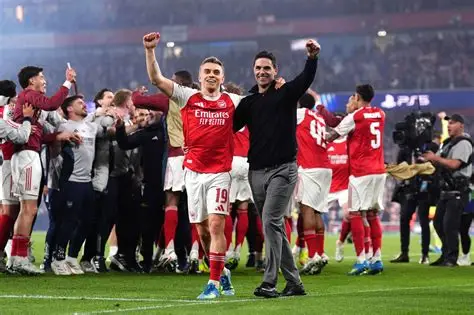
The Emirates, two decades after the move, has now laid down roots of success that will be felt for years to come. Arsenal’s 2025-26 team have etched their chapter in history.
Goodbye, second again. Farewell, bottlers. Hello again, after all this time… “Champions again, ole, ole”.
- A Tell Media report / By Amy Lawrence / Source: The Athletic


About author