

This is an integrated and integrative article on the enduring and/or continuing Banyarwanda Question despite constitutional engineering in the early 1990s to rest it for once and all. The article rests on a sturdy tripod of evidence: Constitutional/Executive Action, Official democratic data and historical-regional conflict analysis.
This provides the robust academic protection of the timely critical intervention by a senior citizen of Uganda with a futuristic mindset who was there at the height of British colonialism, when direct crude colonialism ended on October 9, 1962, and has continuously lived in the country since 1991, witnessing its unmaking to accommodate extraneous interests of conquest, occupation, and capture in modern times. It is an article for present and future generations of Ugandans.
Colonial fabric and its enduring pillars
The nation-state of Uganda is not an ancient, organic formation but a British colonial construct. Its birth in 1894 as the “Uganda British Protectorate” was an act of violent intrusion – invasion, conquest and occupation. The colonial power did not find a singular “Ugandan” identity; it encountered a complex tapestry of distinct, autonomous indigenous societies, each with a deep, symbiotic and ecological belonging to specific territories.
This foundational reality was legally crystallized in the colonial-drafted 1962 Independence Constitution, which endorsed the kingdoms of Ankole, Buganda, Bunyoro, Toro, and the Territory of Busoga. The emblems of 15 foundational indigenous groups—from Acholi to West Nile—were inscribed above the Parliament, serving as the stone-and-mortar pillars of the nascent nation. These groups represented what can be termed autochthonous identities: peoples originating from and formed by the Ugandan space itself.
Introducing allochthonous elements
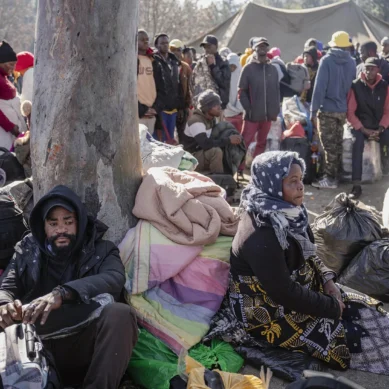
Critically, at the moment of colonial penetration, there was no Buganda Question, no Land Question, no Indian Question and no Banyarwanda Question. These are pathologies born of colonial disruption. The British introduced Indian labour as a bureaucratic and commercial caste and facilitated Rwandan migration through labour policies and as refugees fleeing sociopolitical collapse. From an ecological and historical perspective, these introduced communities can be understood as allochthonous elements: groups originating from elsewhere and introduced into a pre-existing socio-ecological system.
The Banyarwanda presence is particularly complex, stemming from pre-colonial back-migration, colonial labour schemes, and post-colonial refugee flows. Official data confirms this exogenous origin; the Uganda Bureau of Statistics notes migrations prompted by colonial labour needs (1930s), famine (1940s), and the political violence following the 1959 “social revolution” in Rwanda. Their “belonging” was thus administrative, economic or borne of crisis, not rooted in the millennia of culture-land symbiosis that characterised the autochthonous groups.
Legislating belonging
The critical juncture in the Banyarwanda Question arrived with the National Resistance Movement’s (NRM) capture of state power in 1986. The state embarked on a project of constitutional solution to an ecological-historical problem. The 1995 Constitution, in its Third National Objective, commits the state to “integrate all the peoples of Uganda while at the same time recognising the existence of their ethnic… diversity”.
This constitutional mandate became the legal engine for a profound political act: Schedule 3 of the same constitution listed “Banyarwanda” among communities deemed indigenous to Uganda.
This was the moment of state-led political integration, creating an “artificial indigenous group” by legal fiat. It granted belonging-by-law to a community whose belonging-by-nature was contested. The executive enforcement of this integration is unambiguous.
In a June 2025 address to the Abavandimwe community, President Yoweri Museveni invoked his authority under Article 99 of the Constitution to direct that individuals “verified by local authorities” be recognised as Ugandans and issued national documents, framing it as a constitutional right. He concurrently warned against “dual citizenship between Rwanda and Uganda,” highlighting the state’s acute concern over clear national allegiance.
The success of this constitutional and executive engineering is evident in official instruments. The Uganda Demographic and Health Survey (UDHS) 2016, the state’s premier data collection tool, lists “Banyarwanda” (code 24) as a distinct, recognized ethnic category for national enumeration. This demonstrates that the identity has moved from constitutional text into bureaucratic practice, gaining statistical legitimacy.
Metaphor of mobility and the crisis of attachment
This constitutional integration clashes with deeper, older Ugandan socio-ecological models. Many autochthonous societies are built on a sacrosanct attachment to ntaka (clan land) and obutongole (historical rootedness).
In contrast, the historical identity of the Tutsi/Banyarwanda has been characterised by scholars and observers as one with a primary attachment to cattle and grass – movable resources – a lifestyle more aligned with pastoral mobility than fixed territoriality. This is not a value judgment but an ecological observation: a migratory pattern differs fundamentally from a settled agrarian one. The constitutional grant of “indigenous” status to a group perceived through this lens of mobility creates a fundamental, unresolved tension at the heart of the national identity.
Penetration, perception and the new frontiers of identity
The Banyarwanda Question has not been resolved by the constitution; it has mutated and entered a new, more pervasive phase. A growing body of critical thought now posits a troubling evolution:
- From Integration to Penetration and Historical Roots of Dominance: There is a pervasive perception that institutions of the state – the military, security, bureaucracy and political cadres – are disproportionately dominated by individuals with Rwandan genealogical links. This perception has deep historical roots. Analysis indicates that an estimated one-third of President Museveni’s original National Resistance Army (NRA) was composed of Rwandan immigrants and refugees, many of whom subsequently rose to prominent positions within the country’s security apparatus. This has shifted the discourse from one of “integration” to one of “state capture,” fostering a sentiment among many Ugandans of a slave-master relationship within their own homeland.
- The Shield of Sectarianism: The Anti-Sectarianism Law, rather than being seen as a tool for unity, is widely perceived as an instrument to silence discourse on this very issue. It effectively criminalises questioning of origin, thereby politically protecting the new elite from the very historical and ecological scrutiny that defines Ugandan belonging.
- The National ID as the Ultimate Arbiter: The final frontier of this struggle is the bureaucratic realm of citizenship verification. As analysts argue, the biometric National Identity Card has become the supreme legal proof of “Ugandan-ness. (e.g. ” The process of its issuance is now the battleground. Allegations that this system has been strategically “penetrated” suggest a fear that the final, administrative gatekeeper of identity is being manipulated to favour the historically allochthonous, thereby completing the “Rwandanisation” project from within.
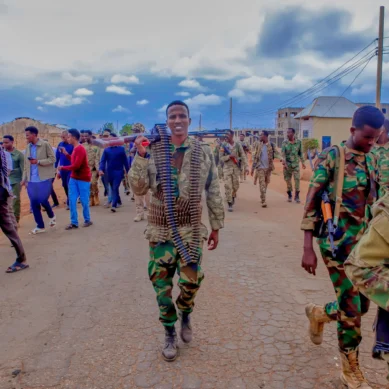
- The Transnational Threat and Regional Repercussions: The activities of advocacy groups and the ominous invocation of the M23 rebellion in the Democratic Republic of Congo (“we will go with our land”) amplify national anxieties. This is not mere rhetoric but is connected to a tangible regional conflict. The M23 itself was formed to defend the rights of Congolese of Rwandan origin (Banyamulenge) and has historical roots in rebel movements reportedly sponsored by both Rwanda and Uganda. This frames the issue not as one of domestic integration, but as an aggressive, expansionist identity politics that views citizenship and territory as contestable entitlements, backed by implied or actual force across borders.
Existential crossroads
Uganda stands at a profound existential crossroads. The colonial creation, once balanced on 15 autochthonous pillars, is undergoing a radical identity shift engineered from within via constitutional schedule, executive directive, and bureaucratic enumeration. The “Rwandanisation” thesis posits that through these mechanisms – coupled with demographic restructuring, state penetration with deep historical roots and the manipulation of citizenship instruments – a historically allochthonous group is fundamentally altering the character of the Ugandan state and identity.
This is not merely a political dispute over power-sharing. It is, at its core, an ecological-biological and socio-cultural crisis. The pulling down of an Obote statue was a singular political act. The erosion of the 15 pillars from the national psyche – through the dilution of their unique historical and ecological meaning by a state-mandated, homogenising legal identity – represents the death of the Uganda envisioned at independence. The haunting question for the nation is this: Can a legally-created belonging ever reconcile with or replace a natural-ecological belonging? Or does such an attempt only plant the seeds of perpetual conflict, as the introduced logic of the state forever wars with the ancient logic of the land? The silence of those emblems above Parliament grows louder each day, a stone-faced jury to this unresolved national dilemma.
For God and my country.
- A Tell report / By Oweyegha-Afunaduula / Environmental Historian and Conservationist Centre for Critical Thinking and Alternative Analysis (CCTAA), Seeta, Mukono, Uganda.
About the Centre for Critical Thinking and Alternative Analysis (CCTAA)
The CCTAA was innovated by Hyuha Mukwanason, Oweyegha-Afunaduula and Mahir Balunywa in 2019 to the rising decline in the capacity of graduates in Uganda and beyond to engage in critical thinking and reason coherently besides excellence in academics and academic production. The three scholars were convinced that after academic achievement the world outside the ivory tower needed graduates that can think critically and reason coherently towards making society and the environment better for human gratification. They reasoned between themselves and reached the conclusion that disciplinary education did not only narrow the thinking and reasoning of those exposed to it but restricted the opportunity to excel in critical thinking and reasoning, which are the ultimate aim of education. They were dismayed by the truism that the products of disciplinary education find it difficult to tick outside the boundaries of their disciplines; that when they provide solutions to problems that do not recognise the artificial boundaries between knowledges, their solutions become the new problems. They decided that the answer was a new and different medium of learning and innovating, which they characterised as “The Centre for Critical Thinking and Alternative Analysis” (CCTAA).


About author