
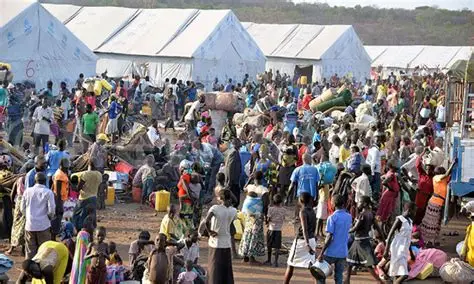
Uganda has a serious problem of refugees. Refugees compete with citizens of Uganda for resources, services and jobs. They even distort natural belong, identities and the biocultural landscape of the indigenous communities of Uganda. However, the Uganda government does not see these as problems. It has designed a refugee policy that puts no constraints to the influx of refugees into the country. Until recently this was unlimited.
Uganda’s refugee policy over the past 40 or so years has been hailed the world over but most especially by the United Nations High Commissioner for Refugees (UNHCR), as the most progressive in the world.
The policy has been an open one, which has benefitted the refugees greatly to the envy of Ugandans, especially the indigenous Ugandans grappling abject poverty, ill-health, food shortages, hunger, diminishing public services and uncertainty of survival.
The refugees have had access to public services, jobs, opportunities almost more readily than the indigenous people. I don’t know how much money the National Resistance Movement (NRM) government has been spending on each Ugandan to survive. However, for refugees, the government says it has been spending $16 on each one of them every month. This is far more than the government spends on each pupil or student under the Universal Primary Education (UPE) programme or Universal Secondary Education (USE).
Currently the NRM government spends Ush6667 on each UPE pupil per term, Ush58,000 per USE student per term and Ush90,000 on each Advanced Level student per term. Because of these low contributions by government to the education of young Ugandans, education sounds free but it is not so, although during campaigns like now when we are getting ready for presidential, parliamentary and council elections, we are bombarded by praises of government by the ignorant of free education. The truth is that the education of Uganda drains the parents far more than it relieves them (Hellen Zawedde, 2025).
This means also that government’s minimal commitment to the education of our children and grandchildren, schools cannot sustain themselves well enough to offer quality education. Parents who want to ensure their children get quality education try to work hard to get enough income from their labour. However, because of fluctuations in crop prices, they end up failing to see their children through the education cycle.
Unscrupulous ones manifest as corruption people or else flock to politics where they steal and are protected and sometimes encouraged by the system. Then they get money and place their children in the best private schools in the country.
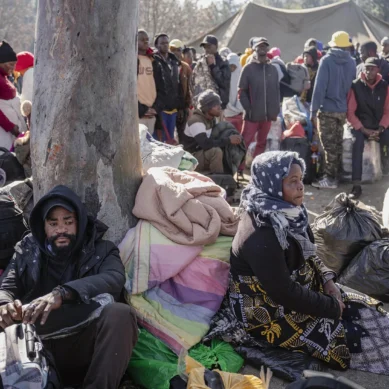
Given the government’s open door policy to refugees Uganda had achieved the status of the most attractive haven in Africa and the third most attractive haven on the globe for refugees on the globe. By August 2025, Uganda had allowed in almost two million refugees to enter its Environmental space. In fact, since June 2025 an average of 600 refugees arrived in Uganda, mainly from Eritrea, Somalia and Ethiopia. Some were coming in from the war-torn eastern Democratic Republic of Congo (DRC) and the conflict-weary South Sudan.
Many theories have been advanced to explain why Uganda became Africa’s largest refugee hosting nation and the third largest globally during the reign of President Tibuhaburwa Museveni. One theory is that since the government in Uganda has been dominated by nomadic pastoralists, there has been a soft spot for refugees who share the same pastoral-nomadic human energy system.
Another theory is that the refugees channel has been a lucrative source of money for corrupt government officials, who have been keen on sustaining the channel for selfish interests. Yet another theory holds that it is the environmental decay and collapse in refugee source countries.
The more intriguing theory is that by inserting an article in the Uganda Constitution 1995 that creates an indigenous group called Banyarwanda, the combatants of Luwero Triangle sought to disguise Banyarwanda refugees and create a leeway for Rwandans from Rwanda and Mulenge in DRC to freely enter and leave in Uganda as “Ugandans” any time they want.
Uganda Refugee Response Plan (URRP) had a budget of $968 million but by August 2025 only 25 per cent of the budget had been received. By December 4, 2025, the Uganda government responded by stopping to grant refugees from Eritrea, Somalia and Ethiopia refugee status in the country since it no longer has enough money to address the needs of all the refugee.
Whatever the case many such refugees had got leeway to establish enterprises in the country and even access land in different parts of the country at the expense of Uganda’. I thought you the reader needed this background information in order to appreciate what I am going to write below on Uganda:
Dangers of unregulated inflows of refugees
Let me now address my topic “Uganda: The Danger of unregulated influx of refugees” with particular reference to the four dimensions of the Uganda environment: the ecological – biological, the sociocultural, the socioeconomic and the temporal. I will not address the theories but serious students can use them to research
Introduction
Uganda, long praised for its open-door refugee policy, is at a crossroads. Hosting over two million refugees, primarily from South Sudan, the Democratic Republic of Congo, and Burundi, the country faces significant strains across ecological, sociocultural, socioeconomic, and temporal dimensions. Recent decisions, like the halt on inflows from Eritrea, Ethiopia, and Somalia as of December 4, 2025, following a UNHCR funding cut from $240 million to $100 million in August 2025, underscore the urgency of addressing these challenges.
Ecological-biological dimension
Pressure on natural resources: Refugee settlements strain forests, water sources, and land, contributing to deforestation and competition for firewood and water. Refugees, many from pastoral-nomadic backgrounds, are also impacting the 7-8 agro-ecological systems critical to Uganda’s food security.
- Biodiversity Threats: Increased human activity risks disrupting local ecosystems and increasing disease transmission.
Mitigation Strategies:
- Promote sustainable energy (solar, biomass alternatives)
- Implement strict environmental management in settlements
- Encourage reforestation and water conservation projects.
Sociocultural dimension:
- Tensions and Perceptions: Many Ugandans feel refugees have greater access to public services, fuelling perceptions of unequal treatment. There is a belief that refugees are prioritised over locals and concerns about land access. Some Ugandans also express concerns about the presence of refugees in state institutions like the army and police, linking this to heightened tensions during political periods, such as the 2026 elections. Currently, there is concern that people with exogenous origins have been cleared to stand for elective offices in the 2026 Presidential, Parliamentary and Council elections.
- Political involvement: Concerns have emerged about refugees, particularly from Rwanda, engaging in Uganda’s politics with groups like “Bavandime” publicly campaigning for specific candidates. This raises questions about the boundaries of hospitality and refugee integration. No genuine Ugandans can get involved in the politics of Rwanda.
- Cultural Dynamics: Shared pastoral-nomadic roots of some refugees and government officials contrast with growing frustrations among Ugandans feeling overlooked or marginalized from resources, jobs and other opportunities.
-Mitigation Strategies:
- Foster dialogue and cultural exchange programmes
- Improve transparent communication about resource allocation
- Clarify guidelines on refugee political participation if necessary
- Strengthen community engagement to build cohesion among Ugandans.
Socioeconomic dimension:
- Economic Strain: With the government spending about $16 (Ush57,122. 22) per month on each refugee contrasts with limited investments in Ugandan citizens. Per pupil spending is low – Ush6,667 (primary), Ush58,000 shillings (secondary), Ush90,000 shillings (A-Level) – fuelling resentment. Concerns also arise about refugees operating businesses without paying taxes or receiving protection and allegations of Rwandese refugees, alongside foreign investors, exploiting minerals and fisheries with minimal contributions to national revenue. Many Ugandans think the hated apartheid system is being replayed in Uganda to create social and economic advantage for nomadic pastoralists.
- Resource Competition: Pressure on schools, healthcare, and jobs risks reducing quality for locals.
-Mitigation Strategies:
- Boost international aid for both refugees and host communities
- Encourage refugee entrepreneurship with clear tax regulations
- Strengthen oversight of natural resource use and tax compliance
- Invest in infrastructure upgrades.
Temporal Dimension:
- Short-term vs. long-term planning: Emergency responses may overlook sustainability, risking prolonged dependency. Without durable solutions, settlements may become permanent, straining resources.
- Future Risks: Climate change could worsen scarcity, amplifying tensions between refugees and locals.
-Mitigation Strategies:
- Develop phased, sustainable settlement plans with international support
- Promote voluntary repatriation
- Use regional arrangement to encourage the governments of the countries where refugees come from to rebuild and reconstruct their environments to create opportunities for their people.
Conclusion
Uganda’s generosity is commendable, but unregulated inflows of refugees highlight the need for a balanced approach. Addressing ecological pressures, socioeconomic disparities, perceptions of inequity, and ensuring refugees’ roles align with Uganda’s laws and sovereignty requires collaboration with global partners, transparent governance, and investments in both refugee and host communities. The path forward lies in turning challenges into opportunities for inclusive development and resilience.
For God and my country
- A Tell report / By Oweyegha-Afunaduula / Environmental Historian and Conservationist Centre for Critical Thinking and Alternative Analysis (CCTAA), Seeta, Mukono, Uganda.
About the Centre for Critical Thinking and Alternative Analysis (CCTAA)
The CCTAA was innovated by Hyuha Mukwanason, Oweyegha-Afunaduula and Mahir Balunywa in 2019 to the rising decline in the capacity of graduates in Uganda and beyond to engage in critical thinking and reason coherently besides excellence in academics and academic production. The three scholars were convinced that after academic achievement the world outside the ivory tower needed graduates that can think critically and reason coherently towards making society and the environment better for human gratification. They reasoned between themselves and reached the conclusion that disciplinary education did not only narrow the thinking and reasoning of those exposed to it but restricted the opportunity to excel in critical thinking and reasoning, which are the ultimate aim of education. They were dismayed by the truism that the products of disciplinary education find it difficult to tick outside the boundaries of their disciplines; that when they provide solutions to problems that do not recognise the artificial boundaries between knowledges, their solutions become the new problems. They decided that the answer was a new and different medium of learning and innovating, which they characterised as “The Centre for Critical Thinking and Alternative Analysis” (CCTAA).


About author