


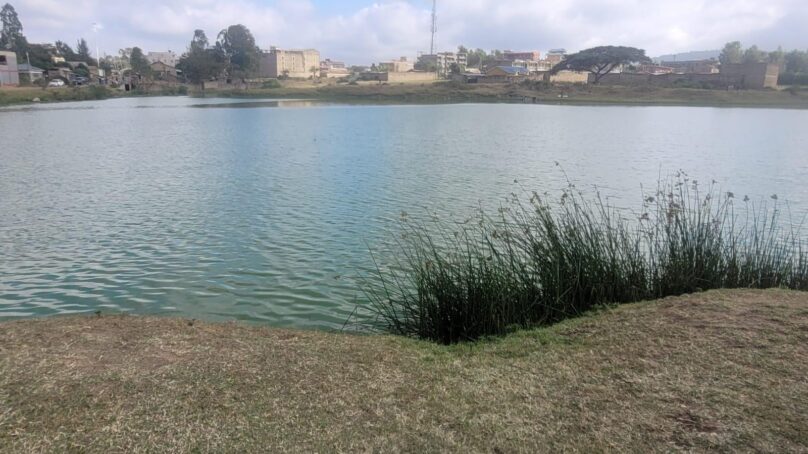
Residents of Tala town in Machakos County, east of Kenya capital Nairobi, have strongly opposed to plans by the regional government to drain Tala Silanga Dam to pave the way for the construction of a commuter bus park.
The residents argue that the move threatens their livelihoods, heritage and water security in addition to biodiversity disruption.
Tala town is about 67 kilolitres east of Nairobi or two-hour drive from the capital city’s central business district.
The residents say the dam that sits on a three-acre piece of land has served the community for more than 75 years and remains a critical source of water for farming, livestock and construction activities. They contend that replacing it with a bus park would amount to erasing an important part of the area’s history and undermining community resilience in a drought-prone region.
Speaking to the media in Tala town, 70-year-old resident, Dr Charles Kyalo, recalled that Silanga Dam was constructed between 1945 and 1950 under the leadership of Chief Uku wa Mukima. He said the dam was built through communal effort with men and women mobilised to clear the riverbed and lay a foundation that has sustained generations.
“This dam is part of our history and our lifeline. It was built through the sweat of our parents and grandparents and it has supported us for decades,” said Kyalo. “Draining it would be like erasing our past. No amount of public participation will convince us to accept the destruction of this dam.”
Kyalo recalls that Tala residents have long depended on the dam, particularly during dry seasons, and insisted that it should be preserved and improved rather than replaced. Local farmer Sila Mutiso echoed the sentiments, saying he relies on the dam water for farming, feeding livestock and construction, despite the water being muddy.
Mutiso expressed concern that the county government might use public participation forums to justify draining the dam.
“We are opposed to any public participation aimed at paving the way for a bus park,” Mutiso said. “This water sustains our farms and animals, and without it, many families will suffer.”
James Mwovi Mwangangi, a resident of Matungulu, warned that draining the dam would be a grave mistake especially given that Ukambani is largely arid and semi-arid, and prone persistent droughts.
“This is a dry area and water sources like this dam should be protected not destroyed,” Mwangangi said. “Preserving Silanga Dam is critical for Matungulu and the wider Tala community.”
Pastor John Mbalu of Tala urged the county government to prioritise essential services such as healthcare and road infrastructure instead of constructing a bus park. He also called on the National Environment Management Authority (NEMA) to intervene and compel the county to clean, desilt and maintain the dam to enhance its water-holding capacity.
“The solution is not draining the dam but rehabilitating it,” Mbalu said.
Contacted, Tala Member of County Assembly (MCA) Jackson Ndaka said such decisions cannot be made by a few individuals and emphasised that public participation will inform final decision.
Despite the assurance, residents remain anxious that the Silanga Dam could still be drained, fuelling a heated debate on whether development should come at the expense of heritage, water resources and community livelihoods.
- A Tell Media / KNA report by Anne Kangero

About author