


Scars of slavery-2: Why Slave Master began to drink heavily, haunted by memory of the crippled daughter he had rejected and lost
We buried Violeta on a small hill overlooking the valley where we had been happy. There was no priest, no elaborate ceremony, just me, my new-born son, and the promise that her memory would be honoured. When we arrived at the farm the next day, Colonel Ferreira was waiting for us at the gate. His face showed a mixture of relief and fury.

Scars of slavery-1: No one wanted to marry the colonel’s crippled daughter, so he handed her over to the roughest slave
Eulália had married the colonel five years prior – an ambitious widow who saw Violeta as an obstacle to her own plans. She had two children from her first marriage and always made it clear that Violeta was an unwanted nuisance.
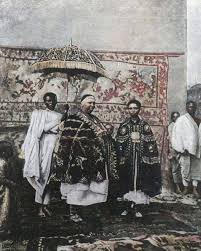
How Empress Taytu Betul saved Ethiopia from becoming Italian colony, then led a force of 5,000 infantry and 600 cavalry against European army
Taytu had watched the Italians operate for years. She’d seen them colonise Eritrea to the north. She’d watched them swallow most of Somalia. She knew exactly what Italy wanted: Ethiopia. And she knew that European powers didn’t sign “friendship treaties” with African nations they viewed as equals.

Seven children-4: Slavery story isn’t about the past, it’s about how the past lives in the present and continue shaping lives today
The story of Samuel and the seven Thornton children forces us to confront uncomfortable truths about how power determines not just who can speak, but what can be officially known.
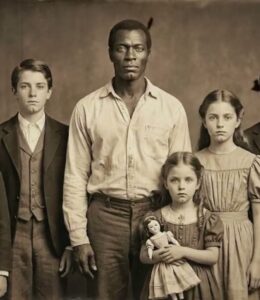
Seven children-4: Master’s seven children all looked exactly like one field slave…he never knew until his death
Catherine Thornton, left alone for months at a stretch, walked those fields more often than anyone recorded. And then the children started arriving. The first child, Thomas, came in 1833, exactly 9 months after Robert’s longest absence. Samuel knew the truth from the beginning, a truth he would carry in absolute silence for the rest of his life.

Seven Chldren-3: Slavery reduced people to property regardless of blood ties, genetic connections in a world ruled by skin colour
But workers nearing 50 depreciated like equipment wearing out, their value declining steadily toward whatever they might fetch in a final sale. Samuel understood this calculus with perfect clarity. He had watched it play out with other ageing field workers whose treatment shifted as their usefulness declined. Yet Samuel occupied a peculiar position that complicated these typical patterns.

Seven Children-2: Incredible story of how plantation slave sired 7 children with master’s wife, his carbon-copy elder son inherits him
By 1851, as Robert’s health began failing, Samuel had been carrying this knowledge for 18 years. Eighteen years of watching his children grow. 18 years of knowing the oldest Thomas would soon inherit him as property. That his own son would legally own him.

Wandering stranger: Turning and turning in widening gyre, Destiny has a way of writing the epilogue
For in solitude, the heart begins to respond to its own pulse, summoning thee soul to ebb and flow in the rhythm of the pulse. It is in the absence of noise that purpose whispers clearly. And I learned that sometimes God removes everyone else’s voice so you can finally hear His.

Post-Raila Luo: Coming to grips with the vulgarity, ethnicity and mediocrity that define roots of Luo pride and arrogance
The senior civil servants from the Luo community are just as inadequate as their political leaders. Health Principal Secretary Oluga, had the audacity to post on his Facebook, “Tutam is a reality,” simply because Ruto visited his home, while never mentioning the failing SHA and the dismal health system

Legacy of Mwalimu Nyerere in $137 million ‘sovereignty’ war: How latter-day regimes made Tanzanian businesses vulnerable to foreign banks
The High Court cleared the way for the EADB’s properties in Dar es Salaam to be auctioned and their bank accounts at Standard Chartered to be frozen to pay the businessman.