

Improved roads, drainage systems and solar-powered street lighting under the Second Kenya Informal Settlements Improvement Project (KISIP II) are proving to be to access to education and healthcare in Wajir Municipality’s informal settlements.
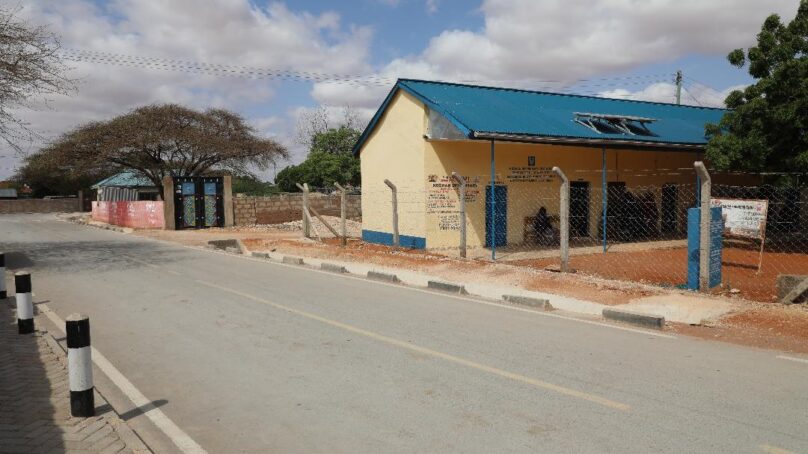
The infrastructure investment has improved connectivity to schools and health facilities in Shalatey, Hodhan, Halane, Wagberi, Jogoo and Borwaqo settlements, which has reduced challenges previously caused by sandy and impassable roads, flooding and inadequate lighting.
Implemented by the State Department for Housing and Urban Development under the Ministry of Lands, Public Works, Housing and Urban Development, KISIP II is supported by World Bank, Agence Française de Développement (AFD), the European Union and Wajir County government.
The project has delivered more than 8.4 kilometres of road, nearly 10 kilometres of drainage channels, more than 400 solar-powered streetlights and several high-mast floodlights across the targeted settlements.
Wajir County Project Manager Engineer Dan Owore explains that the improved infrastructure has strengthened access to essential public services that include schools and health facilities.
“The project has improved accessibility to residential areas, schools, health facilities and markets. Residents can now move more easily, while service providers can reach communities without the difficulties experienced before,” Owore said.
At Wajir Excel Academy in Halane Settlement, the improved road network has addressed challenges that previously affected learning. School Manager Ismail Abdikadir said the road outside the institution was previously covered with loose soil and generated considerable dust whenever vehicles passed near the institution.
“The classrooms are located close to the road, so dust and noise from passing vehicles affected lessons,” he said.
Abdikadir said the upgraded road had improved the learning environment and reduced transport-related costs for the school.
“Our school buses now consume less fuel because the road is smoother while the streetlights have also improved security around the school,” he said.
He explained that the improved environment enables the learners to concentrate in class better during lessons.
“Children are no longer distracted by dust and excessive noise. They are able to concentrate more during lessons, and we have observed improvements in their academic performance,” he said.
The improved road network has also made it easier for learners and teachers to access schools during different weather conditions. In the past, sections of the settlements became difficult to navigate during rainy periods, affecting movement and sometimes disrupting access to educational institutions.
At Borwaqo Girls Primary and Junior School, solar-powered flashlights have provided an additional benefit by improving visibility within the school compound, particularly in the boarding section. Head teacher Abdirashid Aden Mohamed said the lighting had enabled boarders to undertake evening activities despite frequent power interruptions.
“The girls can study comfortably at night, conduct group discussions and complete their assignments,” he said.
Mohamed said the improved lighting had also strengthened security in the school compound and increased parents’ confidence in the safety of their children.
“The well-lit compound has improved security and parents are more confident about leaving their children in school,” he said.
The project has similarly improved access to healthcare, particularly for residents who previously faced difficulties reaching health facilities because of poor roads and insecurity at night.
At Hodhan Dispensary, health workers say improved road access and street lighting have made it easier for patients to seek medical attention, including during emergencies. Adow Billow a nurse at the facility said poor road conditions previously discouraged some residents from seeking treatment, particularly at night.
“Today patients can reach the health centre more easily because of the improved road and street lighting,” he explained. “Pregnant women in labour can now arrive safely even at night using motorcycles or vehicles.”
The health facility has also recorded an increase in outpatient attendance following completion of the infrastructure works. According to data from the facility, outpatient attendance has increased by approximately 30 per cent, with improved accessibility enabling more residents to seek treatment.
The nurse said the upgraded road had also improved the movement of ambulances, medical supplies and community health promoters.
“The road has improved access for ambulances, medicine deliveries and outreach services. Security has also improved because the facility is well lit throughout the night,” he said.
Improved accessibility has also reduced the difficulties faced by health workers during community outreach programmes. Community health promoters can now reach households more efficiently, while larger vehicles transporting medicines and other supplies can access the facility without the challenges previously posed by sandy roads.
Wajir County KISIP Coordinator Mohamed Adow Abdi said that improving access to social services is one of the key objectives of the infrastructure investment.
“When roads are accessible, people can reach schools and health facilities more easily, while service providers can also reach residents,” Adow said.
He said the project had demonstrated that investment in basic infrastructure could have wider benefits beyond roads and drainage.
“Improving infrastructure in informal settlements is also about improving access to essential services and creating an environment where residents can access opportunities that were previously difficult to reach,” he said.
Project Engineer Blantom Gitau says the infrastructure is designed to respond to the specific challenges experienced by communities in Wajir.
“For many years residents faced poor accessibility, flooding and inadequate lighting. These challenges affected not only transport but also access to schools, health facilities and other services,” he says.
Gitau said the project incorporated vertical drainage systems to address flooding while allowing water to percolate into the ground and replenish shallow groundwater.
“Because Wajir is generally flat, the vertical drainage system helps manage storm water while also supporting groundwater recharge,” he said.
Community participation also played an important role in determining the infrastructure priorities. Gitau said residents identified roads, drainage and street lighting among their most urgent needs during consultations conducted before implementation.
“We asked communities what they wanted and they prioritised roads, drainage and street lighting. Their participation created ownership and made implementation easier,” he said.
The improved infrastructure has also benefited school transport operators and parents by making roads more accessible and reducing travel times.
For schools located within the upgraded settlements, better roads have eased the movement of school buses and other vehicles, while improved lighting has strengthened security around learning institutions.
At the same time, health facilities have benefited from easier access by patients, emergency vehicles and suppliers. Assistant Resident Engineer Emmanuel Mosioka said the project was completed within 18 months at a contract sum of approximately Kshh672 million.
“The roads, drainage systems and streetlights have achieved their intended purpose. Feedback from residents has been overwhelmingly positive because they are already experiencing improved access and better services,” he said.
The project has also created a safer environment for children and other vulnerable groups moving within the settlements. Solar-powered streetlights installed along roads and around strategic public spaces have improved visibility after dark, allowing residents to move between homes, schools, businesses and health facilities with greater ease.
Shalatey Settlement Chair Mohamed Hussein said the improved infrastructure had changed access to public services in the settlement.
“Previously, poor roads made movement difficult, especially during the rainy season. Today, vehicles can access the settlement more easily, including those taking people to health facilities and school,” he said.
Shalatey Settlement Chair Isnina Nur said improved lighting had particularly benefited women and children.
“Before the road and streetlights, insecurity was a major concern. Today the area remains illuminated throughout the night and residents feel much safer,” she said.
She noted that improved drainage had reduced flooding while school transport reaches children in parts of the settlement more easily.
In Hodhan Settlement, Chair Mohamed Abdulle Unshur said improved infrastructure had strengthened access to essential services while contributing to wider community development.
“The roads and streetlights have brought many positive changes. Movement has improved, security has improved and economic activities have increased,” he says
The project’s impact on education and healthcare forms part of the broader objectives of KISIP II to improve living conditions and access to basic services in informal settlements. The programme also includes socio-economic inclusion initiatives, including skills development for young people and land tenure regularisation aimed at strengthening the long-term sustainability of the upgraded settlements.
- A Tell Media / KNA report / By Hamdi Buthul


About author