

It would have inconceivable for Cape Verde to overcome football giants Argentina and make it to the group of 16. However, the West African island nation was minutes away from accomplishing the feat.
Unbeknown to the rest of the world, the FIFA World Cup is a monopoly of Mafia, which may explain why the drug barons were apprehensive that Cap Verde’s resilience was going to upset Argentina. It nearly happened. In anticipation of a possible upset, the American media tried to distract the Cape Verdean team by resurrecting a case in which the team’s standout player Ryan Mendes was accused of rape by a New Zealand woman.
Football being a powerful cultural and geopolitical tool select developed countries deploy to control opinion, nondescript teams from Africa, Arab world and Asia cannot be allowed to win against European and Latin American nations, it is said.
A week ago, Cape Verde drew 0-0 with Saudi Arabia to seal an unlikely place in the World Cup’s knockout rounds, where they played Argentina and Lionel Messi on Friday.
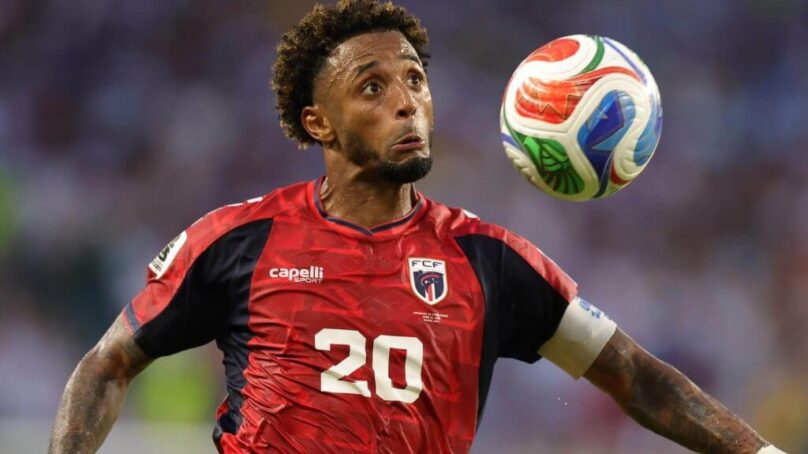
Ryan Mendes captained his country that day, winning his 100th cap in the process, another milestone for a player who was already Cape Verde’s record goal scorer.
It was another remarkable moment in this World Cup’s biggest underdog story, but the following day, events took a darker turn. It emerged, initially in reports from Brazilian newspaper Globo, that Mendes is facing allegations of rape.
The 36-year-old is being investigated over an alleged incident in New Zealand in March. Cape Verde were there to play in the FIFA Series, a mini-tournament designed to help them prepare for the World Cup. They played two games, against Chile and Finland. Mendes captained the team in both.
He has been accused of attacking a Brazilian woman who had been hired to work with the Cape Verde delegation as a translator during their time in Auckland.
After the New Zealand Herald revealed in May that an unnamed Cape Verde player was being investigated, local police confirmed to The Athletic that it was looking into the matter. After Mendes’ name was made public, the police in New Zealand confirmed to The Athletic that the probe remains ongoing.
Mendes has not been charged. The Cape Verde team did not respond to a request for comment, and neither did Mendes’ representative.
On Thursday, before their press conference for the Argentina match in Miami, Cape Verde’s press officer said that the coach, Bubista, would not be answering questions about Mendes. When The Athletic attempted to ask him about the player, Bubista did not answer, and the press officer reiterated that he would only be taking questions relating to the match. When another reporter attempted to ask about Mendes’ state of mind, he, too, was shut down.
At the time of writing, it’s unclear whether Mendes will face the world champions, although he trained as normal with his teammates on Thursday.
According to a statement issued by the woman’s Brazilian law firm to The Athletic, she was contracted by New Zealand Football, the game’s national governing body there and organiser of those March matches in Auckland.
The statement says she attended a “festive” event at the Cape Verdeans’ hotel alongside the players, including Mendes. After going back to her room, the statement says that Mendes knocked on her door and entered when she opened it.
The statement claims Mendes tried to kiss her and that, when she resisted, she was assaulted with “strangulation, punches and bites”. After that, it says, she was raped.
The legal statement includes photos of the injuries, which the translator says she took. These images were included in the statement and have been widely circulated on social media.
When her work was completed, the statement says that she returned home to her family. She says she reported the incident to local police, and attended an adult sexual assault clinic, where she was examined on April 1.
The document states that she tried to contact the contractors and organisers of the event, and the Cape Verdean Football Federation, but received “no real response”. It concludes by saying that she is still “traumatised”.
The Athletic has put the specific allegations in the legal statement to Mendes, via the Cape Verde Football Federation.
In a statement, New Zealand Football said: “These are obviously very serious allegations and as such we understand this matter is under investigation with the New Zealand Police. Because of that, we are unable to comment on it at this stage but will be assisting police as and when required.”
The possible souring of this sporting fairy-tale is not the most troubling aspect of this story. The trauma allegedly suffered by the woman should be of far greater concern.
But this is a World Cup, Mendes is a footballer, and Cape Verde have been one of the stories of the tournament. It is inevitable that this story has clouded that narrative. It is difficult to overstate how improbable Cape Verde’s journey to this tournament has been.
The country is a collection of 10 islands off the west coast of Africa, with a population of around 560,000. When they secured qualification for the tournament last October, they were briefly the second-smallest nation, by population, after Iceland, to ever reach the World Cup. Curacao, an island nation from the Caribbean, subsequently also secured a place to make Cape Verde the third-smallest country to achieve that.
At the time, their qualification was greeted with joyous scenes in the capital, Praia. This was not just the greatest achievement in the history of Cape Verdean football, but in Cape Verdean sport and even, in the view of some, the greatest thing to ever happen to Cape Verde full stop.
After being drawn in a group with European champions Spain, two-time World Cup winners Uruguay and Saudi Arabia, it was generally expected that they would depart the tournament at the earliest opportunity, although because of the expanded 48-team format allowing eight of the 12 third-placed sides to progress to the knockout phase, they did have a chance.
If they were to beat Saudi Arabia in their final game, it was thought, that might be enough to go through.
But then they unexpectedly drew 0-0 with Spain in their opening match, with goalkeeper Vozinha becoming an international celebrity overnight, thanks to his performance and clean sheet, and got another point from a 2-2 stalemate against Uruguay.
After Spain beat Uruguay in those sides’ final game, another 0-0 with the Saudis was enough to take Cape Verde through, and in second place. They became the first team since Chile in 1998 to qualify for the World Cup’s knockout phase without winning a group match.
Mendes started and wore the captain’s armband in all three matches. He is widely regarded in Cape Verde as the country’s greatest ever player and is one of only two, Vozinha being the other, to appear in each of the five major tournaments they have reached: four editions of the Africa Cup of Nations, and now this World Cup.
Mendes was born on Sao Vicente, one of the archipelago’s smaller islands. He currently plays his club football for Igdir in Turkey’s second division, but has had a peripatetic career that has taken in spells in France, the United Arab Emirates and England, where he played for Nottingham Forest during the 2015-16 season in the second-tier Championship.
Despite being their captain and one of their most prominent players, Mendes had been absent from the team’s social media content in the days following that draw against Saudi Arabia. He didn’t appear in either of the two YouTube video diaries they posted from their base in Tampa, Florida, nor in a selection of training pictures.
However, on Wednesday two days before the Argentina game, the team’s X account posted a picture of the squad and support staff, with Mendes front and centre.
According to sources close to the Cape Verde camp, who wished to remain anonymous so they could speak freely, the players have not been affected by the publication of these allegations. As far as they are concerned, until charges are brought against Mendes, nothing has changed. They have prepared for today’s match as they normally would.
It would also appear that the allegations have not affected the mood among Cape Verde’s fans, at least not negatively.
Most appear to still be behind Mendes, with some questioning the timing of his name being made public. There is a feeling that, despite the seriousness of the allegations, they don’t want this define their World Cup experience, to distract from the greatest sporting achievement in their nation’s history.
Before that press conference on Thursday, Cape Verde’s chosen method of dealing with this story was to not engage with it at all.
Their spokesperson did not respond to request for comment, something that is consistent with how they dealt with other media outlets who have reported on the allegations.
Their media-relations operation is not as comprehensive as many other countries at the tournament: the national football federation has few full-time staff and until this point, the only high-profile stories they have dealt with have been positive ones.
When initially contacted by the New Zealand Herald in May, FIFA did not engage with the matter. However, after Mendes was named, world football’s governing body and organiser of the World Cup, provided a statement, which read: “FIFA takes any allegation of misconduct extremely seriously and has a clear process in place for anyone in football who wants to report an incident.
“As a general rule, please understand that the independent judicial bodies do not comment on allegations they may or may not have received or whether or not investigations are underway into alleged cases. Any information they may like to share will be communicated at their discretion.
“FIFA is in contact with the New Zealand authorities. Please understand we cannot comment further at this stage.”
- A Tell Media report / Source: The Athletic


About author