

Tanzania launches electrification project targeting 120 islands across eight regions
The initiative aims to install 20,000 solar home systems at a total cost of Tsh8 billion ($3.2 million). The project, implemented by the Rural Energy Agency (REA), was officially inaugurated by Deputy Minister for Energy Salome Makamba on Bezi Island in Lake Victoria

Tanzanian president finally ‘remembers’ to ‘express sympathy’ for 10,000 civilians killed by police and internet blackout but no apology
However, President Suluhu Hassan did not out-rightly apologise for the reported 10,000 unarmed civilians killed by the police and military during the post-election violence. The president did not address concerns that the civilians shot dead security forces were buried in mass graves.
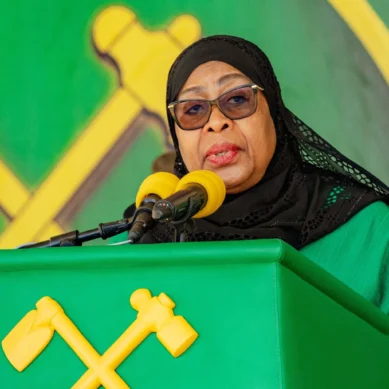
Tension over disputed election forces Tanzania President Samia Suluhu to shelve Independence Day celebrations fearing protests
Prime Minister Mwigulu Nchemba on Monday asked all nonessential workers to stay home on Tuesday. The annual Independence Day celebrations were cancelled in November and the government said funds that would have been used for the celebrations would be used to repair damaged infrastructure.

Kenyan civil societies want independent probe by ICC of election atrocities in Tanzania
Scores went missing, prompting fears that they may have been killed by the political bodies dumped in mass graves as may be the case with hundreds – civil society allege thousands – with Tanzanians suspected to have been buried in unidentified graves.

Making of a Swahili Nation: How bloody repression in Tanzania, Uganda and Kenya gave birth to quest for new dispensation
Tanzania is the result of the 1964 merger of two former states – Tanganyika, the mainland territory, and Zanzibar, the coastal archipelago. The merger followed Tanganyika’s independence from Britain in 1961 and the Zanzibar Revolution in January 1964 that led to a new government that sought unification with Tanganyika.

What to know about Tanzania president’s ‘white collar hit squad’ after bloody chaos
President Samia Suluhu Hassan, who took office in 2021 after the death of her predecessor, took more than 97 per cent of the vote, according to an official tally. Her main rivals, Tundu Lissu of Chadema and Luhaga Mpina of ACT-Wazalendo, were barred from running.

Tanzanian’s Idi Amin Dada incarnate: Curse of yellow flags and why East Africans are calling President Suluhu Hassan ‘Idi Amin Mama’
Notably, the inauguration of President Samia Suluhu Hassan was done without the participation of the people she claims gave him 97 per cent of the vote. The election body has been careful not reveal voter turnout that can help shed light on Suluhu Hassan’s sudden popularity. The unprecedented feat is “bettered” on by Paul Kagame of Rwanda who in the last presidential election garnered 99.1 per cent of the vote.

How election thievery became democracy: Paradox of Africa with world’s youngest population is ruled by oldest presidents
The trend points to deeper structural problems with Africa’s underlying political environment, said Jeffrey Smith, executive director of democracy-focused Vanguard Africa non-profit. He said all three countries feature incumbents leveraging state resources to stay in power, partisan security forces as well as flawed legal processes.

Coup in the offing? Tanzania sinks further into abyss as military appears sympathetic to protesters
A similar situation to what is happening in Tanzania is also currently unfolding in Cameroon where 92-yar old Paul Biya – in power since 1982 – was early this week declared winner, sparking protests that have since received the support of the military. Like President Suluhi Hassan, President Biya – who spends more than 80 per cent of his time in France – had used the courts, police and electoral commission to arbitrarily lock out opponents.
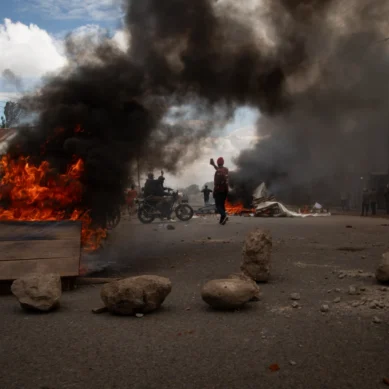
Decision to shut down internet denies Tanzania platform to repulse rumours ex-president Kikwete has fled Kenya as violence spirals
The ruling Chama Cha Mapinduzi or CCM (Revolutionary Party), which has been in power since independence in 1961 after changing name from Tanganyika African National Union – TANU), sought to extend its rule in Wednesday’s election, with presidential candidates from the two main opposition parties barred from running.
- 1
- 2