


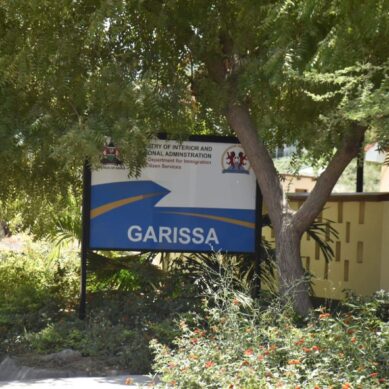
Why suspicion is rising over Garissa deputy immigration office has processed 16,000 passports, issued 15,000 others
North Eastern Regional Commissioner John Otieno on his part noted that the reopening of the office was part of the government’s commitment to bringing services closer to the people and promoting inclusivity for all Kenyans to access services equally.
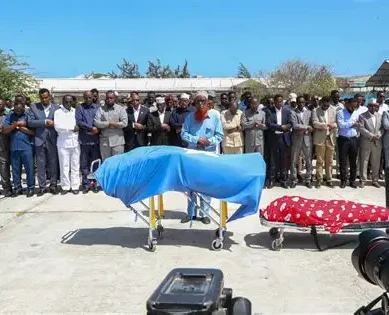
Somali national intelligence kills 22 al-Shabaab terrorists in central region as they planned attacks
Somalia’s National Intelligence and Security Agency (NISA) backed by international partners killed 22 al-Shabaab terrorists during two separate operations carried out in Hiran and Mudug regions. The NISA said the joint operation that was carried out on Friday evening targeted militants’ leaders who were planning to carry out terrorist attacks...

Priceless peace: By and by, Somali capital Mogadishu rebuilds after half-century of turbulence and bloodletting
Mogadishu, the capital of Somalia, has witnessed a tumultuous history since 1991, marked by civil war, insurgency and terrorism. The al-Qaida-linked extremist group al-Shabaab has wreaked havoc, perpetrating frequent attacks that instilled fear and crippled socio-economic development.

Somalis protests Israel’s recognition of breakaway state Somaliland as Turkey accuses Tel Aviv of stirring conflict in Horn of Africa
In the Somali capital, Mogadishu, crowds gathered at the main stadium for a rally led by prominent religious figures who condemned Israel’s recognition and called for unity in defence of Somalia’s territorial integrity.

Why humanitarian agencies often confide al-Shabab would be a more efficient partner than the Somali government
Despite this apparent governance success, al-Shabaab faces a crucial paradox: legitimacy without popularity. While Somalis may recognise the group’s administrative competence and align with its ideology up to a degree, it appears most do not want to live under al-Shabaab rule.

Somalis defy al Shaabab militants to celebrate Prophet Muhammad’s birthday
Some young people filmed the processions on their phones, livestreaming chants to friends abroad, while others hoisted banners adorned with verses of praise. Security forces, rifles slung over their shoulders, stood at the edges of the crowds, scanning for threats but unable to suppress the festive mood.
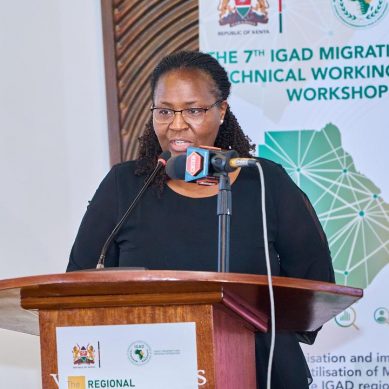
Horn, Eastern African states agree to integrate migration data to inform policy making
Speaking in Mombasa during the Seventh Regional Migration Data Technical Working Group meeting, IGAD Director of Health and Social Development, Ambassador Moussa Meigague Ali said member-states are committed to advancing evidence-based approaches to managing migration and displacement challenges.

Cut to the bone: In Kenya refugee camps, meat, fish and fruit are now absent, while onions, greens or tomatoes are rare treats
Reducing aid budgets is a grave mistake, a moral failure. If budgets must shrink, the axe should not fall on humanitarian aid. Reductions should target areas where they cause less harm, such as development programmes in middle-income countries that can better absorb the shock.

Somali capital Mogadishu is one of cities urbanising rapidly but weak state and clan politics leave its displaced in limbo
Clan dynamics are a particular complication. Mogadishu is dominated by powerful major clans, especially the Hawiye. The majority of IDPs, however, are from marginalised so-called minority groups, including farm-based Bantu people.

Al Shaabab announce death of three Kenyan solders in blast, unusually doesn’t claim responsibility
Al Shabaab controls large swathes of southern and central Somalia and frequently makes cross-border attacks on military and civilian targets, which security analysts say are aimed at pressuring Kenya into withdrawing its troops from peacekeeping missions in Somalia.
- 1
- 2