
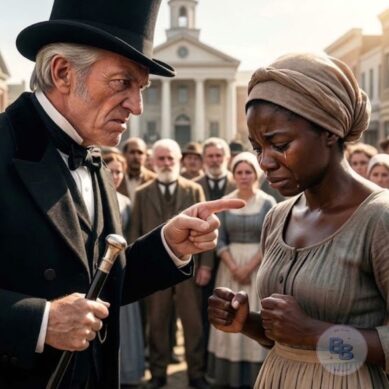
Race and class: In public Slave Master called Esther his ‘property’ but in a letter ‘more wife to me than any peace I have known’
For 14 years, she had moved through Cole House like a shadow trusted to carry trays, letters, silence, and shame. But by the time she stepped out into the hall with the banker downstairs and the hidden desk waiting in the dark, she knew the night had changed.
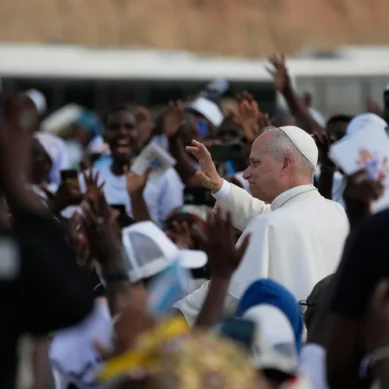
Is Pope Leo’s ancestry African? Census records trace his geology to mulatto, Black, Creole or free person of colour
Pope Leo XIV on Sunday recalled the “sorrow and great suffering” Angolans endured for centuries as the American pope prayed at a Catholic shrine located at the site of an important hub of the African slave trade during Portugal’s colonial rule. Leo travelled to the Sanctuary of Mama Muxima, nestled...
Horrors of slavery-2: Abducted into slavery with his mother and sister, Tobias vowed to revenge and did it by impregnating Whites
Tobias left that meeting and went to his quarters. He sat on his bed in the darkness and he smiled for the first time in 15 years. Because Edward Harlow had just handed him the weapon he needed, not the breeding itself. Harlow expected Tobias to stay within the enslaved population. That was the plan. That was what made it profitable.
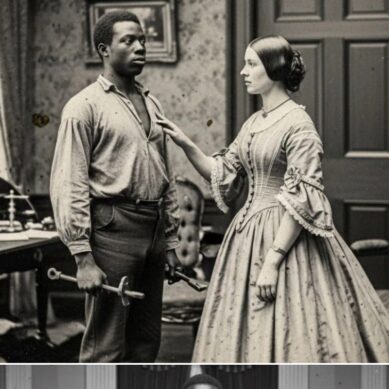
Horrors of slavery: His job was to impregnate slave women, then impregnated his owner’s wife and daughter
When Sheriff Thomas McKinley drew his pistol, Margaret Harlow, the plantation owner’s wife, stepped forward, her belly opened, her child lying dead at her feet, and she raised her bloodied hands in front of Tobias.

Solid gold-3: How stubborn persistence of love for Black man drove Elellanena to breach racial barriers, give birth to three mixed-race children
When Elellanena arrived, there were over 80 inmates crowded into cells meant for two or three. Most of the prisoners were there for minor offenses – theft, prostitution, public drunkenness. A few were there for violence. Elellanena was the only one there for loving across the colour line.

Seven children-4: Slavery story isn’t about the past, it’s about how the past lives in the present and continue shaping lives today
The story of Samuel and the seven Thornton children forces us to confront uncomfortable truths about how power determines not just who can speak, but what can be officially known.

Seven Chldren-3: Slavery reduced people to property regardless of blood ties, genetic connections in a world ruled by skin colour
But workers nearing 50 depreciated like equipment wearing out, their value declining steadily toward whatever they might fetch in a final sale. Samuel understood this calculus with perfect clarity. He had watched it play out with other ageing field workers whose treatment shifted as their usefulness declined. Yet Samuel occupied a peculiar position that complicated these typical patterns.

Seven Children-2: Incredible story of how plantation slave sired 7 children with master’s wife, his carbon-copy elder son inherits him
By 1851, as Robert’s health began failing, Samuel had been carrying this knowledge for 18 years. Eighteen years of watching his children grow. 18 years of knowing the oldest Thomas would soon inherit him as property. That his own son would legally own him.

Plantation owners threw Black male slave into murky swamp but it refused to bury him, he survived and came back for all 43 of them
The procession toward the swamp moved slowly. Cypress knees jutted from the mud like broken bones. Spanish must swayed overhead. The torches hissed in the damp air. The swamp, vast and black, waited without ripple. Local folklore held that the swamp was bottomless in places that bodies thrown into it were never found. Alligators fed deep within its channels.

Black Widow-3: My mother died begging them for mercy, did the Ku Klux Klan white supremacists show her any?
No matter what happened next, whether she lived or died trying to escape, she had already done something very important. She had shown that the knights were not invincible, that justice could find them even when the law couldn’t and that there were consequences for being cruel, even in a world built to protect the cruel.
- 1
- 2