



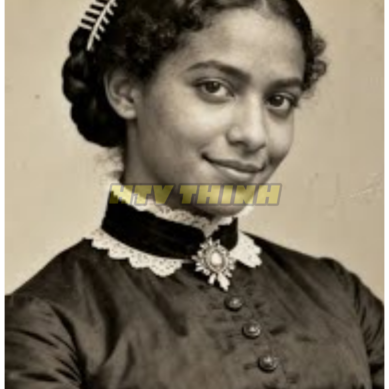
After abolishment of slavery, a Black widow sought revenge by seducing, killing 11 Ku Klux Klan men – White supremacist hate group
Thomas Brousard, who owned 1,500 acres of cotton fields east of town that weren’t doing well, ran into her outside the general store on a Wednesday afternoon. She was looking at a piece of fabric and moving her gloved hands over it with skill. He said he would help.

How three White widows bought a Black slave at Charleston Slave Market in 1857 and made him a gigolo, then jealousy set in
The house on Longitude Lane operated under rules that defied conventional Charleston dynamics. Samuel wasn’t assigned to manual labour. He was given a well-furnished room on the second floor. Catherine explained the arrangement: the three widows had formed a “domestic cooperative.” Wealthy, but without male heirs or husbands to give them social legitimacy, they needed something specific.
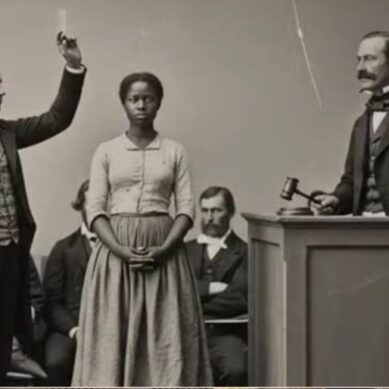
How problems retrace way home: Land owner bought slave girl ‘for less than price of cup of coffee’, she turned out to be his own wife’s blood
In the dim light of the kitchen, the housekeeper took a damp cloth to Nora’s wrist. She wiped away years of dirt until the faded blue scrap showed clearer. The letters on it stood out just enough now to read: MB. The housekeeper’s breath caught. Her mind flew to another piece of cloth packed years ago in a trunk that had belonged to Miss Margaret Beaumont before she became Mrs. Caldwell.
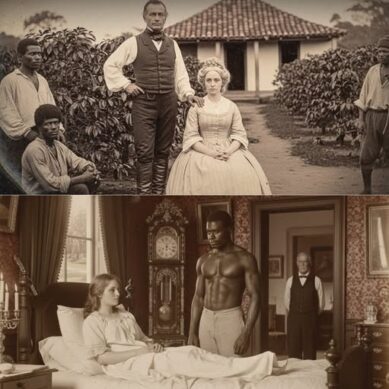
Dehumanisation: How desperate Brazilian slave owner picked seven Black men to share his wife with to get children
The promise of freedom was both a motivation and a form of control. The Colonel knew it would create competition among the slaves, decreasing the chances of rebellion or conspiracy. João Crisóstomo was assigned to Mondays, Miguel to Tuesdays, Antônio to Wednesdays, Pedro to Thursdays, Francisco to Fridays, José Maria to Saturdays, and Luís Carlos to Sundays.

Most beautiful woman in slave quarters on a South Carolina farm was forced to obey, instead that night she shocked everyone
A quiet ancestral courage woven by generations who had survived everything. And to break that courage, he subjected her to the most brutal tasks, carrying the weight of two men, cleaning the big house until dawn, working under the cruel gaze of overseer Elias Crowe, the man who prided himself on breaking any spirit, but his methods could never break hers.

Dismissed and ostracised: Intriguing story of America’s trailblazing Back Dr Margaret Morgan Lawrence who revolutionised child psychiatry and psychoanalysis
Psychiatry and psychoanalysis in the 1940s were overwhelmingly white, male and oriented toward treating wealthy private patients in Manhattan consulting rooms. The dominant theoretical frameworks were Freudian, focused on individual psychosexual development, with little consideration of social context, racism, or structural oppression.

Celebrated African novelist Wole Soyinka, from Nigeria, reveals his US visa has been revoked by Trump regime
Soyinka, who has taught in the US and previously held a green card, joked on Tuesday that his green card “had an accident” eight years ago and “fell between a pair of scissors.” In 2017, he destroyed his green card in protest of President Trump’s first inauguration.