



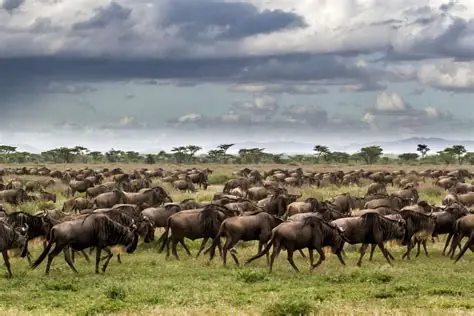
Narok County, in South Rift, is carrying out comprehensive infrastructure refurbishment to raise the profile of world-famous at the Masai Mara National Reserve by upgrading transport in the park, facilitate better ranger patrols, enhance the visitor experience and bolster conservation efforts.
The reserve has received upgrades that include the rehabilitation of local roads to make them usable all-year-round, even by non-4WD vehicles.
County Executive Committee Member (CECM) for Tourism, Wildlife and Culture Robert Simotwo said major developments include construction of new ablution facilities and modern Persons with Disabilities (PWD)-friendly visitor facilities, ranger housing upgrades and the launch of Masai Mara National Reserve (MMNR) Conservation Centre.
Simotwo observed that the Masai Mara National Reserve (MMNR) Management Plan, spatial plan and greater Mara ecosystem plan mandates the devolved unit to carry out regular upgrading and rehabilitation of the entire road network at the reserve, thereby optimising visitor use of the reserve, reducing congestion in heavily used areas, increasing access to new parts of the reserve where appropriate, and consolidating security coverage of the area.
In 2023, Narok Governor Patrick Keturet ole Ntutu signed into law a Maasai Mara National Reserve (MMNR) Management Plan, spatial plan and greater Mara ecosystem plan to be used between 2023 and 2032.
Simotwo pointed out that beyond the famed wildlife migration, Maasai Mara possesses immense ecological value as it hosts more than 25 per cent of Kenya’s biodiversity and plays a crucial role in sustaining the cross-border wildlife corridors.
The CECM noted that in July last year Masai Mara National Reserve was officially recognised by the World Book of Records for hosting the world’s greatest annual terrestrial wildlife migration.
“This monumental achievement elevates Kenya’s internationally renowned reserve further in the field of conservation and tourism. This recognition was a proud moment for Kenya, for Narok County, for our conservation partners and for all who cherish the Masai Mara,” he pointed out.
The World Book of Records’ honour specifically acknowledged the dramatic annual migration of over 1.5 million wildebeests, zebras, and antelopes across the expansive Serengeti-Mara ecosystem – a breathtaking spectacle unmatched anywhere on the planet.
Speaking in his office, Simotwo explained that Governor Ntutu’s administration had also enacted new management laws, upgraded ranger operations and adopted technology-driven conservation tools.
The CECM disclosed that besides the annual wildebeest migration, the reserve offers excellent year-round game viewing thanks to its diverse population of game like elephant, buffalo, zebra, giraffe, hyena, eland, gazelles and the Mara’s famous big cats.
The national reserve was first established in 1948 when the Mara Triangle, a 520 square kilometre area between the Siria Escarpment, the Tanzanian border and the Mara River, was declared a National Game Reserve.
Simotwo explained the primary aim of the national reserve was to protect the spectacular wildlife in the ecosystem. In 1961, the reserve was brought under the control of the then County Council of Narok and the core area was extended to the east to cover an area of 1,831 square kilometres.
In 1984, parts of the reserve were set apart to provide access to watering points for livestock and the reserve was brought to its present size of 1,530 kilometres.
In 1995, following the creation of the Trans Mara District, the management of the reserve was split between the County Councils of Narok (CCN) and County Council of Trans Mara (CCTM).
CCN was responsible for the reserve to the east of the Mara River while CCTM was responsible for the reserve to the west of the river (also known as Mara Triangle).
However, he said, after the promulgation of the 2010 Constitution, the two county councils were superseded by the Narok County Government that sis now responsible for the management of the entire reserve. In a bid to strengthen the National Reserve, Simotwo observed that the Narok County government launched the three policy documents namely: The Maasai Mara Management plan Spatial Plan and greater Mara ecosystem plan.
He said the three documents had gone a long way in preserving the great ecosystem as the management of the game reserve had improved. Among the key issues highlighted in the management plan is the zonation and visitor use scheme aimed at managing and regulating visitor use and impacts in the different zones at the National Reserve.
The zonation scheme, according to the management plan, establishes four categories of zonal area which are high-use zone, low use zone, Mara River Ecological zone and MMNR buffer zone.
In the new law, the high use zones are the focus of management efforts to enhance the reserve’s tourism product and provide a high quality, proactively managed, wildlife viewing experience for visitors.
Mara River ecological zone, which has a high tourism pressure because they are the rhino breeding areas and wildebeest crossing points, also has special management prescriptions and actions to protect the zone.
The national reserve has seven entry points namely Sekenani, Talek, Musiara, Olalaimutiai, Sand River, Enoompuai and Oloololo for public road access while the air access entry points are Keekorok, Olkiombo, Musiara, Mara Serena and Kichwa Tembo.
As a way of reducing negative impacts on the reserve’s environment and tourism product, Mr. Simotwo explained that no new ballooning concessions or expansion of existing concessions are permitted in the reserve during the lifespan of the plan, including balloons taking off from outside the reserve.
A maximum of six balloons per concession are permitted, with approval and licensing required from the Narok County Government, Kenya Civil Aviation Authority and the National Environment Management Authority.
- A Tell Media / KNA report / By Emily Kadzo


About author