

Religious leaders and other stakeholders have called for sustained dialogue, accountability and peaceful political engagement as Kenya prepares for the 2027 General Election.
Speaking on Saturday at the National Stakeholders’ Convention on Democratic, Credible and Peaceful 2027 Elections at Ufungamano House in Nairobi, participants noted that inclusive consultations were central to addressing emerging challenges and safeguarding the integrity of the electoral process.
The call was made barely hours after the elections body was ordered by the Public Procurement Administrative Review Board that found defects in its tender document’s technical requirements and evaluation rules. Consequently, the board ordered Independent Electoral and Boundaries Commission (IEBC) to amend and re-advertise its Integrated Elections Management System tender following a review request filed on August 14, 2026, by Galadirel Investments Limited against tender IEBC/OIT/01/2026-2027.
The procurement covers the supply, installation, testing, commissioning, support and maintenance of the IEMS, including hardware and accessories intended to support election technology ahead of the 2027 General Election.
The opposition has since the appointment of current IEBC office sustained pressure on the elections agency to open to public scrutiny of procurement of elections material. The opposition has also been loud in questioning the integrity of IEBC Chair Erastus Edung Ethekon, whom they consistently cast as a hireling of incumbent President William Ruto.
Consequently, the board directed IEBC to correct, clarify and amend the tender, then publish a new compliant version. Prospective bidders, it said further, must be given at least seven days to study the changes and submit bids. IEBC may seek technical advice from the Public Procurement Regulatory Authority, and the Board Secretary was directed to send the ruling to the PPRA director-general for monitoring and any further action.
IEBC is yet to announce when the corrected tender will be published, when bidding will close, or whether the procurement will still be completed in time for the 2027 election.
The final technical specifications, scoring method and ownership requirements will show how far the commission changes the original document. The reports also do not establish whether any bidder has been selected; the board ordered a fresh bidding process rather than an award.
The two-day interfaith convention at Ufungamano held from September 2-3, 2026 brought together actors in the democratic and electoral space to assess the country’s preparedness for the 2027 polls, identify potential risks and develop measures to mitigate threats to peaceful and credible elections.
A representative of IEBC Alutalala Mukhwana outlined the commission’s state of preparedness and reaffirmed their commitment to deliver credible, fair, transparent, and peaceful elections.
Dr Mukhwana urged religious leaders and other stakeholders to play their respective roles in promoting peace and accountability by engaging the electoral body constructively. He called on stakeholders to embrace dialogue as a means of charting the country’s peaceful path to 2027.
The commissioner also encouraged stakeholders to hold the commission accountable as it undertakes their constitutional mandate, noting that credible elections require the participation and responsibility of various actors beyond the electoral management body.
Notably, the organisers of the forum convened under the Kenya Religious Leaders Forum by the Kenya Conference of Catholic Bishops (KCCB), Evangelical Alliance of Kenya (EAK), Supreme Council of Kenya Muslims (SUPKEM) and National Council of Churches of Kenya (NCCK), maintained that the convention seeks to formulate strategies, actions and commitments to protect democratic outcomes before, during and after the 2027 electoral cycle.
Further it also provides a platform for stakeholders to examine the preparedness of constitutional institutions with electoral and security mandates and identify issues that could undermine democratic participation and peaceful political engagement.
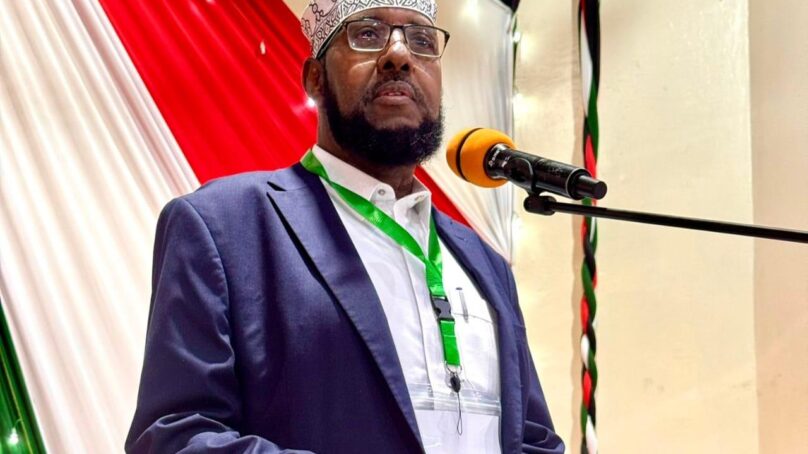
Supreme Council of Kenya Muslims (SUPKEM) delegation led by Secretary General Sheikh Abdullahi Salat and accompanied by its head of religious affairs Sheikh Yusuf Maki said their participation demonstrates commitment to peaceful and democratic engagement, national cohesion, responsible civic participation and credible electoral processes.
Secretary General Sheikh Abdullahi Salat also urged stakeholders to create an electoral environment where Kenyans can exercise their constitutional rights freely and peacefully, while faith communities contribute to maintaining peace, justice, and national unity.
Meanwhile, the convention comes as stakeholders increasingly emphasise the need for national dialogue that brings together government, civil society, religious institutions, professionals, the private sector and other actors in addressing the country’s social, economic and governance concerns.
Importantly, participants stressed that such engagements should move beyond deliberations to concrete action, with recommendations translated into measurable outcomes.
They further called for continued consultations that give diverse groups an opportunity to contribute to national decision-making processes and address concerns that could affect cohesion and democratic stability.
The stakeholders said sustained dialogue, respect for democratic institutions and responsible political participation would be essential in creating an environment conducive to credible and peaceful elections in 2027.
- A Tell Media / KNA report / By Nancy Omondi


About author