


The essay that follows is not written for those who seek comfort. It is written for those who seek truth – however inconvenient, however unsettling; however long suppressed.
For 40 years, the Indigenous peoples of Uganda have witnessed a systematic dismantling of their collective power. This dismantling has not announced itself with drums and declarations. It has proceeded quietly, incrementally, through laws and policies and constitutions that promised one thing while delivering another.
It has hidden behind the language of development, unity, and progress. It has persuaded even its victims that their suffering is incidental – the unfortunate but unavoidable by-product of nation-building in a complex world.
This essay rejects that persuasion absolutely.
What follows is an exercise in multivariate analysis – a way of seeing that refuses the comfortable simplifications of disciplinary thinking. The majority of Ugandans, including many who consider themselves educated, have been trained to think in fragments. They analyse politics without ecology, economics without culture and law without history.
They propose solutions that become new problems because they have never been taught to see the interconnections between the forces that shape their lives. This imprisonment in disciplinary silos is itself a form of disempowerment – a mental Bantustan that prevents the mind from perceiving the wholeness of its condition.
This essay is an escape attempt.
It names the pillars of disempowerment because what is named can be confronted. It traces the connections between land grabbing in the north, refugee education in the west, constitutional manipulation in Kampala and economic exclusion everywhere. It reveals that these are not separate problems requiring separate solutions but a single integrated system requiring an integrated response.
The reader who emerges from these pages still thinking in fragments has not truly read it.
The essay also names something else: the exogenous identity of President Tibuhaburwa Museveni. This is not named as accusation but as explanation. For four decades, polite discourse has danced around this fact, treating it as irrelevant to analysis. But a regime cannot be understood without understanding the identity of the man who built it and the community he has systematically elevated through every instrument of state power.
The constitutional inclusion of the Banyarwanda as indigenous; the importation and documentation of refugees from the Great Lakes region; the allocation of educational resources to exogenous children while indigenous classrooms crumble; the transformation of nomadic pastoralists into a constitutionally entrenched political base – all of this flows from a single source. To pretend otherwise is not analysis but complicity.
The reader may find this essay uncomfortable. Good. Discomfort is the beginning of awakening. For too long, the Indigenous peoples of Uganda have been silent, fearful, persuaded that their powerlessness is inevitable. The first thing to fear is fear itself. At nearly 77 years of age, what remains is not the anxiety of personal consequence but the clarity that comes from seeing beyond one’s own horizon.
Death, when it comes, is simply the next phase of being. What matters is what one leaves behind. This analysis is left behind.
It is written especially for the young – for those who will inherit either the ruins of this architecture or the foundations of a reconstructed indigenous dignity. It is written for the Acholi child watching gold extracted from ancestral land by outsiders. For the Muganda fisherman chased from Lake Victoria by soldiers while exogenes take his catch. For the Mukiga youth denied a national ID because bureaucratic requirements were designed for another era. For the Nubian professional passed over for appointment despite four generations of family presence. For every indigenous child sitting in a crumbling classroom while refugee children in nearby settlements receive properly funded educations.
For all, this essay is a tool. Use it to understand your condition. Use it to connect your suffering to the suffering of others. Use it to see that your enemy is not your neighbour from another district or another community, but the system that has fragmented you all. Use it to reclaim your memory, your belonging, and your power.
The architecture of erasure is formidable but it is not indestructible. Memory, once reclaimed, becomes a weapon. Belonging, once asserted, becomes power. And the Indigenous nations of Uganda, once they remember that they are nations, will find the strength to demand what has been taken from them.
Read this essay with the attention it demands. Read it not as a consumer of information but as a participant in an argument about the future of this land. Read it and then ask: What will be done with what is now known?
The answer to that question will determine whether this essay is merely a document – or the beginning of a movement.
Naming ourselves, reclaiming our collective memory
For four decades, a singular political project has defined the history of the territory once known as the British Uganda Protectorate. It is not a project of liberation, development or unity as its proponents claim. It is a project of erasure.
This essay argues that President Tibuhaburwa Museveni has systematically constructed an architecture of disempowerment designed to dismantle the collective agency, identity and sovereignty of the Indigenous peoples of Uganda.
To begin this analysis, an act of reclamation must be performed: the Indigenous nations must be named. The Indigenous Ugandans are the peoples belonging to the distinct traditional-cultural nations that the British colonialists found inhabiting this land.
They are the Acholi, Alur, Baganda, Bagisu, Bagwere, Bagungu, Bakenyi, Bakiga, Bakonjo, Banyabindi, Banyankore, Banyara, Banyarwanda (the original pre-colonial communities that existed prior to colonial boundaries), Banyole, Banyoro, Baruli, Basoga, Batoro, Banyabinza, Banyagwasa, Batuku, Batwa, Chope, Dodoth, Ethur, Gim, Hima, Ikl, Iteso, Japhadhola, Jie, Jonam, Kakwa, Karimojong, Kebu (Okebu), Kuku, Kumam, Lang’i, Lugbara, Madi, Mening, Mvuba, Napore, Ngikutio, Pokot, Sabiny, Samia, Shana, So (Tepeth), Vonoma and all others whose ancestors shaped this land’s ecology, culture, and history.
The regime in power, seeking to dissolve these nations into a malleable and compliant populace, has pursued a policy of Bantustanisation. As one analyst has observed, Uganda’s relentless creation of new districts – exploding from 33 at independence to over 100 – has followed an ethnic pattern, producing what can accurately be described as Invisible Bantustans“: territories resulting from national gerrymandering to form new districts composed of a majority ethnic group.
Just as the apartheid regime in South Africa created fragmented, economically unviable “homelands” to disenfranchise the Black majority, the Museveni regime has relentlessly promoted the politics of meaningless enclaves – districts, constituencies, and sub-counties – as the primary units of identity. This administrative fragmentation is a deliberate political tool. Its purpose is to make Ugandans forget that they belong to fifteen or more traditional-cultural nations, replacing collective memory and national consciousness with a parochial scramble for district-level patronage.
A person is no longer a proud member of the Kitara Confederacy or the Busoga Kingdom, but a supplicant from “Kazo District.” This is the first and most fundamental act of disempowerment: the erasure of the self.
To fully comprehend this four-decade-long project, the terms must be clearly defined. Empowerment is the process by which a people gain mastery over their affairs across all dimensions of their existence. Its pillars are:
- Ecological-biological: control over ancestral land, natural resources, and a healthy environment that sustains physical and cultural life.
- Socioeconomic: equitable access to economic opportunities, fair taxation and the power to shape the national economy for the collective good.
- Sociocultural: the freedom to practice, evolve and transmit one’s culture, language and social structures without coercion or replacement.
- Educational: equitable investment in the minds of the young, ensuring that indigenous children receive the tools to compete and thrive in their own society.
- Temporal: the agency to set the pace of change, to integrate new technologies on one’s own terms, and to plan for a future where one belongs.
Disempowerment, therefore, is not merely a lack of these things. It is the active and systematic destruction of these pillars, rendering a people as human pollutants in their own environment – alienated from their land, irrelevant to their economy and strangers to their own future. This essay will dissect the specific pillars of disempowerment that President Tibuhaburwa Museveni has erected to fortify his own “personalist” sovereignty at the expense of the Indigenous Ugandans who, for forty years, have been subjected to this architecture of erasure.
Presidential identity and the project of disempowerment
Any honest analysis of Uganda’s four-decade trajectory must confront a foundational truth that polite discourse has long evaded: President Tibuhaburwa Museveni is not an Indigenous but automatically became one after engineering Banyarwanda (in the Uganda Constitution 1995) as one of the Indigenous Groups of Uganda!). This fact is not incidental to the project of Indigenous disempowerment; it is the very key that unlocks its logic and explains its relentless consistency.
The 1995 Constitution’s inclusion of “Banyarwanda” as a constitutionally recognised indigenous community of Uganda represents the single most consequential manipulation of identity in the country’s post-colonial history. This provision, inserted at the insistence of the president transformed what had been a fluid trans-boundary nomadic pastoralist (trans-humanist) population into a legally entrenched constituency with full indigenous rights. The consequence has been profound and predictable: virtually any nomadic pastoralist from the Great Lakes region can now, through political patronage and selective documentation, claim Ugandan indigeneity at will.
This constitutional sleight-of-hand has enabled a demographic and political transformation that would otherwise have been impossible. The Banyarwanda community, now numbering over 11 million according to their own political mobilisation, has been consolidated as the president’s unwavering political base. Their chairman’s declaration that “Museveni, with the wisdom of a sage and the courage of a lion, changed our story” is not mere gratitude – it is an acknowledgment that their constitutional elevation came at the direct expense of every other indigenous nation.
From this foundational manipulation, all other pillars of disempowerment naturally flow. A president who has constitutionally elevated his own ethnic community cannot then govern as a neutral arbiter among indigenous nations. He governs instead as the champion of one against the many, using the machinery of the state to progressively weaken all others while consolidating his base.
The “wave of imported refugees” that has characterized the regime’s later years is not a humanitarian accident but a logical extension of this project—each refugee family, properly documented and settled, represents future voters whose loyalty runs not to the indigenous nations whose land they occupy, but to the patron who granted them belonging.
Pillars of disempowerment
Ecological–biological pillar: Land dispossession and environmental alienation
For an Indigenous person, land is not a commodity; it is the foundation of identity, history and belonging. President Museveni’s regime has systematically dismantled this foundation.
Land-grabbing and displacement: Under the guise of “investment” and “modernisation,” the state has facilitated the large-scale grabbing of ancestral lands. The creation of vast ranch schemes, sugar plantations (like those in Bunyoro and Busoga) and national parks (often with support from international conservation organizations in a process of “eco-colonialism”) has resulted in the physical displacement of communities. The indigenous people are not consulted; they are evicted. Their agro-ecological systems, perfected over centuries, are bulldozed to make way for monocultures that benefit foreign and local elites connected to the regime.
In northern Uganda, a particularly insidious pattern has emerged. As Eng Olanya Olenge Tonny has documented, the region’s gold-rich lands face what he terms a “calculated invasion” by so-called “Balalo” herders – a strategic move orchestrated by powerful political interests to seize control of valuable mineral resources. The influx of cattle serves as a “deceptive prelude to the real prize: vast gold deposits,” with actors backed by well-connected “mineral mafias” exploiting insider knowledge of Uganda’s mineral wealth.
Government agencies, including the National Forestry Authority (NFA) and Uganda Wildlife Authority (UWA), have been “weaponised to seize mineral-rich sub-counties,” violating indigenous rights and threatening the social fabric of communities already scarred by decades of conflict.
Even when the president issues directives ostensibly protecting indigenous land rights, the enforcement mechanisms themselves become instruments of disempowerment. When Museveni ordered the eviction of pastoralists from the Acholi region in 2025, the policy was implemented through military deployment, with fishermen subsequently accusing UPDF soldiers of brutalizing them and killing their colleagues during enforcement operations.
The army deployment to curb illegal fishing across multiple regions has left “several landing sites in Busoga sub-region and other parts of the country… economically disempowered.”
Erasure of belonging: This physical displacement creates a profound psychological disorientation. When a Mukonzo can no longer access the Rwenzori foothills that hold the spirits of his ancestors, or a Karimojong warrior is confined to a fraction of the vast rangelands his people managed for millennia, they are transformed into ecological refugees. The environment becomes foreign, a place where they are trespassers rather than custodians. This is the bio-politics of disempowerment: controlling a people by severing their lifeblood connection to their land.
Socioeconomic pillar: Weaponising poverty and privileging the exogene
The economic architecture of the Museveni regime is designed not for the prosperity of Indigenous Ugandans, but for their perpetual peripherisation.
Over-taxation and resource extraction: The indigenous population bears the burden of multiple and over-taxation, from market levies to local council dues while the state’s revenue is funnelled into maintaining a vast military and a sprawling, corrupt bureaucracy. The wealth extracted from Uganda’s soil – coffee, minerals, oil – enriches a tiny elite and foreign companies, leaving the communities who live on that soil in deepening poverty.
Affinity for the exogene: This is perhaps the most deliberate and ideological pillar of economic disempowerment. The regime actively constructs a Uganda where the exogene (foreigners and refugees) is privileged over the Indigenous person. By granting citizenship, national IDs and passports to waves of immigrants from the Great Lakes Region, and by actively courting Indian and Chinese nationals, President Museveni is engineering a demographic and economic shift.
The statistics are stark and undeniable. As one commentator noted in early 2026, “While citizens of Indian origin constitute less than one per cent of our population, data from the Uganda Revenue Authority and related agencies consistently indicate that enterprises associated with this community contribute over 60 per cent of industrial output, formal private-sector GDP, and tax revenue.” This disparity is not accidental but structural – the result of policies that have deliberately channelled indigenous Ugandans toward “survival-based economic activities” while enabling exogenes to “control value-addition, manufacturing, logistics and large-scale agro-processing.”
Economic peripherisation: Exogenes are encouraged to own and manage the commanding heights of the economy – from construction and retail to banking and manufacturing. Indigenous Ugandans are systematically excluded, pushed to the margins of their own economy to become labourers in their own land or “modern-day nomads” roaming in search of casual work. The indigenous businessperson cannot compete with a well-financed and politically connected foreigner.
State programmes as political weapons: Programmes such as Emyooga, Operation Wealth Creation, and the Parish Development Model are fraudulently marketed as empowerment tools. In reality, they are political radar and tools for weaponising poverty. Their distribution is not based on need or community development, but on political loyalty to the National Resistance Movement.
Communities and urban areas that consistently vote against the president are starved of these resources, while NRM supporters are rewarded. This transforms poverty into a cudgel to enforce political compliance, ensuring that entire indigenous communities are punished collectively for their electoral choices. It is the institutionalization of economic discrimination.
Sociocultural pillar: Engine of erasure
If the economic pillar impoverishes the body, the sociocultural pillar is designed to capture and reprogram the mind and the social fabric.
Citizenship as a political tool: The 1995 Constitution established an explicit ethnic definition of Ugandan citizenship, including a schedule listing 65 ethnic groups considered indigenous. This framework, while appearing to protect indigenous identity, has instead become an instrument of division and exclusion. Communities like the Maragoli – estimated at around 18,000 people – have been rendered effectively stateless because they are not listed in the Third Schedule, denied national IDs and forced into a discretionary naturalisation process that does not allow them to transmit citizenship to the next generation. Even communities formally recognised, such as the Nubians who trace their roots in Uganda to 1844, report being “rarely considered for public service appointments, including ministries, government boards and foreign missions” despite their constitutional recognition.
Conversely, the regime has used executive orders to affirm the citizenship rights of politically aligned communities. Executive Order No. 1 of 2025 directed that “Indigenous Banyarwanda be treated as full citizens,” with President Museveni dismissing documentation requirements as “illogical and outdated.”
The Bavandimwe community, over 11 million strong, has subsequently pledged unyielding support for Museveni in the 2026 elections, their chairman declaring, “We were ghosts in our own country, our dreams tethered by bureaucracy. But Museveni, with the wisdom of a sage and the courage of a lion, changed our story.”
Dismantling clan and kinship: The regime has accelerated the destruction of the clan-based extended family system, the ancient social security net and moral compass of Indigenous societies. Through urbanisation, the imposition of nuclear family-centric economic models, and the glorification of individual accumulation over communal responsibility, the bonds of Ubuntu (or humanness) have been fatally weakened. The elder who once held authority is now ignored; the clan meeting that once resolved disputes is now replaced by a corrupt local court.
Importing and integrating exogenes: The sociocultural dimension is the frontline of erasure. By granting citizenship to refugees and immigrants, the regime is not just being “generous”; it is actively populating the body politic with people who have no historical ties to the Indigenous nations. These new citizens are given Ugandan IDs and passports, and crucially, are encouraged to integrate and take up leadership positions.
An exogene can now stand for election as a local council chairperson or even a Member of Parliament in a community they have only recently joined. As a leader, they have no incentive to protect the cultural sites, sacred groves, or traditional knowledge of that indigenous community. Their loyalty is to the patron who granted them citizenship: the president. This ensures that even at the local level, leadership is alienated from the people it purports to serve, accelerating the erasure of cultural memory and practice.
Educational pillar: Weaponising refugee funding to starve indigenous minds
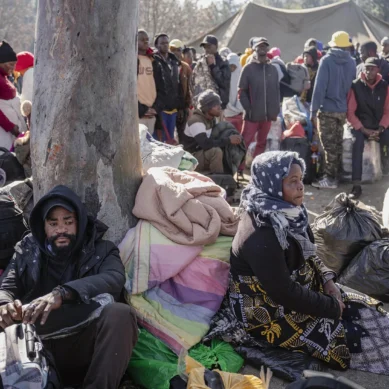
Among the most insidious and overlooked tools of indigenous disempowerment is the regime’s educational policy – specifically, the massive allocation of public resources to educate refugee children at the direct expense of indigenous Ugandan children.
For God and my country.
- Tell Media report / By Oweyegha-Afunaduula. The writer is a retired Ugandan scholar and elder who has witnessed and analysed Uganda’s political evolution from colonialism through independence to the present day.


About author