
There is something deeply unsettling about the emerging jostling for the leadership of Linda Wananchi movement before Kenyans are even been presented with a clear political roadmap for the organisation.
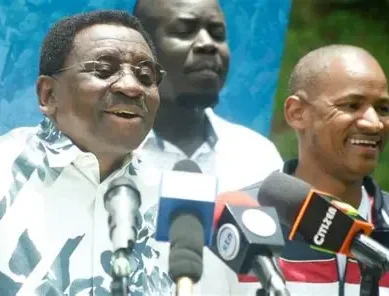
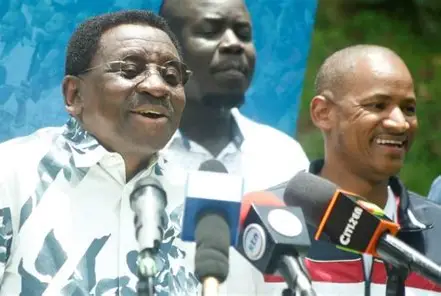
If allegations of political infighting by Babu Owino and James Orengo for influential positions are anything to go by, then an initiative that should represent a new chapter in Kenya’s political history risks being trapped in the old politics of personalities, positions and political entitlement.
That would be unfortunate. Kenyan youth hope the allegations are just that.
Linda Wananchi, still at the stage of establishing itself as a political vehicle should not begin its journey with a scramble for the throne. It should begin with a conversation about the Kenya we want, the institutions we need and the values that must underpin the management of the republic. This covers Article Six of the Constitution.
The fundamental question should not be who becomes chairman or party leader. The fundamental question should be: what kind of Kenya is Linda Wananchi proposing to build and how will it get us there?
Kenya has been here before. We have witnessed political movements born with magnificent promises of transformation only to become vehicles for individual ambitions. We have seen coalitions that began as instruments of liberation gradually degenerate into contests over positions, patronage and access to power.
Linda Wananchi must not become another version of the same story.
The apparent Orengo-Babu Owino axis represents, in my view, precisely the kind of political contest that Kenyans seeking a modern, civilised and accountable republic should question. This is not necessarily an argument that either individual has no constitutional right to seek political leadership. They do. Nor should political competition itself be condemned. Democracy requires competition.
The concern is different. When a movement has not yet adequately explained its ideology, programme, organisational structure and national agenda, why should the first political conversation be about who gets which position? That is where the problem begins.
The Kenya of tomorrow cannot be constructed using the political instincts of yesterday. The country needs leaders who understand that public office is not a trophy, entitlement or reward for political longevity. Leadership is a responsibility entrusted to citizens.
Linda Wananchi must therefore be bigger than the ambitions of any individual, however experienced, popular or politically accomplished. It is tempting to declare that particular politicians do not possess the “modern Kenya DNA.” But political arguments become stronger when they are based on measurable standards rather than personalities. The real test should be conduct.
Does a prospective leader respect democratic institutions? Does he believe in independent oversight? Can he tolerate dissent? Does he have a credible economic programme? Does he support transparent management of public resources? Does he believe in merit rather than patronage? Can he build institutions that will survive his departure from office?
These are the questions that should determine leadership. Kenya does not need another political organisation in which members spend more time calculating positions than discussing the country’s economic and institutional crisis.
Against this background, I am particularly impressed by what appears to be the humility of Edwin Sifuna in avoiding the cheap and premature controversies surrounding political positions and concentrating instead on the broader agenda. That approach deserves recognition.
But Sifuna, like every other political actor, must ultimately be judged by the same standard. Avoiding a leadership quarrel is commendable; it does not, by itself, establish that one possesses the best programme for Kenya. The danger would be to replace one personality-centred politics with another.
Linda Wananchi must not become a Sifuna Movement, Orengo Movement or Babu’s movement. It is constructed on the understanding and belief that is an agrarian movement, proletarian movement. It must become a democratic vehicle owned by its members and, ultimately, accountable to the Kenyan people.
Where is the roadmap to the proverbial Canaan? This is the question that should now dominate the national conversation.
Kenyans have heard the name Canaan before. It religious and proverbial sense Canaan is only second to the Garden of Eden – places where there is unstinted supply of milk and honey. In other words: joy and happiness.
Kenyans have heard promises of transformation, liberation and a better country. They have listened to politicians describe attractive destinations without explaining the road by which the country will get there. Linda Wananchi must do better. Where is the roadmap?
Kenyans deserve to know what this proposed political vehicle stands for.
What is its economic philosophy? How will it reduce the cost of living? How will it create productive employment for young people? How will it revive agriculture and manufacturing? How will it address Kenya’s growing debt burden? How will it ensure that public resources are used for public benefit? How will it tackle corruption?
How will it restore Parliament as an effective institution of oversight rather than an appendage of the Executive? How will it protect the independence of the Judiciary and other constitutional institutions? How will it reform public procurement and ensure accountability for major infrastructure projects? How will it deal with public-private partnerships and other long-term commitments that can bind future generations to decisions made today?
Perhaps most importantly, how will Linda Wananchi prevent itself from becoming another personality-driven political machine?
Answers to these questions are more important than the names of those fighting for positions. From political mobilisation to institutional reconstruction The Kenya we want cannot be achieved merely by changing the occupants of State House. Our problem is much deeper.
We need functioning institutions, accountable leadership and systems that prevent the abuse of public power regardless of who occupies office. Parliament must exercise genuine oversight. The Judiciary must operate without political intimidation or manipulation. Independent commissions must be allowed to perform their constitutional functions. Public participation must be meaningful rather than ceremonial. Public procurement must be transparent. Corruption must have consequences. Government projects must be subjected to proper feasibility studies, public scrutiny and value-for-money assessments. Public debt must be managed responsibly.
And citizens must be treated not as voting numbers to be mobilised every five years but as sovereign owners of the republic.
That is the political transformation Kenya desperately needs.
The greatest danger facing Linda Wananchi is not necessarily who eventually becomes its chairman or party leader. The greater danger is allowing the organisation to acquire the habits of the political establishment it claims to replace.
If the first instinct is to divide positions among political personalities, mobilise around individuals and negotiate who gets what, then Linda Wananchi will have failed its first test before it even reaches the ballot.
A new political movement must demonstrate that it can practise internally the democracy it promises to deliver nationally. Its leadership must therefore emerge through transparent, democratic and merit-based processes.
Its constitution must be clear. Its ideology must be known. Its economic programme must be measurable. Its governance agenda must be specific. Its leadership selection must be democratic. Its leaders must understand that positions belong to the institution – not the individuals occupying them.
For this reason, I would caution Kenyans against allowing the emerging Orengo-Babu rivalry to become the defining conversation around Linda Wananchi.
The issue is not whether either man is politically experienced or capable. The issue is whether the political culture represented by the contest is consistent with the Kenya that Linda Wananchi claims to seek.
If the answer is no, then Kenyans should reject that culture – not necessarily because of the individuals involved, but because Kenya cannot afford another political project that begins with elite competition for positions and ends with citizens being asked to provide the votes.
We should demand something fundamentally different. The Kenyan dream is not about finding another political messiah. It is about building a country in which institutions work, public resources are protected, citizens enjoy economic opportunity, leaders are accountable and political power is exercised within the Constitution. That is the modern Kenya DNA.
And if Linda Wananchi genuinely wants to carry that dream, it must demonstrate that DNA in its own organisation.
The movement should therefore resist the temptation to rush into personality contests. It should first give Kenyans the roadmap to Canaan.
Let it tell us where Kenya is going. Let it explain how we shall get there. Let it show us how the economy will be rebuilt, institutions restored, corruption confronted and public resources protected. Let it explain how ordinary citizens—not merely political elites – will benefit.
Then let Kenyans decide who among those offering themselves for leadership has the competence, integrity, humility and national outlook to deliver that programme. Until then, the race for positions is a distraction.
Kenya is not looking for another political throne. Kenya is looking for a political system that works. Thus, Linda Wananchi must understand one fundamental truth from the beginning:
The road to Canaan cannot be paved with the old politics of personality, position and political entitlement. It must be built on ideas, institutions, integrity, competence and the sovereign will of the Kenyan people.
- A Tell Media report / By Dr Seth Wetoyi Adams

About author