



Kenya is accelerating efforts to eliminate tuberculosis (TB) as a public health threat, with the government reaffirming its commitment to close the gap in diagnosis and treatment while scaling up community-driven interventions around the country.
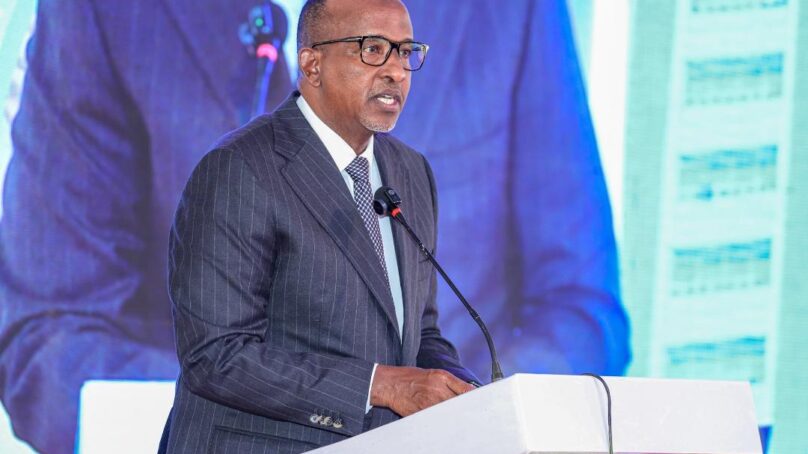
Speaking during the 2026 World TB Day commemoration at the University of Nairobi Graduation Square, Cabinet Secretary for Health Aden Duale revealed that 90,900 people were diagnosed and initiated on treatment in 2025 – representing 81 per cent of the estimated TB burden.
“This gap represents lives missed, families affected and ongoing transmission within our communities. As a government, we are committed to closing this gap,” he stated.
The event, held under the theme ‘Yes! We Can End TB – Led by Government, Driven by Communities’, underlined the need for a coordinated, whole-of-government approach, with communities playing a central role in prevention, detection and treatment.
Further, the cabinet secretary noted that Kenya has made significant progress, recording a 45 per cent reduction in TB incidence and a 58 per cent decline in TB-related deaths since 2015, driven by sustained government investment, strong county collaboration, and partnerships.
To strengthen early detection and access to care, the Ministry of Health – working with county governments – has expanded TB services to cover all 47 counties, including the deployment of molecular diagnostic technologies and ultraportable AI-enabled digital X-ray machines.
“These innovations are enabling early and accurate detection, even in remote areas, as we take services closer to the people in line with Universal Health Coverage,” Duale explained.
However, the cabinet secretary pointed out that ending TB requires more than medical interventions, noting that the disease is closely linked to poverty, overcrowding, malnutrition and environmental factors.
He therefore announced that the government is adopting an integrated, multi-sectoral response to address these underlying drivers, including improving living conditions, enhancing nutrition and expanding access to screening and care in high-risk settings and workplaces.
With 63 per cent of TB cases reported among men, Duale called for targeted, gender-responsive strategies to improve health-seeking behaviour, including workplace programmes, community outreach and the use of digital self-screening tools to encourage early diagnosis and treatment.
He also underscored the importance of sustained public awareness campaigns to promote treatment adherence, reduce stigma, and encourage household screening.
“TB is curable, and services are available across the country. No one should delay seeking care due to fear or discrimination,” he said.
Equally, the cabinet secretary highlighted the critical role of community health promoters, civil society, faith leaders and TB survivors in finding missing cases, supporting treatment adherence and driving behaviour change at the grassroots level.
Likewise, Duale gave assurance the government’s commitment to ending TB, describing it as both a public health priority and a national development imperative.
“Ending TB is about protecting households, sustaining a productive workforce and advancing Universal Health Coverage. As government leads, we will continue to work with communities to ensure no one is left behind,” he assured.
- A Tell Media / KNA report / By Michael Omondi


About author