

Kenya is in the process of preparing the Second Voluntary Progress Report for the Period 2023-2025 on the implementation of the Global Compact for Safe, Orderly and Regular Migration (GCM) for presentation at the International Migration Review Forum (IMRF) in New York in May this year.
The report, which is expected to demonstrate measurable progress, acknowledge implementation gaps and priority areas for future action will contribute to global stock taking at the IMRF forum which commences on May 5-8, 2026.
The East Africa nation hosts one of the highest populations in the world.
Director of National Coordination Mechanism on Migration (NCM) Dan Opon said the report will be Kenya’s voice during the IMR Forum, noting that Kenya and Luxembourg were appointed by the President of the United Nations General Assembly to be the co-facilitators during the event.
“Kenya was selected to come up with the GCM implementation plan because it is a champion in the Africa Region and globally. This work is being coordinated by National Coordination Mechanism on Migration for implementation of the activities,” he said.
The first voluntary report, submitted in 2022, provided an important baseline that has been used by many African countries.
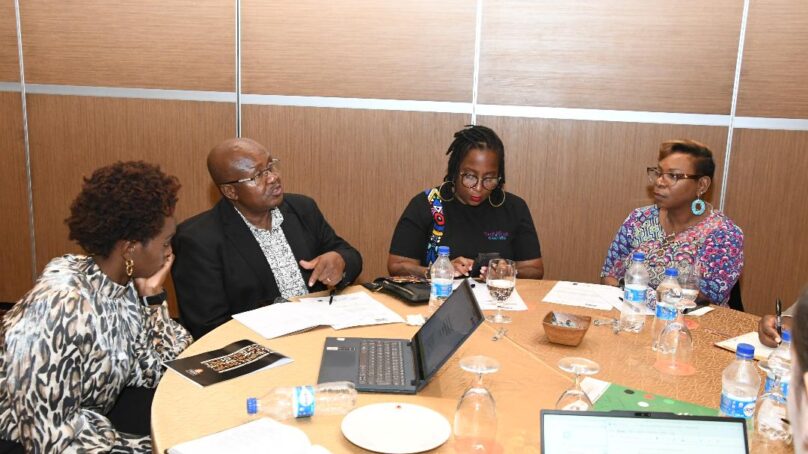
Dr Opon was speaking during the opening of the three-day Civil Society Consultative Forum to Review and Validate the National Voluntary Progress Report on the Global, Compact for Safe, Orderly and Regular Migration held in Nairobi.
He noted that the validation is part of the national commitment to periodically appraise itself and stakeholders of the progress made in the implementation of the compact since states are required to negotiate the compact for proper management.
“With the UN Global Compact on Migration, states are urged to negotiate the compact for proper management to curb issues of irregular human trafficking and smuggling,” the director said.
Dr Opon noted that since the endorsement of GCM in 2018, Kenya has domesticated its commitments within its national frameworks, by putting in place the first National Implementation Plan 2019-2022, which has seen the country strengthen its legal frameworks, enhance migration data systems and improve institutional coordination.
“Building on those gains, we launched the second National Implementation Plan 2023 -2027 under the leadership of NCM that focuses on deepening institutional reforms, addressing migrant vulnerabilities and aligning migration governance with Vision 2030 and the Sustainable Development Goals (SDG) and in particular SDG No.10.7,” he explained.
Kenya is the first country to come up with the National Implementation of the Global Compact Report 2023-2027. Several African countries have visited Kenya to benchmark on migration governance.
The director said civil society organisations (CSOs) are indispensable partners in the review and validation process of the report since their organisations provide essential services to migrants, besides advocating for migrant rights, conducting research, generating evidence and ensuring that voices of the migrants and host communities are heard in and around the country, and along border routes.
“In many instances, civil society actors are the first responders to the challenges faced by migrants, including vulnerable groups such as women, children, victims of trafficking, and migrant workers,” he said.
He said the workshop builds on the outcomes of the ministries, departments and agencies multi-stakeholder dialogue that was held in February this year where they reflected on the progress made in implementing 23 objectives of the Global Compact and identified areas that require attention.
Dr Opon advised the civil society organisations at the workshop to come up with additional perspectives and insights that will refine the zero draft of the national report, as well as identify key challenges, opportunities and emerging migration issues that need to be reflected in Kenya’s voluntary progress report that will guide future actions.
In his remarks in a speech read on her behalf by the Head of Programme Support Unit at IOM Mr Ethan Way, Chief of Mission at International Organization for Migration (IOM) Nomagugu Ncube commended Kenya for “notable progress” in strengthening migration governance frameworks, improving coordination and advancing diaspora engagement and labour migration systems.
“The country should also address the challenges on the protection risks faced by migrant workers abroad, irregular immigration and misinformation, climate mobility and internal displacement, reintegration of returnees and access to services for migrants in vulnerable situations,” Ncube said.
He called on both state actors and other stakeholders reviewing and validating the report to ensure that it ensures that migrant realities, that vulnerable populations are adequately represented, the dimensions of gender, youth and disability are sufficiently addressed and that civil society contributions are visible and acknowledged.
The workshop organised by the National Coordination Mechanism on Migration with the help of Department for Immigration and Citizen Services was sponsored by the International Organisation for Migration.
- A Tell Media / KNA report / By Bernadette Khaduli

About author