
Kenya has joined other African nations in calling for the removal of trade barriers and the easing of cross-board livestock movement on the continent in a push to unlock the sector’s potential and reduce Africa’s rising livestock import bill.
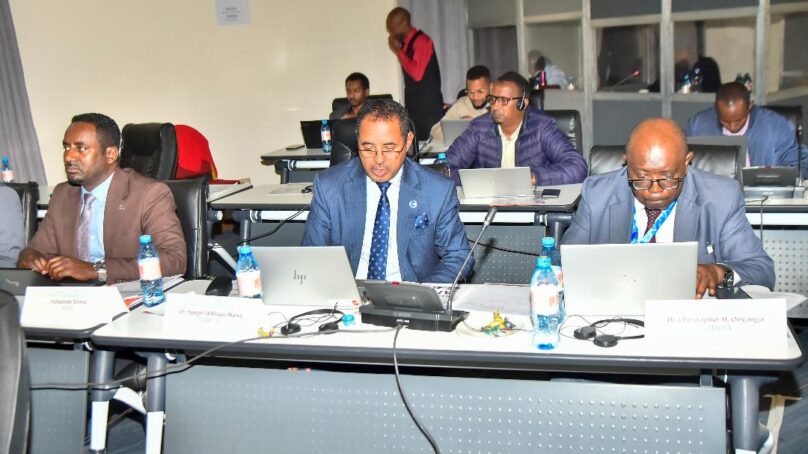
The appeal was made during a stakeholder engagement forum in Naivasha that brought together representatives of the East African Community (EAC), Inter-Governmental Authority on Development (IGAD) and Sahel region countries.
The participants emphasised that stronger cross-border livestock trade could transform a sector widely considered underperforming despite Africa’s vast natural resources and large pastoral communities.
The engagement backed swift implementation of the African Continental Free Trade Area (AfCFTA) agreement to create a single continental market for goods and services to eliminate non-tariff barriers that hinder trade among African countries.
Despite possessing one of the world’s largest livestock populations, Africa remains a net importer of livestock products.
According to Coordinator of the Economics, Marketing and Trade Unit at the African Union Inter-African Bureau for Animal Resources (AU-IBAR) John Oppong‑Otto, African countries imported livestock meat worth about $5 billion (Ksh646 billion) in 2024 from outside the continent.
Oppong-Otto said this deficit could be reduced if African countries strengthened intra-continental supply chains so that nations with surplus livestock production could supply those facing shortages.
“Africa has immense potential to grow its livestock economies and there is a need for renewed efforts to remove existing trade barriers and create stronger linkages between member states to reduce the continent’s heavy import dependence,” Oppong-Otto said.
He said AU-IBAR is currently implementing the Africa Pastoral Market Development Programme, which seeks to strengthen livestock value chains, improve market access for pastoralists and promote regional trade.
The representative said the Naivasha forum will seek to harmonise trade protocols such as livestock testing, certification and quality standards among trading partners.
Oppong-Otto said aligning these procedures would reduce transaction costs, ease cross-border movement of livestock and livestock products, and boost trade within Africa. He added that collaboration among pastoral communities, policymakers and the private sector would be critical in linking livestock farmers with regional markets and large-scale buyers.
Dr Solomon Munyua, a livestock trade expert noted that Africa imports livestock products worth about $10.2 billion annually, while exports account for only $3.4 billion, creating a trade deficit of roughly $6.8 billion.
Dr Munyua said African countries must address policy weaknesses, improve market data integration and close governance gaps to unlock the full value of the livestock economy.
He called for review of structural and policy frameworks as well as political commitment and goodwill in order to remove the major barriers and expand the livestock trade.
“Governments must tackle the high cost of production and invest in value addition if the continent is to benefit fully from its livestock resources,” he said.
Dr Munyua noted that Africa has exploited only about 10 per cent of its hides and skins potential, with many countries continuing to import finished leather goods from markets such as China and India despite huge potential in developing domestic processing industries.
Kenya has expressed strong support for the AfCFTA framework to create the world’s largest free trade area by number of participating countries.
Director of Livestock Policy and Regulations at the Ministry of Agriculture and Livestock Development Christopher Wanga said Kenya has already ratified several AfCFTA protocols and revised relevant laws to promote livestock trade.
“The African free trade area will open up the largest market for African products, including livestock and livestock products,” he said.
Adelaide Ayoyi said EAC member states have begun piloting safety standards manuals designed to ensure quality and safety of livestock products traded within the region.
At the continental level, Principal Officer for Trade in Goods and Competition at AfCFTA Secretariat Diana Akullo said the implementation of AfCFTA protocols would gradually liberalise livestock trade across Africa.
She noted that new tools such as the online non-tariff barriers reporting mechanism and rules-of-origin manuals were already in place to guide traders and governments on requirements for intra-African trade.
According to AU-IBAR estimates, Africa hosts nearly one-third of the world’s livestock population, with the sector supporting the livelihoods of millions of pastoralists and smallholder farmers.
The removal of trade barriers and regional markets integrated, livestock could become one of the continent’s most powerful drivers of food security, rural employment and export earnings.
- A Tell Media / KNA report / By Erastus Gichohi


About author