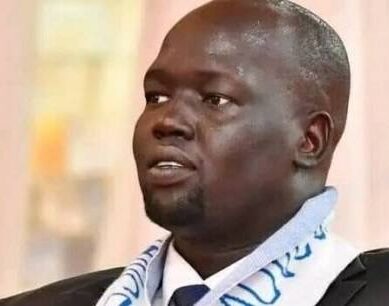

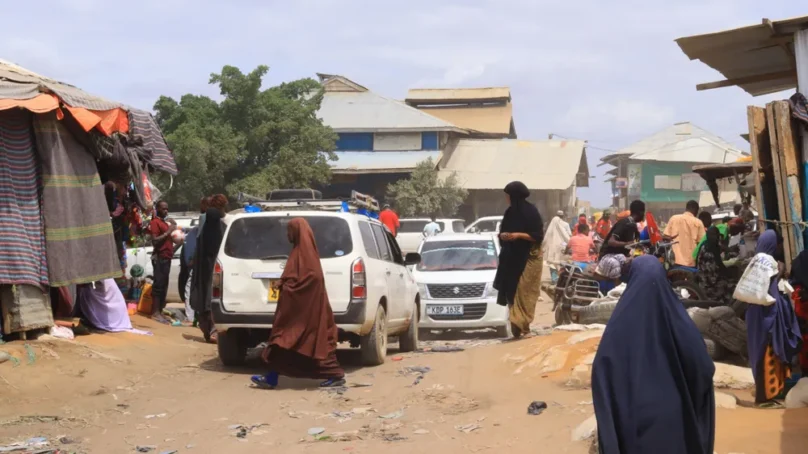
On a quiet morning in January in Kenya’s Dadaab refugee complex, 38-year-old Aden Mohamed Hafow, a father of four and a respected comprehensive school teacher, hung himself.
Born in Somalia, he had arrived in Dadaab as a three-year-old in the early 1990s. He knew little else but the camp’s dusty paths and makeshift classrooms. For more than 15 years, he had waited patiently in the queue for US resettlement, dreaming of a fresh start. But that hope began to crumble last year when US President Donald Trump barred the entry of refugees from Somalia.
The final blow came this year when, as a result of budget cuts, his contract with the Lutheran World Federation (LWF) – an international aid and religious organisation that employs many of Dadaab’s refugee teachers – was terminated.
“He became increasingly withdrawn,” his wife, Lul Mohamed Birkan, told The New Humanitarian. “He often isolated himself, spoke to himself, and repeatedly said he did not know how he would continue caring for our family.”
Just days after Hafow’s death, 26-year-old Mohamed Murjan Aden, a labourer, also hung himself. He had locked himself inside his house, and when neighbours finally broke through the door, they were unable to revive him.
Aden was struggling with his family responsibilities. His wife had left him and he had two children to support but he had also recently lost his job delivering water with a push cart. His mother, Leyla Mohamed Muse, had stepped in to look after the children and fed them all – although on some days there was no food at all.
Five days before Aden killed himself, his wife had returned and the children moved back into the family home. Muse is nevertheless clear why her son died. “The reason he ended his life was simply because of hardship,” she said.
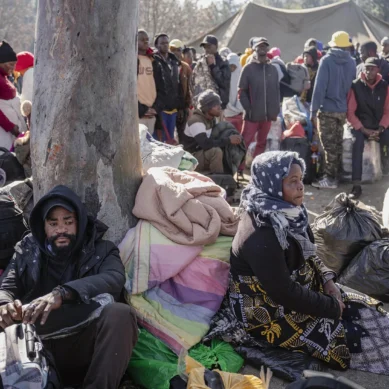
Hafow and Aden are not isolated tragedies in Dadaab – a three-camp complex of roughly 430,000 refugees. Although there is no official data, anecdotally the feeling here is that there has been a sharp rise in suicides, a consequence of the pressure cooker existence of prolonged displacement, slashed aid, and fading futures.
Poet Peter Kidi explores the human cost of aid cuts, and the resilience of refugees living between hunger and hope.
Established in 1991 to shelter those fleeing Somalia’s civil war, Dadaab’s camps have hosted generations who have never seen life beyond the fences. Kenya’s remarkable hospitality has sustained them, yet today the system that once offered refuge feels like a trap.
Decades of confinement, limited movement and dependency on humanitarian aid have bred frustration. Every year, more than 4,000 secondary students graduate with dreams of university or jobs, only to return to idleness.
Those lucky enough to find work are paid an “incentive” by the aid agencies – far less than the market rate. A teacher earns $30-$70 a month, barely enough for one person, let alone for families that can number more than eight.
There has also been roughly a decade of ration cuts amid global funding shortfalls. In August last year, the World Food Programme’s (WFP) introduced a new system of “differentiated assistance”, ranking households in categories from 1-4. Those in Category 1 – considered the most in need – received only 40 per cent of a full food ration. Category 2 gets 20 per cent, while categories 3 and 4 – assessed as having other means of support – receive no regular food aid at all.
Although Hafow had lost his job, he was still in Category 4. And even for those refugees assessed as Category 1-2, the reality – after years of ration cuts – is that they are desperately poor: often dependent on credit to get them through the month.
Habiibo Nuur Khalif, chair of Hagdera camp, the largest in Dadaab, is in no doubt that WFP’s new system is behind the perceived surge in deaths by suicide.
“This situation has caused extreme hunger, which has pushed many individuals toward suicide,” she said. “It has also contributed to divorce and the breakdown of many families.”
Siyaad Tawane Adan, board director of the Dadaab Refugee-Led Organisations Network (DARLON), said the whole of Dadaab feels the shock of suicides – an act forbidden under Islam. “It has become a serious and painful issue for our community,” she explained.
“I work closely with youth, and they often tell us that living in the camps has become extremely difficult,” Aden added. “They feel that their future is becoming increasingly uncertain and that their hopes are gradually disappearing.”
At the heart of these pieces is a simple truth: The experience of displacement is not only about survival, but also about dignity, creativity, and resilience. Research suggests rates of suicide are generally much higher for camp-based refugees and among displaced people than host populations.
Refugees in East Africa also experience higher rates of depression (31 per cent) and functional impairment (62 per cent) compared to the local population (10 per cent and 25 per cent, respectively). Prevalence is even higher among refugees who have witnessed violence and extended periods of displacement.
The few specific studies available on Dadaab note that women refugees who have experienced gender-based violence – a longstanding problem in the camps – are also far more likely to struggle with depression and PTSD.
“If someone says, ‘I want to kill myself,’ nobody cares… [They think] you are just joking.”
Jane Kireto is a school psychosocial counsellor with LWF based in Dadaab. She points out that depression is often misunderstood – and ignored – partly because there is a stigma around mental health.
“If someone says, ‘I want to kill myself,’ nobody cares… [They think] you are just joking,” she told The New Humanitarian. Physical illnesses like malaria prompt immediate hospital visits, but mental distress is seen as far less serious.
Counselling services have been available in the camps – historically more so than the neighbouring host population – but they too have been affected by aid cuts.
“When someone takes their life, it becomes important to understand the circumstances that led to it,” said Abdullahi Mohammed, a school headmaster. “We appeal to authorities and the community to provide awareness and mental health support, especially for young people.”
Community leaders are beginning to take charge, organising peer counselling, faith-based encouragement, and informal networks. “No one [should] feel that suicide is their only option,” said Dahabo Qowla Abdi, chair of Daghley camp.
In the wake of Hafow and Aden’s deaths – and at least two cases this year of attempted poisoning – Shacban Omar Ali Amin, an elder from Daghely camp, made a heartfelt appeal.
“I call on Somali youth to be vigilant, seek help, and avoid taking their own lives,” said Amin. “Let this be the last time such a tragedy occurs in our community.”
This week, Radio Gargaar – in partnership with The New Humanitarian – ran a call-in show for the Dadaab community to discuss the issue of suicides. Several of the callers had family and friends who had taken their lives, and shared their stories. The following are translated excerpts of some of the comments:
“We did not escape war and hunger only to lose our children to silence and despair here. My son survived everything in Somalia, but he could not survive the hopelessness in this camp.”
“I lost my brother to suicide two years ago. He kept saying he felt trapped with no future. We told him to be strong, but strength alone cannot replace opportunity and hope and we end up losing him.”
“I am one of the elders in Ifo camp. We bury our loved ones quietly, but inside we are screaming. How many more graves must we dig before someone listens to us? We are all fearing for our children. The situation in the camps is becoming harder in that the youth will either go for trafficking and die in the sea in Libya, or commit suicide.”
- A Tell Media report / Source: The New Humanitarian


About author