


There are songs that are written for celebration, and there are songs that are born from wounds. In Kenya, some of the oldest songs do not belong to musicians at all. They belong to mothers who waited beside doors that never opened again, to fathers who stared for years at the road hoping to recognise a familiar figure beneath the dust, to children who grew old carrying the unanswered question of where their fathers had gone.
You may have listened to a song of a soldier sent to a military mission yearning to return home to get any news from his family that he has been away from for years. This is Mbali or Kure Kure (So far away) is one such song.
Long before Kenya became a country of flags raised proudly beneath the morning sun, there were villages where history arrived not as something written in books but as footsteps outside the house at night, as whispers moving through sleeping homesteads, as the sudden absence of a neighbour whose name people learned to speak softly.
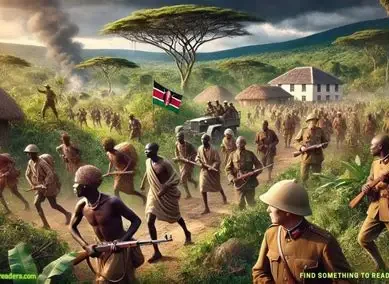
During the years of colonial rule, and especially during the Mau Mau Uprising of the 1950s, thousands of lives were torn apart by violence, detention, forced displacement, executions, collective punishment and fear. The forests of central Kenya became places of resistance, but they also became places where men disappeared into the darkness and families were left waiting beneath skies that seemed to know more than they could ever be told.
And perhaps that is where this story begins – not with a gunshot, not with a politician’s speech, and not with the raising of a flag, but with a woman standing at the entrance of a small rural home, watching the road long after everyone else had gone to sleep.
She had learned the geography of waiting. She knew which bend in the road caught the evening light and which one disappeared first into darkness. She knew the sound of approaching footsteps and the sound of footsteps belonging to strangers. She knew that hope could become its own kind of hunger. Every evening, when the sun descended over the ridges and painted the grass with the colour of old fire, she would listen.
Somewhere beyond the hills, the country was changing. Men were disappearing into the forests. Colonial soldiers and police moved through villages. Emergency regulations tightened their grip. Detention camps filled. Entire communities were uprooted or placed under surveillance. The ordinary life of Kenya – the planting of crops, the carrying of water, the laughter of children, the evening cooking fires – was increasingly interrupted by a history that had become merciless. The woman did not know the language historians would one day use to describe those years.
She did not know that generations later scholars would debate the uprising, examine archives, document abuses and reconstruct the suffering. She knew only that someone she loved had left, and that departure had acquired the terrible possibility of becoming permanent. Her children learned not to ask too many questions. The neighbours learned to lower their voices. And the road, once merely a road, became a place where memory waited.
In the forests, resistance fighters lived under conditions that belonged to another world. They moved through thick vegetation, depended upon local knowledge, survived hunger and exposure, and carried with them the dream of a Kenya in which Africans would have greater control over their land and political destiny. Among those who became associated with the struggle were figures such as Dedan Kimathi, whose name would later become inseparable from Kenya’s liberation history.
But history is often kinder to famous names than it is to the nameless. For every person whose photograph entered a textbook, there were countless others whose names survived only in the memories of relatives. There were men who left their homes and were never seen again. There were women who endured detention, intimidation and enormous hardship. There were children who grew up without understanding why one chair at the family table remained empty. There were villages whose silence contained more history than an entire library. The forest therefore became more than a geographical place. It became a symbol of resistance, sacrifice, fear and hope. Beneath its trees, people fought for an imagined future; beyond its borders, ordinary families paid prices they had never imagined they would be asked to pay.
Then came the arrests. They came in waves, sometimes in darkness, sometimes at dawn. People were detained on suspicion of supporting the rebellion. Villages were subjected to collective measures. Many Kenyans were confined in detention camps, where prisoners endured harsh conditions, forced labour and abuse.
The colonial government’s counterinsurgency campaign became increasingly severe. The violence did not belong to one simple story of heroes and villains; it was a complicated and devastating period in which civilians, fighters and security forces became caught in a machinery of fear and reprisal. Yet beneath every political argument was the human cost. A mother could lose a son. A child could lose a father. A wife could lose a husband. A village could lose its sense of safety. And when the names of the dead were never formally recorded, grief itself became the memorial.
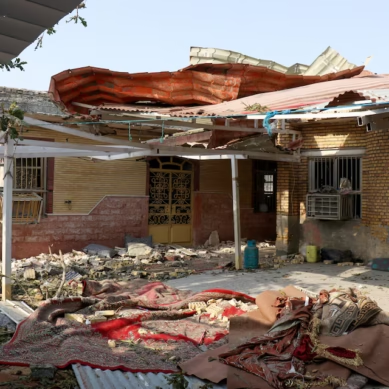
Perhaps that is why the most powerful history is sometimes found not in monuments but in ordinary objects. A cooking pot that belonged to someone who never returned. A faded photograph kept inside a tin box. A walking stick leaning against a wall long after its owner has died. A piece of clothing folded carefully because throwing it away would feel like admitting the truth. A name spoken once every year so that the person will not completely disappear. These are the small archives of suffering. They tell us that humanitarian history is not ultimately about statistics, although statistics matter.
It is about the individual hidden inside every number. It is about understanding that when thousands are displaced, there is one child asking where home has gone. When thousands are detained, there is one mother waiting at a gate. When thousands are killed, there is one family learning how to continue living inside a world that has suddenly become incomplete.
Years passed. Kenya moved towards independence. Political prisoners were released in phases. The colonial order began to weaken. Negotiations and constitutional changes transformed the country’s future. On June 1, 1963, Kenya achieved independence, and less than a year later, on December 12, 1964, became a republic.
On Independence Day, the Black-Red-Green flag with two stripes of white rose into the morning sky, and a new nation stood before the world. There were celebrations, speeches, music and crowds. There was the extraordinary joy of a people who had waited generations to call their country their own. Yet somewhere beyond the celebrations were those who could not celebrate without remembering. Independence could change a nation’s political status in a single day, but it could not return every missing person. It could not rebuild every broken family. It could not erase every scar left by years of violence. Freedom arrived, but grief arrived with it.
And perhaps that is the paradox at the heart of Kenya’s history: sometimes a nation is born while thousands of private hearts are still mourning. The flag can rise even when someone is still waiting for a knock on the door. A country can become free while a family remains imprisoned by an unanswered question. History may announce independence at midnight, but memory keeps its own clock. It remembers the faces that disappeared before the celebrations began. It remembers the people who carried the burden of survival so quietly that nobody wrote their names down. It remembers women who became both parents because war had taken one away. It remembers children who learned adulthood before they learned the meaning of peace.
Today, decades later, Kenya is young compared with the age of its mountains and rivers, but old enough to have inherited memories that cannot be buried simply because time has passed. Across communities, families continue to tell stories of those years. Museums, archives, memorials, historians, survivors and descendants have helped bring forgotten experiences into public memory. The preservation of such stories matters because remembrance is not revenge.
Properly held, remembrance is a form of responsibility. It asks what happened. It asks who suffered. It asks whose voice was missing. It asks why the people went missing. And, most importantly, it asks what must never happen again.
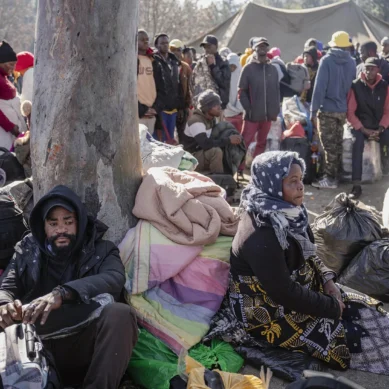
For humanitarian organisations across the world, this is where the story becomes larger than Kenya. The woman waiting beside the old road could have lived in any country where conflict separated families. The child looking at an empty doorway could have been born anywhere. The displaced family carrying everything it owns in a single bundle belongs to no single continent. The grief of disappearance has no passport.
From Kenya to Sudan, from Ukraine to Syria, from the Democratic Republic of Congo to countless places whose suffering rarely reaches international headlines, humanity continues to confront the same ancient question: what do we owe one another when violence makes ordinary life impossible?
Perhaps we owe each other memory. Perhaps we owe survivors the dignity of being heard without turning their suffering into spectacle. Perhaps we owe children the right to inherit history without inheriting hatred. Perhaps we owe the missing a promise that their names will not vanish merely because the years have become long. And perhaps we owe the future something even greater – the courage to recognise the warning signs before another generation learns to identify the sound of footsteps approaching in the darkness.
The old woman is gone now. The road has changed. The country has changed. Houses have risen where fields once stretched towards the horizon, and new generations travel roads that their grandparents once walked with fear. Nairobi glows at night. Kenya speaks loudly in the world. Children go to school carrying books instead of burdens that once belonged to adults. Yet if you stand quietly enough in an old village at dusk, when the wind moves through the trees and the last light rests upon the hills, you may understand why some songs refuse to die. They are not songs asking us to remain prisoners of the past. They are songs asking us to remember the cost of becoming free.
And so we sing – not because the dead need our voices, but because the living need their memory. We sing for the fathers who vanished into forests and detention camps, for the mothers who waited beside doors, for the children who grew up around empty chairs, for the unnamed men and women whose suffering was never carved into marble and for every family in every corner of the world that has ever waited for someone who did not come home.
We sing because history is not finished when the guns fall silent. It continues in the lives of those who survive. It continues in the questions children ask. It continues in the hands that rebuild houses, plant trees, educate the young and reach across borders to help strangers. And perhaps, after all these years, that is the most beautiful meaning of remembrance: not to live forever inside yesterday, but to carry yesterday carefully enough that tomorrow does not repeat it.
This is the song for those who never returned home. And it is also a promise to those still waiting.
- A Tell Media report / By Ben Munya

About author