



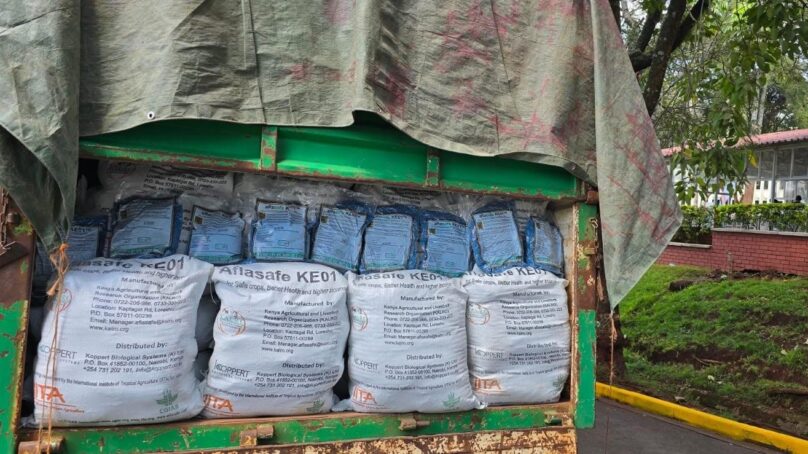
Concerned that country maybe flooded with poisoned food, Kenya is now contemplating assembling a team of leading agricultural scientists to investigate the possibility of toxic food circulating in local markets.Agriculture Principal Secretary Kipronoh Ronoh announced on Tuesday that government researchers will undertake a three-month study of national food safety with a focus on exploring any potential links between chronic illnesses such as cancer and food consumption.
He made the remarks on the side-lines of the start of a five-day second Kenya Agricultural and Livestock Research Organization (KALRO) Scientific Conference and Innovation Expo at Loresho in Nairobi.
Dr Ronoh said the study will help clarify growing public concerns and “demystify” claims connecting food safety issues to rising cases of chronic diseases.
“We have tasked scientists under KALRO and other related organisations to expeditiously conduct the survey. The findings will help the government make concrete decisions on food safety and ensure that food produced and consumed in the country is of high quality,” he said.
He added that reports alleging the presence of poisonous food in circulation have prompted the government to commission a deeper analysis of food safety standards. The findings, he noted, will also guide future policy interventions aimed at ensuring farmers adhere to safe production practices.
At the same time, Dr Ronoh directed researchers to conduct a separate one-month study on fertiliser use and aflasafe as key components of food production.
The study will examine gaps in the production system despite increased uptake of subsidised fertiliser and assess why adoption of aflasafe remains low among farmers.
The PS suggested that aflasafe could be integrated into the national fertiliser subsidy programme.
KALRO Chair Thuo Mathenge raised the alarm over aflatoxin contamination in food and animal feeds, warning that it continues to cause significant losses in livestock production and poses risks to human health.
Food safety in Kenya faces significant challenges from aflatoxin fungus that grows on maize, millet and peanuts, producing a potent carcinogen known as aflatoxins.
He cited cases of farmers losing entire flocks due to contaminated feed and called for stronger involvement of all value chain actors to increase the use of aflasafe.
“As a research agency, we recommend greater collaboration across the value chain to increase uptake of aflasafe,” he said.
Dr Mathenge also urged farmers to adopt improved crop varieties developed by KALRO, noting that low uptake of scientific innovations continues to worsen challenges such as climate change impacts and declining productivity in the agricultural sector.
“The board is firmly committed to supporting an environment where evidence-based research can flourish, where scientific integrity is non-negotiable and where the translation of knowledge into impact is a shared institutional priority,” he said.
KALRO Director General Patrick Ketiem said that, through partnerships with the private sector and farmer organisations, the ministry is working towards ensuring research is driven by national needs such as climate resilience and food security even as they continue to strengthen the institution’s role in policy and public discourse and build greater trust through accountability and delivery.
The conference is expected to run for four days, with participants encouraged to use the sessions to strengthen partnerships and accelerate the adoption of agricultural innovations.
- A Tell Media / KNA report / By Wangari Ndirangu


About author