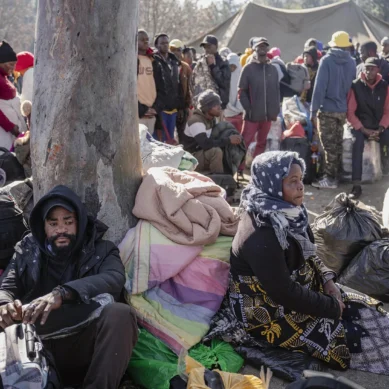




Wanjiku did not drive away that day. She looked at Otieno. Then at little Jabali. And she knew a transaction of the heart could not end on a sidewalk in Westlands. She picked up her phone and made one call.
Not to her father. To her property manager.
“The two-bedroom unit in the guest wing of the Lavington property. Is it ready? Clean it. Now.”
As the Mercedes pulled away from the Sarit Centre area, Otieno sat in the backseat, hands resting carefully on the fine leather, staring out at a city that had ignored him for months. He was not going back to the storefront.
When they arrived in Lavington, the gates opened to a garden heavy with bougainvillea. Wanjiku led them into a bright, furnished apartment. Clean white linen. A stocked kitchen. Warmth that did not come from borrowed blankets.
“This is your home for now,” she said. “No more July chills. No more hiding under shukas.”
Otieno stood in the middle of the living room, speechless. Jabali ran straight to the bedroom, leaping onto the mattress with a laugh that echoed down the hallway. Something inside Wanjiku softened completely.
But she understood something important. A house is shelter. A future is structure.
Two weeks later, she called Otieno into her study.
“Jabali starts school on Monday. The fees are covered for the next three years. As for you, I do not need charity cases. I need a logistics manager for our warehouses. Someone who understands the value of every shilling. Someone who understands promises.”
That was when his composure broke.
“Madam… why are you doing this for a stranger from the streets?”
She held his gaze.
“My father told me that if I gave you everything, you would take it all. But when I gave you everything, you took only what saved your son. That is not poverty. That is character.”
Today, her father still complains about “handouts” from behind his high Muthaiga walls. Wanjiku no longer argues.
Every morning she sees a boy in a neat school uniform heading to class. Every day she sees a man managing her operations with a loyalty that cannot be purchased.
The card had no limit. Her life did. Until she decided to expand it.
⸻
This story is not fiction.
It was shared with me by a prominent lady advocate of the court. The gentleman in this story studied at Kabete Institute, where he pursued a diploma in marketing. He once walked proudly into a two-bedroom apartment in Gachie with his wife after performing their traditional African marital rites.
Their son was born. When the child was one and a half years old, tragedy struck. During the Covid pandemic, his wife passed away. Work became unstable. Eventually, he lost his job. Too embarrassed to return home to his mother, he drifted into the streets of Nairobi. That is where destiny intervened.
Today, he works. He leads. He rebuilds.
He and the lady who helped him are quiet followers of this page. He approached her after discovering that she, her peers and her colleagues read my posts. He asked if their story could be shared here, not for praise, but to remind Nairobi that good people still exist.
He said something that stayed with me.
“Your posts teach people things others charge heavily for. If knowledge can save someone money, it can also save their dignity.”
So this is not a fairy tale. It is a reminder.
In a city obsessed with status, there are still Mountain daughters and Lakeside sons choosing integrity over assumption.
And that is wealth no economy can measure.
- A Tell Media report / By Faith Mirunde Hakala / Republished with the permission of Ms Mirunde – a budding public litigator and legal public educator


About author