
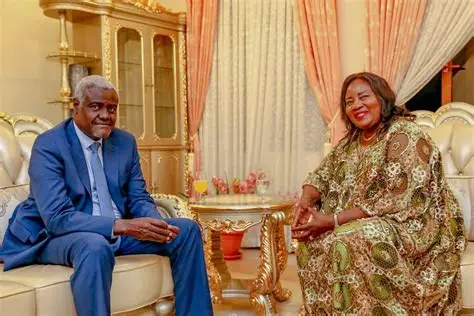
Way back in the 1990s before Jaramogi Oginga Odinga died, one the heroes of the Kapenguria Six, Achieng Oneko visited then President Daniel arap Moi. At that time contact with Moi was political anathema in the eyes of those leading what has come to call the Second Liberation.
Before Oneko’s visit, one of the Ford Party leading lights Martin Shikuku had visited Moi in 1992 and became a laughing stock among women and men then called Young Turk.
So strong was the criticism against Shikuku meeting Moi that he given a nickname that would henceforth be used in political banter – Ugali Eater. When Paul Muite and James Orengo caught wind of Oneko’s visit, they rushed to Jaramogi Oginga who was their Ford Kenya chair.
“Oneko has sold out. Imagine he has gone to meet President Moi,” Muite, then Ford Kenya vice-chair is reported to have said.
“Youngmen, what Achieng Oneko has achieved for the Kenyan people, none of you will ever achieve in your lifetime,” Jaramogi responded.
“The sacrifices he has made are immense. You need to talk to his children to know and understand the price he has paid for the freedom you enjoy today. If you must criticise him try and achieve a quarter of what he has achieved first. I don’t want to hear anybody speaking disrespectfully of Oneko,” Jaramogi explained further.
After long stories about the suffering of Oneko’s family when he was in second detention before and after independence, he concluded:
“When a freedom fighter of Oneko’s stature takes a break in whichever manner, you just thank him or her. Nothing more”
Ida Odinga could have fallen in this bracket after the appointment by President William Ruto and now generally critics of her new bond with Ruto may choose to handle her with Jaramogi’s gloves.
As discussions on comrade Ida Odinga’s resolve continues, let us agree that all citizens aspire to join government to partake of the endless menu of government services and opportunities.
In the Ida and Raila experience, the association neutralises the punitive claws of state terror. The choice to stay out of government has dire consequences that run through one’s lineage hence our respect for the Odingas.
When Kibaki and Raila ran the country under the Nusu Mkate (Half a Loaf) deal, their spouses were offered Ksh400,000 ($3,100) as their monthly pay. Ida rejected the offer arguing that public good came first.
When she took up the UNEP job, she received numerous messeges of congratulations: She deserves a job; She has been jobless for so long; This country wastes talent and precious labour, etc.
Has Ida really been “jobless” since her sacking at Kenya High? Similarly, one may ask, was Raila “jobless” during his detention? Those who confine the definition of jobs in terms of salary have a case to answer. Society has been so brutal to this category of unpaid workers.
At a personal level, I have experienced humiliation due to “joblessness”. One of those experiences destroyed one of my marriages. In a high profile party where my middle-class wife had dragged me to, attendants introduced themselves with various job titles such as worker at Central Bank of Kenya Kenya Power manager, headmasters, doctor etc. My wife stated her rank in a lucrative parastatal and alas! My turn came.
“Hi good people, my name is Wafula Buke and I am generally jobless.”
I had just come from college – a guerrilla training institute in Uganda, where certificates are never issued. My wife was embarrassed by my title. “How can you say you are jobless? At least say you are a businessman.”
“But darling, which business do I do? How can I be ashamed of a status I share with the majority in Kenya?” I replied.
I sympathised with her because I understood what she was going through. She was sure I would always introduce myself the same way so she asked me never to visit her at her place of work. That had to be a nail in the coffin of our unconventional marriage. How could I stay with somebody who was ashamed of me?
My wife had made the mistake that Ida made: marrying a man whose job had no pay but pain and humiliation. I gave her up and moved on. Ida did not give up on Raila.
Another scenario popped up again in the 1990s. Advocate Gitobu Imanyara asked me to be a witness in court for a former 1982 airforce officer who had served a jail term. The former airforce guy was seeking compensation for wrongful imprisonment and torture.
In court, I was asked many questions by Justice Effie Owour but one question has stayed fresh in my mind.
“Mr Buke what do you do for a living?”
I knew I couldn’t give the answer I gave at my former wife’s party. So I replied:
“I do anything.”
“Anything? What do you mean?”
She probed.
“I do anything, begging, hawking anything that can put food on the table.”
The Minister for finance flies out of the country to beg for us from multilateral donors. If that is a job then my begging was a job too I believed. This was a better answer but not good enough.
I ought to have said that I was engaged in patriotic work. Ida Odinga was not jobless before her appointment to United Nation Environmental Programme (UNEP), hence messeges of congratulations were out of order.
I tell this experiences to demonstrate to you the tribulations and disappointments that people undergo when they live a life that denies them accommodation in government like Ida did. Imagine how a young Ida Odinga, a professional teacher in those days. Days when people celebrated the graduation of two to three degrees per constituency. Being a teacher with a degree was so respected that one could be elected to parliament.
All her career aspirations were thwarted by Raila’s years in detention. Unlike my wife who had a problem with my “joblessness”, mama Ida’s partner was in prison facing treason charges and could be hanged if found guilty. Her case was different. She could not be invited to parties. If she arrived uninvited, the party ended and attendants dispersed fearing to lose their jobs. Mama Ida outshone most of our spouses and those who matched may have been inspired by her resilience.
George Anyona’s wife’s reaction to the imprisonment of her husband for seven years remains fresh in my mind. Anyona’s wife appeared to have lost her mind as she screamed her way out of court.
You could tell from her screams that her world had come to an end with Anyona’s imprisonment. She had been the breadwinner for the Anyona family when Anyona was in detention and when he was free and engaged in “patriotic work”. Like Ida, she had no chance for a speech at funerals because the master of ceremony would be in trouble.
Similarly, the wife of a Mwakenya rebel movement’s professor sold out her husband to the Special Branch (now called National Intelligence Service) in exchange for promotion. She became an Under Secretary in a ministry. The husband was jailed in Kamiti for six years. Ida and Anyona’s wife had an option to sell out too. They chose not to.
After the repeal of Section 2A in 1992, George Anyona was elected Member of Parliament for Kitutu Masaba. What followed should remind us of what Ida has decided to do by taking up the UNEP job. Anyona softened to the Moi government for reasons easy to decipher. More government doors would at least be open to him. Perhaps he also needed opportunities for his children now that old age was nigh.
Armchair analysts will romanticise the struggle and forget that those who pay heavy prices for change are also human. They have needs too. They require government services.
In my family experience, the local administration denied my brothers identity cards. They arrested my father and my brother Patrice Chemwile and asked them to tell them where I was before my brother could be given an ID. My father replied:
“What kind of human beings are you? Do you expect me as the father of my son to show you where he is so that you can go and kill him? Are you really serious?”
The political police freed him but refused to give Patrice an ID. My “brilliant” father had to do what Ida has done. He joined the ruling party KANU and served as a locational official to secure his family.
Anyona’s softening to Moi in the 1990s is comparable to Mama Ida’s resolve to work with William Ruto. She may have thought that if Raila couldn’t take power, who can? Only the Gen Z (Generation Zee) have shown a determination that promises something different but do I want to go through all that at my age? On this basis, she chose a better sunset.
Those who normally give up on pursuing tough causes say “there is a time for everything”. ODM’s interim party leader Oburu Oginga Odinga put it to his brother Raila Odinga more openly “You can’t struggle forever.”
What Jaramogi told Orengo and Muite about Oneko’s visit to Moi was not a justification but a rationalisation and acknowledgement that after all every stretch has a limit.
Finally, has Mama Ida and Raila been jobless through the 1980s? If they were jobless, then they were as jobless as Dedan Kimathi was in the forest fighting for change. The difference between the colonial army and the Mau Mau army was twofold. The Mau Mau army was not being paid while the colonial one had salaries. The Mau Mau were fighting for the people of Kenya while the paid colonial army was sabotaging their liberation.
Mama Ida has been engaged in patriotic work in the opposition struggle beginning with the KANU era. She was doing a more honourable job than all those who were serving in the Kanu government.
My wife was wrong. She should have introduced me as a freedom fighter instead of being ashamed of my unsalaried job erroneously referring to it as joblessness. Society ought to uphold a deeper definition of jobs.
Ida has abandoned an even bigger and more valuable job than what she has taken up. She had the historical and moral stature to oversee the transition in ODM. Now she can’t. That is an important job. To add on that, who knows, she too would have followed in the footsteps of Sonia Gandhi whose husband was assassinated. Sonia took over the Congress Party and led it to power.
Our mother may have made a mistake but as Jaramogi advises on Achieng Oneko after he went to see Moi, we should just say thank you for years of sacrifice and service.
- A Tell Media report / By Wafula Buke –


About author