
Collateral damage: How mere suspicions led to 12-day Israel-Iran war with US in supporting cast role
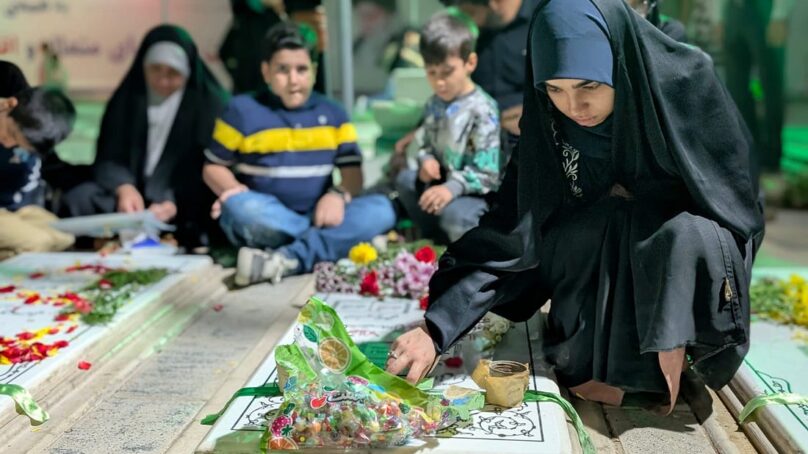
At Behesht-e Zahra cemetery in southern Tehran, families gather every Thursday to mourn their dead. Among the thousands buried, there are royalty, politicians, dissidents and soldiers, but a new section has been set aside for those killed in Israel’s 12-day military assault on Iran in June.
On June 13, 2025, Israel launched “Operation Rising Lion,” which targeted nuclear facilities, military sites and residential neighbourhoods. The assault was backed by US strikes targeting Iran’s nuclear sites on June 22. At least 1,064 Iranians were killed and thousands more injured, according to Iranian government figures. Iran retaliated with missiles and drones, killing 32 people in Israel, according to Israeli authorities.
When our team with Al Jazeera English’s documentary programme, Fault Lines, visited the cemetery in Tehran in October, the area was overflowing with bereaved visitors. Young girls sang songs of martyrdom beside women collapsed over burial plots. The sound of mothers wailing for their lost children, willing them to come back, filled the air with a grief that felt intrusive to witness.
One of the graves belonged to 12-year-old Amirali, who lies next to his father, Reza Amini. It has been months since they were killed in the first hours of the war, but for his grandfather, Sayed Hossein Mir Hashemi, the pain remains fresh and overwhelming.
Flowers and rose petals covered the ornate marble gravestone. Sayed knelt slowly, touching Amirali’s name with one hand, while holding his prayer beads in the other. “I have lost two of my best people,” he said. “My son-in-law is gone. His son is gone.”
Amirali’s mother, Zahraa, and his eight-year-old brother, Amirreza, survived the strike.
“Now my daughter is left with a small child. Without a home. Who’s going to take care of her? They killed her for no reason. What kind of future is waiting for this child without a father?” Sayed asked.
Photographs of victims, including children, hang above the graves at the cemetery. Gesturing toward them, he said, “Look at all these young people. Why were they killed? Most of them are civilians. Did they make bombs? Did they have guns? Did they become enemies with Israel? Did they become enemies with America?”
Breaking down, Sayed said, “I ask God for martyrdom and to go to him soon. I miss him so much that I want to die.”
The Israeli attacks in June came after the International Atomic Energy Agency (IAEA) released a report accusing Iran of enriching uranium to near weapons grade levels, and one day before the IAEA declared that Iran was not complying with its nuclear safeguards obligations.
In 2015, the IAEA issued a report detailing an alleged project to build nuclear weapons, but it stated: “The Agency has no credible indications of activities in Iran relevant to the development of a nuclear explosive device after 2009,” a year when US-led negotiations began and eventually culminated in Iran’s “nuclear deal” in 2015.
Formally known as the Joint Comprehensive Plan of Action, the deal set strict limits on Iran’s nuclear programme. The US withdrew from that deal in 2018 under President Donal Trump. Iran has since denied authorising any plan to develop nuclear explosives.
The Israeli government, nevertheless, claimed the June war was necessary to prevent Iran from acquiring nuclear weapons, declaring that Iran was weeks-to-months away from producing a nuclear bomb. As the bombardment began, Israeli Prime Minister Benjamin Netanyahu said in a speech that “Iran has taken steps it has never taken before – steps to weaponise this enriched uranium. If not stopped, Iran could produce a nuclear weapon in a very short time.”
In an interview with Al Jazeera on June 19, IAEA Director-General Rafael Grossi said that, while the agency had warned about the level of Iran’s uranium enrichment, it had found no evidence that Iran was building a nuclear bomb.
“We said very clearly in that report that preceded the dramatic events and the attack that we did not find in Iran elements that indicate there is an active and systematic plan to develop nuclear weapons,” Grossi said.
This echoed previous assessments by US Director of National Intelligence Tulsi Gabbard, who stated in March that the intelligence community “continues to assess that Iran is not building a nuclear weapon and Supreme Leader Khamenei has not authorised a nuclear weapons programme, which he suspended in 2003. The IC [intelligence community] continues to monitor closely if Iran decides to re-authorise its nuclear weapons programme.”
Iran has consistently maintained that its nuclear programme is peaceful and has been engaged in indirect negotiations with the current US administration, hoping to strike a deal that would allow limited uranium enrichment in return for easing US sanctions. Steve Witkoff, the special envoy to US President Donald Trump, appeared to flip-flop on the official position: at times suggesting enrichment could be part of a deal, then insisting that only the complete dismantling of Iran’s nuclear programme would suffice.
Israel struck Tehran amidst these negotiations, with the US joining the attack on June 22 – 10 days after Israel first struck. The US bombed multiple nuclear facilities, including the notorious Fordow plant, using some of the largest bombs in the world.
By the time a ceasefire was reached on June 24, negotiations on Iran’s uranium enrichment had collapsed.
Iran rarely allows international journalists to report from inside Iran. When Fault Lines visited Tehran – the city that bore the brunt of Israel’s assault – the team gained access to sites across the capital where civilians, including children like Amirali, were killed. Fault Lines obtained the names of 33 children killed in the war – most of them in their homes on June 13, the first night of the assault.
Amirali and his father were asleep in their apartment in the Chamran Complex, a 14-storey residential building linked to Iran’s Ministry of Defence, when they were killed in the first moments of the war.
“It was their rest time. At 2:00am, no one could attack their enemy. But these bastards came at 2:00am and killed people’s children,” Sayed said. Officials told Fault Lines that 46 people were killed in the attack on the Chamran Complex, including 24 children.
Sayed’s son, Amirezza, called him in the early hours and told him about the attack. He rushed to the scene but found rubble where his daughter’s home once stood. At first, he believed the family of four had been killed, but by 4:00am, his daughter contacted him from the hospital, where she was receiving treatment along with her surviving son. It was not until late in the afternoon that emergency workers were able to retrieve Amirali and Reza’s bodies.
“When they were removing the rubble, I saw that my daughter’s furniture had been found. When their mattress came out, Amirali’s hands came out and his face was found under the rubble. But his father’s body had been torn apart. We identified him with DNA two or three days later,” Sayed said.
He added that his son-in-law was an electrical engineer: “He was not a military man. He did not have a gun. He was not a nuclear scientist. He was not a missile operator. He was an ordinary man.”
Amiralli loved Taekwondo and competed in tournaments. Recalling his last conversation with his grandson, Sayed said, “I went to see Amirali for the last time. I kissed him and gave him a hug. He told me that he had a national competition tomorrow. I promised him that I would go to see him tomorrow morning and that we would go to the gym together to watch his competition. Unfortunately, Amirali flew away.”
Local media reported that the target of the strike was scientist Mansoor Asghari, who worked on Iran’s nuclear programme. He was killed along with his wife, daughter and three-year-old granddaughter. Hours after the attack, the Israeli military confirmed it had targeted and killed Asghari but it made no mention of the residential facility or the children killed alongside him.
In addition to the Chamran complex, one of the first locations Israel struck was a 16-storey residential building in Tehran called The Sarv Professors Complex. Once again, the target was a scientist. This time it was Dr Mohamed Mehdi Tehranchi, who was a nuclear expert, professor and president of Islamic Azad University of Tehran. He was killed alongside his wife as they slept in their apartment on the sixth floor. Fourteen other people were killed in the building.
Israel had accused Tehranchi of working on developing nuclear explosives for Iran as part of an alleged clandestine scientific project from 1989 to 2003. Tehranchi was also sanctioned by the US over the same allegations. His son, Mohamed Reza, strongly denied allegations against Tehranchi.
“My father was a scientist working on peaceful nuclear energy,” he said. “There is no evidence these scientists were currently involved in any [(weapons]) project or activity. Israel hasn’t even provided any proof. Israel’s strikes were based on old accusations, ones that were already answered,” he added.
- A Tell Media report / Adapted from Drop Site


About author