
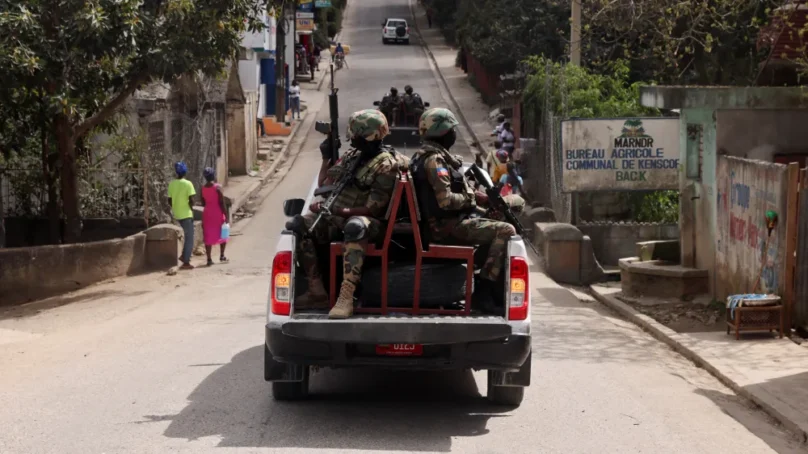
Who will fund it? Which countries will troops come from? How will it coordinate with the police and other actors? What role will Erik Prince’s private drone fleet play? These are just some of the questions facing Haiti’s new Gang Suppression Force (GSF).
After the Kenya-led Multinational Security Support (MSS) mission failed to stem Haiti’s rapidly deteriorating security situation, the UN Security Council approved Resolution 2793 on September 30 to replace the MSS with a new force.
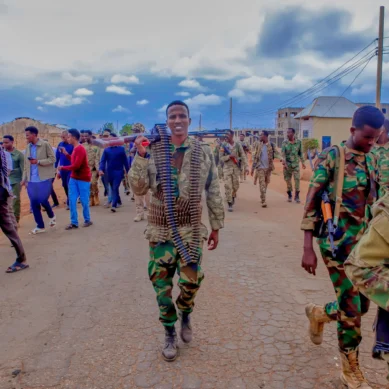
Slated to eventually number 5,500 police and military officers, the GSF officially started operating two weeks later, but for the time-being it is reliant on the contingent of around 1,000 MSS personnel deployed last year.
Authorised by the UN, the MSS was mandated to help the Haitian National Police (PNH) restore security two years after the assassination of President Jovenel Moïse sent the Haitian capital, Port-au-Prince, spiralling downwards into new levels of lawlessness. The US pledged to provide $600 million for the mission, but this wasn’t enough, and other countries didn’t follow through on commitments of money and personnel.
“The MSS was never given the means to carry out its mandate. It was supposed to have up to 2,500 personnel; it got barely to 1,000. They didn’t have the necessary equipment; they were outgunned and underfunded,” a Caribbean diplomatic source said, speaking on condition of anonymity. “We can only hope that the GSF will get the funding and the number of personnel that has been mentioned in the Security Council Resolution.”
A statement posted on the new force’s X account says the transformation of the MSS into the GSF “reflects the lessons learned from the MSS mission”, and adds that the GSF “operates under a more robust mandate”.
But experts both inside and outside of Haiti say more information is needed to know what changes the GSF can really bring about, and many fear it will fall foul of the same obstacles that caused the original mission to fail or, worse, inflame the situation.
This briefing explores what we know about the new force, the challenges ahead, and what it all means for Haitians struggling through one of the world’s gravest humanitarian crises.
What is the current situation in Haiti?
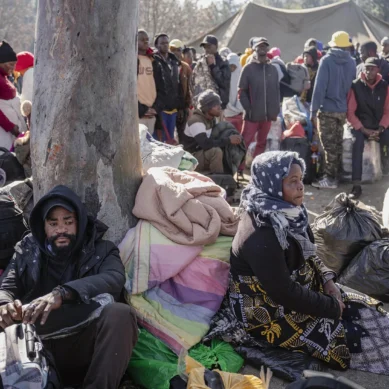
Since the deployment of the Kenya-led force, the security situation has continued to worsen: At least 4,388 people were killed due to gang violence between January and September this year, according to the latest quarterly report from BINUH, the UN’s office in Haiti. Armed groups have continued to expand to larger areas of the country; nearly 1.4 million people are now displaced; and more than half of the population of nearly 12 million faces acute food insecurity.
In early October, Stéphane Dujarric, the spokesperson for the UN secretary-general, told the press that 6,450 cases of gender-based violence had been registered between January and August of this year – half of them rapes. In 75 per cent of cases, gangs were the perpetrators, and displaced people made up 70 per cent of the survivors.
Compounding the situation, humanitarian assistance is struggling to reach those in need, as aid barriers grow insurmountable.
“Working conditions are becoming increasingly difficult, especially with the fear that has taken hold in the humanitarian sector since a gang kidnapped UNICEF workers [in July]”, Jean-Marc Biquet, head of Médecins Sans Frontières (MSF) in Haiti, where the organisation has been repeatedly targeted, said. “Everyone is reluctant to travel to dangerous areas,” he added.
So what do we know about the new Gang Suppression Force?
Like the MSS, the GSF is not a standard UN peacekeeping mission, but a UN-authorised force mandated to operate in consultation with the Haitian government. However, it is different from the original force in several ways.
The GSF will rely on operational and logistical support from a United Nations Support Office in Haiti (UNSOH) still to be set up in Port-au-Prince – a backing the original force did not have. The UNSOH will provide fuel, water, accommodation and other necessary infrastructure for the GSF bases, as well as medical and mobility support.
Set to be much larger than the MSS, which was composed mostly of police officers and whose mandate was to support the PNH in its operations, this new mission will be largely military and is allowed to operate independently of PNH command.
In a press conference days before the resolution’s approval, Henry Wooster, chargé d’affaires at the US embassy in Haiti, said the mandate enjoins the GSF “to go after the gangs, to pursue them with lethal force”, adding that the new force will have “freedom of manoeuvre”.
According to Resolution 2793, its initial 12-month mandate includes “intelligence-led targeted, counter-gang operations to neutralise, isolate, and deter gangs”, but also “provid[ing] security for critical infrastructure sites and transit locations”, and supporting the PNH, the Haitian Armed Forces, and national institutions to ensure the security conditions needed to hold elections and allow access to humanitarian aid.
The mission’s leadership and accountability system are also different to those of the MSS. According to Resolution 2793, the GSF will include – in addition to the 5,500 troop contingent – 50 civilians to whom those troops will report. No information about the nationalities or the distinct roles of those civilians has been shared.
Unlike the MSS, which had to find a country willing to lead it, the strategic direction and oversight of the new force will fall to a Standing Group of Partners, including the nations that contributed to the previous mission – the US, Canada, Kenya, The Bahamas, Jamaica, Guatemala and El Salvador. On December 1, the group designated Jack Christofides, a senior UN official with previous experience leading peacekeeping efforts in Africa and Lebanon, as the force’s Special Representative.
The Organization of American States (OAS) will play a specific role too. In August, the hemisphere-wide regional bloc presented a “Road Map for Stability and Peace in Haiti” – a plan to be led by Haitian authorities with international support and coordinated by the OAS, CARICOM (the Caribbean regional bloc) and the UN.
“The OAS has been asked to contribute to the overall strategic concept of the GSF,” OAS Secretary Albert Ramdin said via email. “[It] has been given a mandate “to provide a targeted support package to the GSF and HNP (Haitian National Police)”, including food and water, fuel, transports, tents, defence supplies, appropriate communication equipment.
Although the GSF will rely partly on UN funding through the UNSOH, it won’t be enough to ensure the required money and troops, which may delay its deployment until after February 7, 2026, when the mandate of the Transitional Presidential Council (CPT) – established in April 2024 to govern the country till new elections could be held – is due to end.
“It’s a hybrid model,” William O’Neill, the UN’s independent expert on human rights in Haiti, said. “There will be some funding from the UN budget, but the majority of the money will still be coming from voluntary contributions. That raises three big questions: Where is the money going to come from? Where are the people going to come from? And how long will it take?”
The US administration, which pushed for both the previous mission and this one, has stated that it already spent a billion dollars on supporting security in Haiti and refuses to continue bearing the brunt of the force’s costs.
Of the money the United States provided, $835 million corresponds to necessities such as logistics, meals, accommodation, medical care and vehicle maintenance, while the rest was for subsidiary and support costs, according to Wooster.
The trust fund established by the UN to gather contributions has received only $113 million, more than half from Canada and $15 million from the US – much less than the $600-800 million per year needed to finance the previous force, let alone one expected to be five times larger. So far, the UN Peace and Security Data Hub reflects no new donations to the Haiti trust fund.
On October 1, the European Union welcomed the new resolution and announced it was contributing €10 million to the force. And three days before the resolution was approved, Canada had pledged about $43 million to support stability in Haiti, some $28.5 million of which were destined for the force.
In mid-November, Laurent Saint-Cyr, the president of the Transitional Presidential Council, announced that Qatar had pledged $44 million to support security and peace recovery, part of which would go to the GSF. But a Haitian security expert knowledgeable about state affairs, who asked not to be identified, said it was no more than “a pledge”.
“There is nothing concrete. No agreement has been signed, and Qatar didn’t make a statement, only Haitians,” the source said. “Of the $44 million announced, the government of Qatar will only provide $10 million directly, not all of which are going to the GSF.”
According to several sources, most of the pressure from the UN and the US is being put on Latin American countries to contribute. Ramdin confirmed that the OAS has been asked “to mobilise support within its member-states for funding for the GSF as well as via the provision of government and security personnel”.
“For some, that may mean financial contributions, for others, technical expertise, training, equipment, or logistical support,” Ramdin said. “Some OAS member states have already expressed interest in supporting Haiti with military personnel,” he added, providing no specifics.
What about troops?
Troops are another source of uncertainty. A factsheet made public in early November indicated that “major elements of the new GSF will arrive in the summer of 2026”, with no mention of which countries would provide boots on the ground.
“We are in the transition phase, which is necessary to ensure the continuity of security operations while other countries prepare to deploy more troops,” Jack Ombaka, the spokesperson for the GSF, said.
One criticism likely to be coming the way of the GSF is that it isn’t so much a new force as simply a rebranding of the MSS.
However, Godfrey Otunge, the Kenyan police officer who led the MSS and is the acting GSF force commander, underscored in a press release that the transition of the MSS into the GSF, “was not a cosmetic shift or a change in name” and that “Haiti’s security posture has fundamentally changed”.
- A Tell Media report / By Daniela Mohor – The New Humanitarian’s Latin America Editor-at-large, based in Santiago, Chile/ Additional reporting by Milo Milfort in Port-au-Prince


About author