
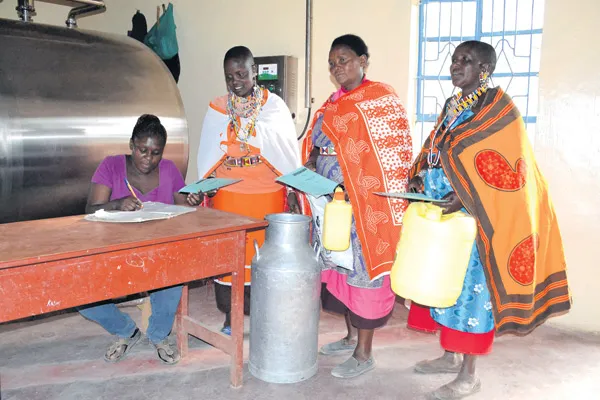
Arid and semi-arid Kajiado County in southern Kenya is grappling with milk glut as a result of overproduction due to improved pasture following the setting in of long rains season.
Farmers in the county say the milk glut attributable to good rains and improved pasture has triggered a sharp decline in milk prices as many dairy farmers unable to mitigate production costs. In several areas, milk is going to waste due to inadequate storage and cooling facilities.
“We are producing more milk than the market can absorb. Buyers are offering very low prices, and sometimes we are forced to let it go to waste,” said Peninah Nasieku, a farmer in Kibini, Kajiado East.
Nasieku lamented that a litre of milk is now retailing at Ksh30 at the local dairy cooperative, a price she says is unsustainable.
“As a single mother, I depend on milk sales to support my family. With such low prices, it is becoming difficult to put food on the table and pay school fees,” she said.
In Isinya, farmers reported that milk prices have dropped from Ksh70 per litre during the dry season to about Ksh50 due to oversupply and low demand. They noted that the current prices cannot even cover transport costs to the market, forcing some to dispose of milk or give it to dogs.
The farmers are now calling on both the county and national governments to invest in cooling plants and equip them with skills on value addition to address the problem.
“If we are trained on value addition, we can process excess milk into products like yoghurt and milk powder and earn more. We currently lack the knowledge and support,” Leah Nairesiae, a farmer in Oloika, Kajiado East, said.
The situation reflects similar trends in other arid and semi-arid regions, underscoring the need for long-term solution to stabilise the sector and safeguard farmers’ incomes.
Meanwhile, the National Treasury I seeking parliamentary approval for Ksh2 billion disbursed earlier this year to cushion dairy farmers against losses arising from the glut.
According to documents tabled in the National Assembly, the funds were released on January 2, 2026, through the Department for Co-operative Development and Management.
The grant is intended to help farmers manage surplus milk, ensure timely collection, stabilise raw milk prices and clear pending payments.
- A Tell Media / KNA by Diana Meneto


About author