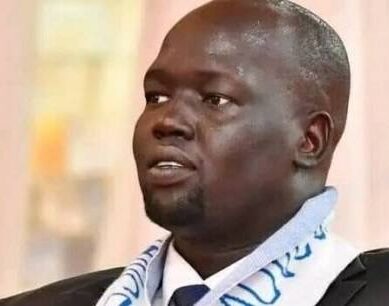




About 225 students are celebrating after the High Court quashed a directive by Health Cabinet Secretary Aden Duale to discontinue Mount Kenya University (MKU)’s Bachelor of Science in oral health programme.
In a judgment delivered by Justice William Musyoka, the Milimani High Court in Nairobi ruled that Health Cabinet Secretary Aden Duale acted without legal authority when he issued the order directing MKU to discontinue its bachelor of science in oral health programme.
In the landmark ruling, the court affirmed that the programme is legally accredited by the Commission for University Education (CUE) and therefore remains valid and operational. The judges further ruled that the ministry of health acted outside its legal mandate when it attempted to interfere with the university programme.
The case centred on the ministry’s directive aimed at halting the Bachelor of Science in oral health course – a programme offered under MKU’s department of dental sciences. The programme is registered with the Oral Health Association of Kenya and has been attracting students seeking careers in oral healthcare and dental therapy.
In its judgment, the court emphasised that the authority to approve, regulate, review or discontinue university academic programmes rests exclusively with the Commission for University Education under the Universities Act. The Ministry of Health, the Court noted, does not possess legal powers to shut down or suspend accredited university programmes.
The judges also considered the far-reaching implications that the directive would have had on students already enrolled in the course. More than 225 students stood to be affected, with their studies, professional training and future careers facing uncertainty had the directive been allowed to stand.
By reversing the ministry’s decision, the court protected the academic interests and professional aspirations of the affected learners while reinforcing the legal framework governing higher education in Kenya.
The ruling means that the Bachelor of Science in Oral Health programme at MKU remains fully recognised and protected under the law. Current students can continue with their studies without interruption while prospective students can pursue admission knowing that the programme retains its accredited status.
The decision also serves as a reminder that only the Commission for University Education has the statutory authority to approve, regulate or discontinue university programmes by ensuring that such decisions are made within the framework established by law.
For MKU students and stakeholders in the health sector, the judgment provides clarity and certainty, safeguarding a programme that plays a crucial role in training oral health professionals needed in the country’s healthcare system.
The case was filed by the Oral Health Association of Kenya against the CS for Health after the Ministry of Health sent a letter ordering MKU to discontinue the programme.
The ministry had claimed that the programme was not aligned with Kenya’s oral health needs. The government also averred that students might lack a professional practice pathway afterwards. The court had to determine whether the ministry had authority to stop the programme and whether the case itself was properly before court.
The court confirmed that the Bachelor of Science in Oral Health programme at MKU was approved and accredited by the Commission for University Education (CUE) back in 2016. It ruled that the Ministry of Health has non-legal power to discontinue the programme.
The judge ruled, “Under the Universities Act, only the Commission for University Education (CUE) has authority to approve, accredit, recognise, inspect or discontinue university academic programme. The ministry was found to have acted outside its mandate (ultra vires), improperly and in violation of the Universities Act.
Although the ministry tried to argue that the letter was merely “advice,” the judge examined the wording and concluded it was actually an order to shut down the programme.
- A Tell Media report / By James Wakahiu


About author