
Death, by nature, is a sensitive and emotionally solemn subject in many African cultures. Consequently, the cultural inhibitions conferred funeral-related businesses in the hands of men.
Women in Kiambu, however, are breaking the longstanding cultural and barriers. Across Kiambu County, more women are steadily investing in funeral services industry, where demand has been on the rise
From managing coffin businesses, coordinating burials, running hearses to helping grieving families navigate some of life’s most painful moments. For many of these women, the business is not just about profit.
It is about survival, service provision and compassion. Some joined the trade through family businesses while others were pushed into it by personal experiences and economic realities.
Yet despite the emotional burden and stigma associated with eking a living from death, they continue to build livelihoods, while balancing motherhood and family demands.
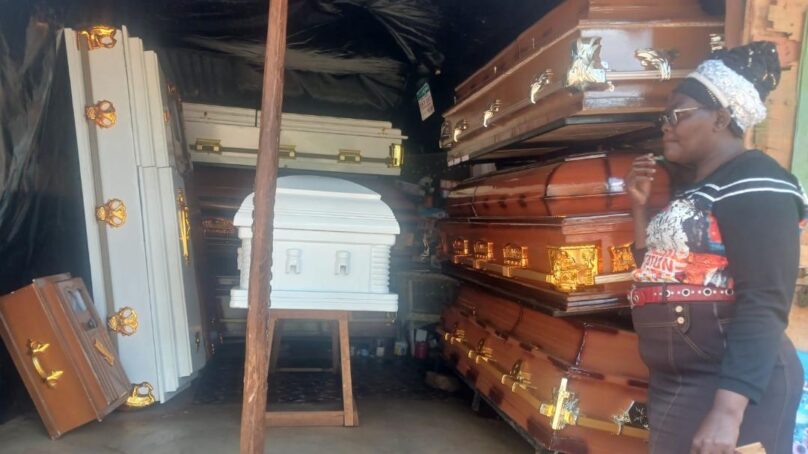
For Jacinta Njoki of Geona Funeral Services, the business has been part of her life for more than 15 years. The mother of 12 says she inherited the enterprise from her husband.
“It was my husband who started making coffins because people would approach him for them. Later, I took over the business and became the one managing it,” she explains, and added, “But running the business has not been easy.”
Njoki says one of the biggest challenges funeral service providers face in Kiambu is limited cold storage capacity at the Kiambu Hospital Mortuary.
“The mortuary does not have enough fridges to accommodate many bodies. So many families are forced to seek services elsewhere. That means we also lose business too,” she explains.
She adds that grief often affects pricing negotiations, making it difficult to sustain profits.
“These are grieving families. Someone comes saying they cannot afford the coffin price. You end up reducing the cost heavily. Sometimes you make almost no profit,” she says.
Her coffins range between Ksh9,000 and Ksh40,000 depending on design and quality. Owing to economic pressures, the business no longer manufactures coffins internally but instead procures ready-made wares.
Founder of Mfariji Funeral Services Elizabeth Gichane says the path into the funeral industry came after a painful personal experience.
The mother of three says she joined the business about one and a half years ago after losing a relative and witnessing what she describes as overpricing, delays and poor-quality hearse services during the burial arrangements.
“I had unsuccessfully vied for the Ndumberi MCA seat in 2022, and around the same time, we lost a relative. We suffered a lot during the funeral process,” she recalls.
Wanting to continue serving the community even after politics, she established Mfariji Funeral Services with the aim of offering affordable and dignified funeral support.
“This business is not so much about profit. It is about serving humanity,” she says.
Gichane says she often finds herself doing more than selling coffins. She assists distraught families with paperwork, directions at mortuaries, and coordination with transport providers.
“Sometimes clients are so overwhelmed that they cannot even think clearly. I help them move from office to office and intervene where they need assistance,” she explains.
Like Njoki, she says pricing remains one of the biggest challenges because many grieving families are financially strained.
“You quote a price, then they explain their situation and you end up accepting whatever they can afford,” she says.
Despite the emotional demands of the industry, Gichane says she intends to remain in the business and is already planning to acquire another hearse.
The funeral services industry in Kenya has grown significantly over the years driven by rapid, population growth and the rising demand for professional burial services.
According to the ministry of health, counties have increasingly invested in mortuary expansion and regulation to address growing pressure on public funeral facilities. The Public Health Act and county licensing regulations currently govern funeral homes, mortuaries and body handling services in Kenya.
In recent years, county governments have also reviewed licensing fees and operational guidelines for funeral service providers, following complaints from small-scale operators about high permit costs and regulation challenges.
The Morticians and Allied Professionals Association of Kenya has previously noted a growing number of women joining mortuary science and funeral service professions. For women like Njoki and Gichane, however, their work remains deeply personal.
- A Tell Media / KNA report / By Rose Muthoni

About author