


A section of teachers in Mombasa are being trained on how to pre-empt youth radicalisation through initiatives spearheaded by the Ministry of Education and the National Counter Terrorism Centre (NCTC).
The NCTC is a multi-agency institution established by the Prevention of Terrorism Act to coordinate national counter-terrorism measures that prevent, detect, deter and disrupt terrorism acts.
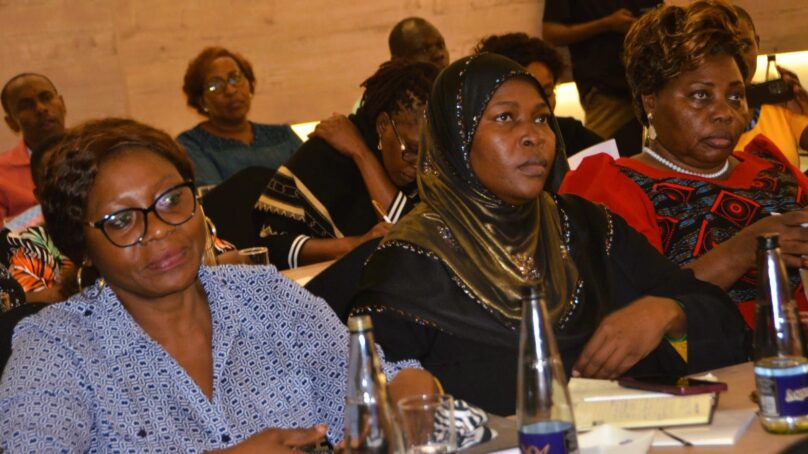
At least 40 teachers drawn from various public schools across the coastal city are undergoing a three-day training aimed at equipping them with the knowledge and skills needed to identify, respond to and prevent early signs of radicalisation and terrorist recruitment that may emerge within learning institutions.
Speaking during the workshop NCTC Head of Communications Charles Opiyo said the training targets teachers and Ministry of Education staff because educators are a critical link in the fight against violent extremism.
He noted that the programme also seeks to strengthen child safety and security by raising awareness of the risks posed by extremist groups.
He said the capacity-building programs focus on how educators could recognize early warning signs of extremism in both physical and digital spaces.
“Teachers are the custodians of these young people and interact with students more closely than anyone else in the education system. Since young people are the primary targets of extremist recruitment networks, equipping teachers with this knowledge would enable them to recognize behavioural changes early and potentially save lives,” Opiyo said.
He added that extremist groups often exploit the immaturity and vulnerability of young people by manipulating their belief systems and the training is intended to equip teachers with the knowledge and skills needed to safeguard children from violent extremism.
Addressing the recent wave of school unrest across the country, Opiyo however said there is currently no evidence linking the incidents directly to violent extremism.
“We cannot directly associate the unrest experienced in schools with violent extremism because there is no empirical evidence showing that the learners involved are being driven by extremist ideologies,” he said.
He said extremist groups like recruiting young people to carry out terror attacks that threaten peace and security as they can easily be manipulated and brainwashed. Opiyo revealed that the programme is currently in its pilot phase and due to limited resources, the training has so far been conducted only in some of the Mombasa sub-counties located near the county headquarters.
“However, plans are underway to expand the initiative to parents and other education stakeholders,” he added.
Mombasa becomes the fifth county to benefit from the programme after Elgeyo Marakwet, Baringo, Taita Taveta and Garissa and the government plans to roll out the training to a total of 10 counties before the end of the year.
One of the key concerns raised during the workshop was the growing challenge of monitoring digital communication with participants noting that terrorist recruiters no longer need physical access to schools, as they increasingly exploit social media platforms to reach and manipulate children remotely, posing significant security challenges.
Representing the Teachers Service Commission (TSC), Mombasa County Deputy Director Dr Patrick Mutua praised the initiative, expressing confidence that it would strengthen teachers’ capacity to identify learners who may be vulnerable to radicalisation.
“We expect this training to positively influence teachers’ attitudes and enhance their ability to pass this knowledge on to learners and information acquired during the three-day training will help teachers identify learners who may be vulnerable to violent extremism or terrorism-related activities,” Mutua said.
He emphasised that learner safety remains a priority for the Teachers Service Commission, noting that teachers cannot identify signs of radicalisation unless they understand what the process entails.
Mutua observed that the Coast region, including Mombasa County has experienced incidents linked to violent extremism, with some cases involving students and called for stronger collaboration among the Teachers Service Commission, the Ministry of Education, the National Counter Terrorism Centre, and other government agencies to enhance efforts aimed at protecting learners from extremist influences.
“As a commission, we are now better equipped to deal with such cases and disrupt the cycle of recruiting learners into violent extremism and this requires a collaborative approach involving all stakeholders,” he said.
Religious leaders attending the training emphasized the critical role teachers play in preventing and countering violent extremism (PCVE), calling for sustained training to equip educators with the knowledge and skills needed to identify and address early signs of radicalisation.
The Director of Centre for Sustainable Conflict Resolution Sheikh Ramadhan Aula welcomed the initiative, describing it as long overdue, particularly in the Coast region.
“It is very important that this training has come to the Mombasa region, In fact, it should have been conducted much earlier because preventing and countering violent extremism is an issue that should be addressed across the country, especially among teachers,” Aula said.
He noted that teachers are uniquely positioned to mentor young people and shape their values, making them indispensable partners in efforts to prevent violent extremism.
“Teachers are the mentors of our children in schools and without the necessary knowledge, they will lack vital information that they need to share with learners,” he said.
Aula explained that his organization’s role is to integrate PCVE efforts with interfaith engagement, particularly within the Muslim community, to address misconceptions that have contributed to the misuse of religion by extremist groups.
“Islam has been misused and misconstrued not only in this country but beyond. Many young people have been recruited using distorted religious narratives to advance the agenda of extremist groups,” he said.
He called for continuous PCVE training for teachers and urged religious leaders to strengthen their engagement with children and young people by providing accurate religious teachings and promoting programmes that instil positive values.
“Religion is one of the most misused tools by extremist groups and religious leaders need to remain close to children and young people by guiding them with the correct teachings,” Aula said.
Deputy Head Teacher at Consolata Primary School in Likoni Sub-County Elizabeth Kadzo, said the training will assist to transform the way teachers interpret changes in learners’ behaviour.
“Behavioural changes, such as a student suddenly changing their name and beginning to write unfamiliar foreign names in their exercise books, can now be viewed through a security lens to help identify potential risks at an early stage,” she said.
The training brought together teachers and other key stakeholders to strengthen awareness and build capacity in preventing violent extremism. Participants were encouraged to play an active role in promoting peace, resilience, and the safety of learners within their schools and communities. A Tell Media / KNA report / By Mary Mtawa


About author